What the Hero Or Villain Quiz measures
This quiz does not diagnose personality disorders, certify moral superiority, or prove you may dogpile strangers. It measures how much you agree with hero versus villain debate statements grouped four ways: moral gray awareness about motives and harm; fandom debate kindness about disagreeing without pile-ons; redemption versus label literacy about growth over permanent stamps; and quiz-not-morality-police limits about playful captions and refusing meme-clinic cosplay. You rate 22 statements from strongly disagree to strongly agree, with reverse-worded traps so one lucky meme cannot inflate every bar. Your answers also feed a second chart on closeness and trust habits. The total becomes an index from 0 to 100 where higher means more reported debate literacy on this screener, not proof you should label real people.
Moral gray awareness
Motives, harm, and context.
Fandom debate kindness
Disagree without dogpiles.
Redemption versus label literacy
Growth over permanent stamps.
Quiz not morality police limits
Fan talk not verdicts.
How it works
Answer 22 agreement items
Rate each statement from Strongly disagree to Strongly agree. Tap Next after each answer.
Answers sort into four domains
Each answer feeds one of four hero or villain debate groups, and every item also feeds a closeness and trust layer.
See your index and charts
You get a 0 to 100 index, a band, four domain bars, and a second chart for intimacy habits.
Take the Hero Or Villain Quiz
Answer 22 short statements to see your hero or villain debate literacy index, four domain bars, and a closeness and trust chart.
What your result means
Your index is the average of all 22 answers, scaled from 0 to 100, with reverse-worded items flipped first. Read morality-police-limit bars together with kindness habits before you treat a high score as moral authority. Licensed clinicians still own diagnosis when real harm is present.
| Band | Index range | Typical reading |
|---|---|---|
| Building hero or villain debate literacy | 0 to 35 | Fewer agreed habits on gray awareness, kindness, redemption or unofficial limit items. |
| Mixed hero or villain debate literacy | 36 to 65 | Solid curiosity with softer bars on spoiler care, debate manners, or limit corners. |
| Strong hero or villain debate literacy | 66 to 100 | Frequent agreement with fan or debate habits and limits; still unofficial reflection only. |
Tips at a glance
A quick takeaway graphic with topic tips (not your personal quiz scores). Start the quiz for your index, bands, and charts.
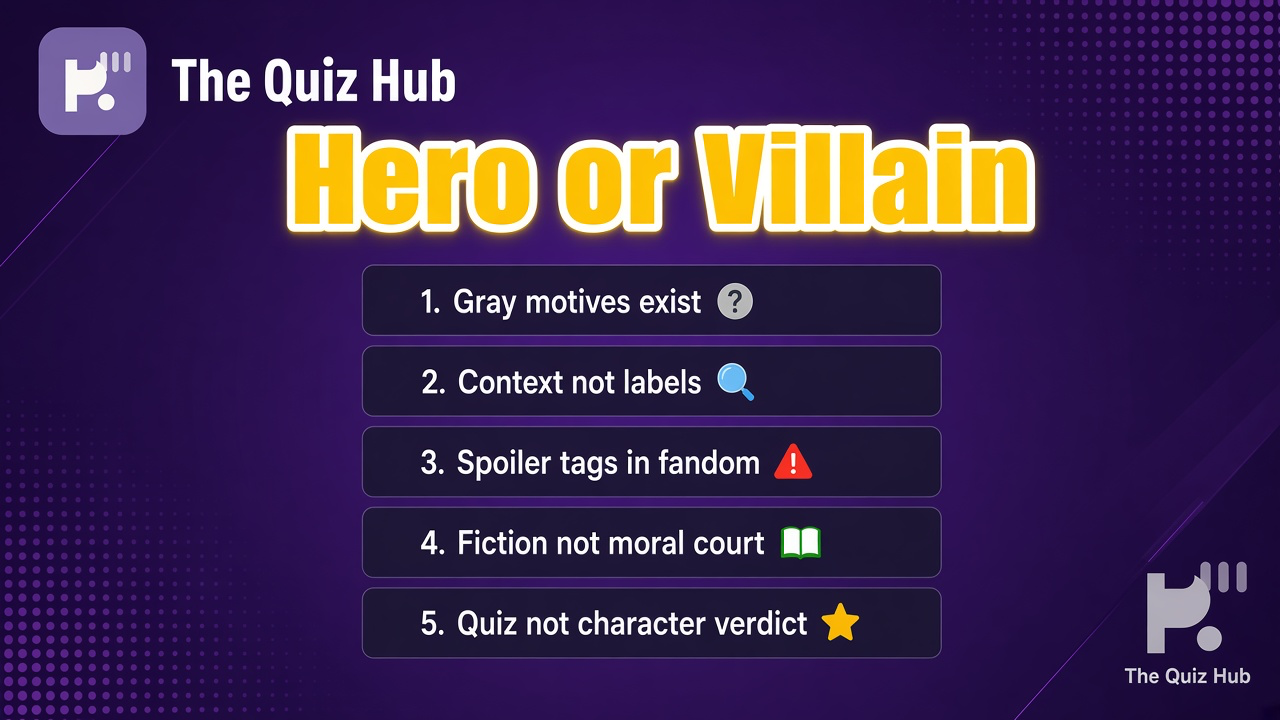
What this quiz can and cannot tell you
Can tell you
- Highlight gray, kindness, and redemption habits worth revisiting before stan wars
- Separate respectful fan reflection from dogpile threads and moral clearance myths
- Encourage repair language without shame spirals about flawed favorites
- Spark better book club questions without claiming ethics exam authority
Cannot tell you
- Replace ethics coursework, therapy, or accountability processes for real harm
- Prove you may stamp coworkers as villains from literacy bar height
- Diagnose disorders or declare moral winners from couch bars
- Predict who deserves harassment from agree totals alone
Why hero or villain quizzes need gray context, kind debate, redemption language, and morality-police separation
Search traffic around hero or villain quizzes often arrives from stan wars or from readers seeking fair language after dogpile weeks, not from ethics portals or permission to stamp real people. Those goals help when readers name motives, skip pile-ons, and keep agree bars away from moral clearance cosplay. They hurt when couch scores become proof you may harass someone who liked a flawed character. Moral gray reflection works best when it names kindness habits and unofficial limits together with original stems.
Dr. Rachel Kim reviews fandom screeners with a simple split: reward honest debate agreement and honest limits on morality-police myths at the same time. Moral gray awareness tracks harm and context without victim-blame cosplay. Fandom debate kindness tracks disagreeing without quote-meme ambushes. Redemption versus label literacy tracks repair steps without forever villain stamps. Quiz-not-morality-police limits keep screeners separate from bar-height verdicts on strangers.
Real fans mix bars. You might score high on gray awareness while keeping kindness moderate, which often describes sharp readers who still post hot takes. Reverse items catch overconfidence: real-life villain stamps, dogpile rights, or meme diagnosis should not inflate bars meant to track kind debate manners.
Pair results with siblings instead of forcing one forever-expert moral story. Our fatal flaw quiz explores trope reflection with separate stems from gray debate lanes here. Our Disney villain quiz stays on animated antagonist recall. Our Harry Potter character quiz offers wider cast talk when your group rotates. Browse the fandom and entertainment hub for more unofficial screeners. Caption shares as fan reflection, skip dogpiles, and treat fiction labels as fiction.
Premiere culture moves faster than kindness habits in group chat. A kindness bar might dip after one meme week while gray awareness stays high until you retake calmly. When you share results, say unofficial moral gray fan habits, not moral scores for real people.
| Test | Focus |
|---|---|
| Fatal flaw quiz | Trope and growth reflection rather than hero versus villain debate lanes here |
| Disney villain quiz | Animated antagonist recall rather than moral gray debate habits on this page |
| Harry Potter character quiz | Wider cast literacy rather than gray debate manners on this screener |
Hero Or Villain Quiz FAQ
What does the Hero Or Villain Quiz measure?
It measures how much you agree with statements about moral gray awareness, fandom debate kindness, redemption versus label literacy, and quiz-not-morality-police limits. You get an index from 0 to 100 plus four bars reflecting self-rated habits on this screener.
Is this a moral judgment of real people?
No. Limit items reject moral clearance cosplay. Fiction debate stays fiction unless real harm needs licensed help.
Can high scores justify harassing someone online?
No. Kindness items reject dogpiles. High bars describe habits you endorsed here, not permission to target strangers.
How is this different from the fatal flaw quiz?
This page emphasizes hero versus villain debate and gray motives. The fatal flaw sibling focuses on trope growth language with separate stems.
Who reviewed this quiz?
Dr. Rachel Kim reviewed the fan framing, kindness language, and result explanations. See our editorial policy for review standards.
Reviewed by