What Fatal Flaw Quiz measures
This quiz does not diagnose disorders, assign clinical labels, or predict whether you or anyone else is doomed. It measures how much you agree with trope statements grouped four ways: story trope awareness about hubris, jealousy, and tragic beats as narrative tools; growth over labels about redemption, repair, and refusing permanent villain stamps; kindness online about fiction-only discourse and skipping pile-ons aimed at real people; and not DSM diagnosis about playful captions, consent, and refusing meme-clinic cosplay from bar height. You rate 22 statements from strongly disagree to strongly agree, with reverse-worded traps so one lucky guess cannot inflate every bar. Your answers also feed a second chart on closeness and trust habits, because trope talk sometimes collides with intimacy fears when labels get weaponized. The total becomes an index from 0 to 100 where higher means more reported trope reflection literacy on this screener, not proof you should label strangers.
Story trope awareness
Tragic beats as craft, not destiny maps for real people.
Growth over labels
Redemption, repair, and change over permanent nicknames.
Kindness online
Argue plots, not people; skip dogpiles and doxxing.
Not DSM diagnosis
Fiction reflection only; clinicians own formal assessment.
How it works
Answer 22 agreement items
Rate each statement from Strongly disagree to Strongly agree. Tap Next after each answer.
Answers sort into four domains
Each answer feeds one of four trope reflection groups, and every item also feeds a closeness and trust layer.
See your index and charts
You get a 0 to 100 index, a band, four domain bars, and a second chart for intimacy habits.
Take the Fatal Flaw Quiz
Answer 22 short statements to see your fatal flaw trope reflection index, four domain bars, and a closeness and trust chart.
What your result means
Your index is the average of all 22 answers, scaled from 0 to 100, with reverse-worded items flipped first. Read not-DSM diagnosis bars together with kindness online before you treat a high score as authority. Fiction reflection supports kinder fandom; licensed clinicians still own psychiatric assessment.
| Band | Index range | Typical reading |
|---|---|---|
| Quieter trope reflection habits | 0 to 35 | Fewer agreed habits on story trope awareness, growth over labels, online kindness, or not-DSM limits on this screener. |
| Mixed trope reflection habits | 36 to 65 | Solid story awareness with destiny-label myths, permanent villain stamps, pile-on slips, or meme-diagnosis cosplay. |
| Strong trope reflection habits | 66 to 100 | Frequent agreement with trope awareness, growth focus, online kindness, and not-DSM limits; still reflection only. |
Tips at a glance
A quick takeaway graphic with topic tips (not your personal quiz scores). Start the quiz for your index, bands, and charts.
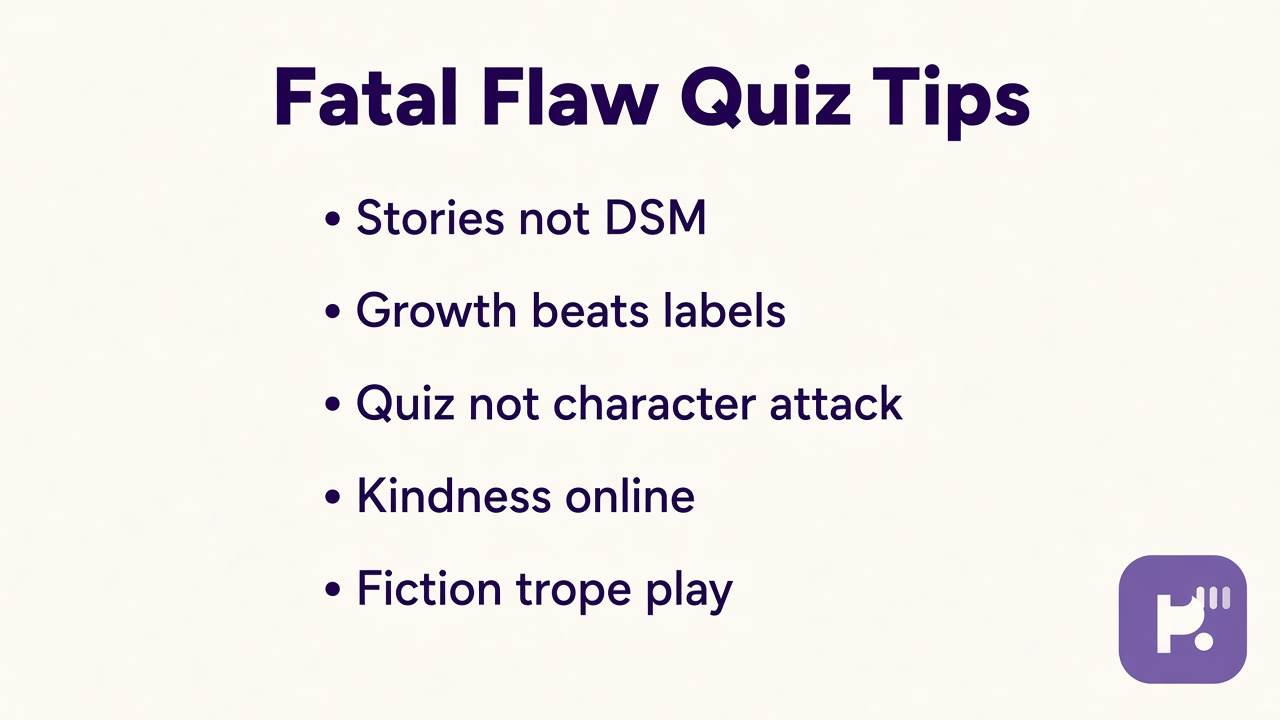
What this quiz can and cannot tell you
Can tell you
- Highlight trope awareness, growth, and online kindness habits worth revisiting before the next hot take
- Separate fiction reflection from DSM labeling or public character assassination
- Encourage redemption framing and repair steps without permanent villain stamps
- Spark better book-club questions about arcs without claiming clinical authority
Cannot tell you
- Replace psychiatric evaluation, therapy, or crisis care when you feel unsafe or stuck
- Prove personality disorders, moral worth, or relationship outcomes from one couch screener
- Give permission to diagnose, doxx, or dogpile real people with trope nicknames
- Predict fictional taste or writing skill from trope bars alone without context
Why fatal flaw talk needs fiction-not-DSM framing
Search traffic around fatal flaw quizzes usually wants two things: playful tragic-hero mirrors, and shareable scores for fandom chats. Those goals help when readers treat tropes as story craft, favor growth over permanent labels, and keep disagreements kind. They hurt when fiction vocabulary becomes meme diagnosis, or when one plot beat turns into a public villain stamp for a real person. Trope reflection works best when it names narrative curiosity and clinical limits together.
Dr. Priya Sharma reviews personality-adjacent fiction quizzes with a simple split: reward honest trope awareness and honest limits on diagnosis cosplay at the same time. Story trope awareness tracks hubris and hamartia as plot tools without destiny-mapping coworkers. Growth over labels tracks redemption and repair without permanent online nicknames. Kindness online keeps arguments on writing choices rather than fan dogpiles. Not DSM diagnosis keeps screeners separate from psychiatric labeling and medication advice fantasies.
Real players mix bars. You might score high on trope awareness while keeping kindness online moderate, which often describes sharp readers who still post hot takes. You might score high growth focus with softer not-DSM items, which can mean you value redemption yet still meme-diagnose cousins. Reverse items catch overconfidence: assigning flaws to everyone, permanent villain branding, dogpiling with nicknames, diagnosing strangers from one post, or perfect scores licensing medication advice should not inflate bars meant to track kind trope reflection.
Pair results with siblings on this hub instead of forcing one genius tragic-hero story. Our fictional character quiz stays on archetype play with stems separate from flaw-label ethics on this page. Our main character quiz explores protagonist energy when narrative framing fits better than DSM limits here. Our character quiz covers cross-fandom habit mirrors rather than online kindness norms on this screener. Browse the personality and psychology hub for more reflection tools. Caption shares as fiction reflection and skip labeling strangers who never asked for a quiz.
Fandom cycles and stress seasons rotate faster than release calendars. A kindness bar might dip after one pile-on thread while trope awareness stays high until you retake calmly. When you share results, say fiction not DSM. When you borrow tips, credit friends who argued plots without doxxing. Retake after one heavy news month and watch whether growth bars stay high even if trope recall rises, which often means you separated story craft from clinical cosplay.
| Test | Focus |
|---|---|
| Fictional character quiz | Archetype and casting play rather than flaw-label ethics and not-DSM limits on this page |
| Main character quiz | Protagonist energy framing rather than tragic-flaw kindness and diagnosis limits here |
| Character quiz | Cross-fandom character habits rather than growth-over-labels and online kindness stems on this screener |
Fatal Flaw Quiz FAQ
What does Fatal Flaw Quiz measure?
It measures how much you agree with statements about story trope awareness, growth over labels, kindness online, and not-DSM diagnosis limits. You get an index from 0 to 100 plus four bars. It describes self-reported fiction reflection habits on this screener, not clinical diagnoses.
Is this a DSM test or psychiatric screener?
No. Not-DSM diagnosis items keep the page in fiction reflection. Licensed clinicians own formal assessment; this screener is couch trope talk with kindness limits only.
Does a high score mean I have a specific tragic flaw forever?
No. Growth over labels items reject permanent villain stamps. High bars mean you related to trope statements here, not that you are locked into one narrative label.
Why include online kindness with trope items?
Fandom threads mix plot analysis with real people. Kindness online keeps arguments on writing choices and skips dogpiles so results stay honest about how you engage trope language.
Who reviewed this quiz?
Dr. Priya Sharma reviewed the fiction-not-DSM framing, growth over labels tone, and online kindness limits. See our editorial policy for review standards.
Reviewed by