What the Heart Block Quiz measures
This quiz does not certify ACLS, replace instructor rhythm exams, or diagnose arrhythmias from strips. It measures how much you agree with heart block study literacy statements grouped four ways: conduction pathway basics about SA node through bundle branches; strip reading study habits about PR, QRS, and pause patterns; nursing watch and escalation about symptoms, trends, and student scope; and quiz-not-clinical-license limits about playful captions and refusing telemetry cosplay. You rate 22 statements from strongly disagree to strongly agree, with reverse-worded traps so one lucky meme cannot inflate every bar. Your answers also feed a second chart on closeness and trust habits. The total becomes an index from 0 to 100 where higher means more reported study literacy on this screener.
Conduction pathway basics
SA node through ventricle order at intro depth.
Strip reading study habits
PR, QRS, and pause vocabulary on labeled strips.
Nursing watch and escalation
Symptom pairs and report habits within student scope.
Quiz not clinical license
Study warm up without telemetry cosplay.
How it works
Answer 22 agreement items
Rate each statement from Strongly disagree to Strongly agree. Tap Next after each answer.
Answers sort into four domains
Each answer feeds one of four heart block study groups, and every item also feeds a closeness and trust layer.
See your index and charts
You get a 0 to 100 index, a band, four domain bars, and a second chart for intimacy habits.
Take the Heart Block Quiz
Answer 22 short statements to see your heart block study literacy index, four domain bars, and a closeness and trust chart.
What your result means
Your index is the average of all 22 answers, scaled from 0 to 100, with reverse-worded items flipped first. Read strip bars with watch bars together before you treat a high total as telemetry proof. Instructors still own graded rhythm outcomes.
| Band | Index range | Typical reading |
|---|---|---|
| Building heart block study literacy | 0 to 35 | Fewer agreed habits on pathway basics, strip study, nursing watch, or license-limit items. |
| Mixed heart block study literacy | 36 to 65 | Solid pathway recall with strip blur, watch slips, or unofficial limit corners. |
| Strong heart block study literacy | 66 to 100 | Frequent agreement with study habits and limits; still unofficial practice only. |
Tips at a glance
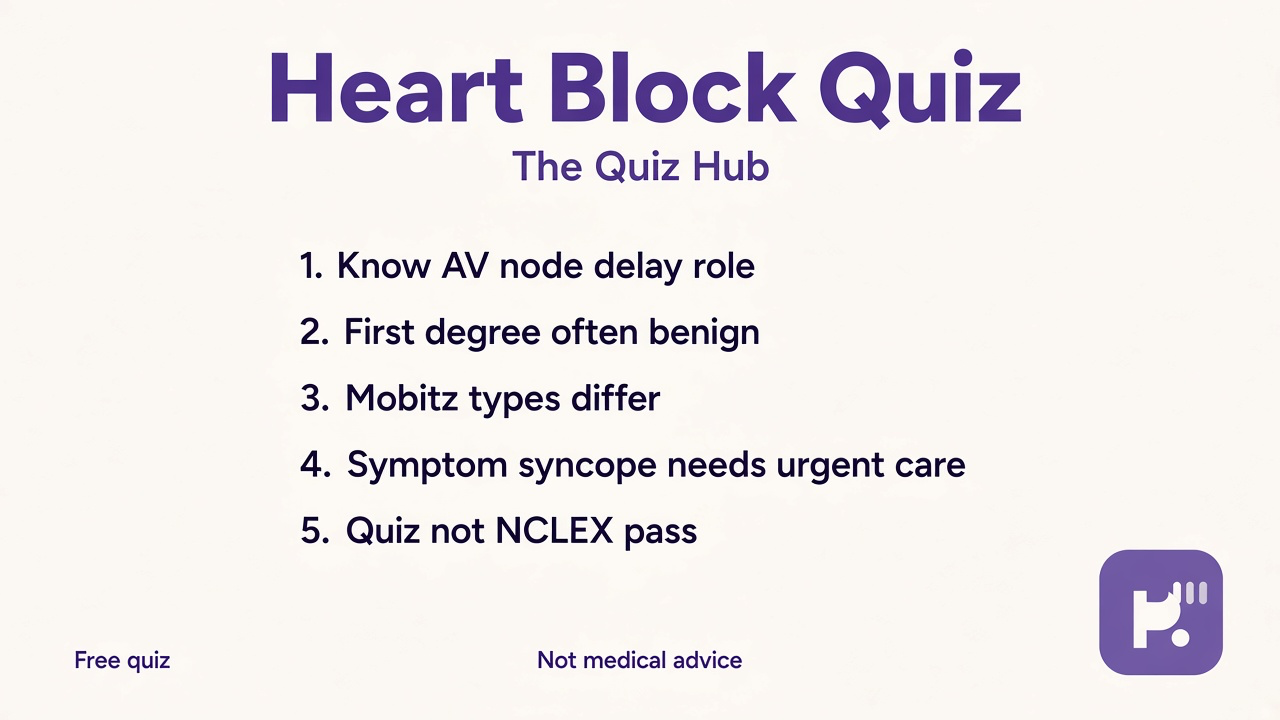
A quick takeaway graphic with topic tips (not your personal quiz scores). Start the quiz for your index, bands, and charts.
What this quiz can and cannot tell you
Can tell you
- Highlight pathway, strip, and watch topics worth revisiting before cardiac exams
- Separate respectful study reflection from rhythm-diagnosis dunk threads
- Encourage instructor strip citations without shame spirals about first-block gaps
- Spark better study questions about conduction without claiming ACLS authority
Cannot tell you
- Replace ACLS cards, telemetry training, or proctored ECG practicals
- Diagnose bradycardia, syncope, or block type for real patients from quiz bars
- Prove you may titrate meds or pace rhythms without orders and licensed staff
- Predict NCLEX rhythm scores or declare charge nurse readiness from bars alone
Conduction pathways, strip study, and nursing limits without telemetry cosplay
Nursing students search heart block quizzes when AV delay vocabulary blurs before exams and social clips mislabel PR segments. Those goals help when readers treat bars as a study map and cite instructor strips. They hurt when couch scores become proof you may read ICU monitors without preceptors. Study reflection works best when limit items sit beside original stems.
Dr. Elena Vasquez reviews YMYL student screeners with a simple split: reward honest conduction agreement and honest limits on licensure myths at the same time. Pathway literacy tracks SA-to-ventricle order without meme-only memory. Strip literacy tracks PR and QRS language on labeled examples. Watch literacy tracks symptom pairs and student scope without DIY pacing jokes.
Real students mix bars. You might score high on pathway recall while keeping strip reading moderate, which often describes strong lecture memory yet occasional pause-pattern blur. Reverse items catch overconfidence: ACLS cosplay, adenosine fantasies, or silent monitor myths should not inflate bars meant to track layered study manners.
Pair results with siblings instead of forcing one rhythm genius story. Our EKG quiz explores broader strip habits with separate stems. Our heart anatomy quiz stays on chamber structure recall when anatomy week overlaps. Our fundamentals of nursing quiz widens safety study when syllabus paths cross. Browse the mental health and clinical hub for more YMYL screeners. Caption shares as study practice, cite instructors, and skip rhythm verdicts on real patients.
| Test | Focus |
|---|---|
| EKG quiz | General rhythm strip literacy rather than heart-block-specific pause depth here |
| Heart anatomy quiz | Chamber and valve structure recall rather than AV block strip lanes on this page |
| Fundamentals of nursing quiz | Broader nursing safety habits rather than conduction pause vocabulary here |
Heart Block Quiz FAQ
What does the Heart Block Quiz measure?
It measures how much you agree with statements about conduction pathway basics, strip reading study habits, nursing watch and escalation, and quiz-not-clinical-license limits. You get an index from 0 to 100 plus four bars reflecting self-rated study habits on this screener.
Can I use results to interpret ICU monitor strips?
No. Limit items reject telemetry cosplay. Real monitor interpretation requires training, preceptors, and facility protocols beyond couch bars.
Does a high score mean I passed my cardiac exam?
No. Instructors and proctored exams own graded outcomes. High bars describe habits you endorsed here, not clinical clearance.
How is this different from the EKG quiz?
This page emphasizes AV block pathways, pause patterns, and nursing watch study. The EKG sibling stays on broader rhythm habits with separate stems.
Who reviewed this quiz?
Dr. Elena Vasquez reviewed the educational framing, YMYL study-limit language, and result explanations. See our editorial policy for review standards.
Reviewed by