What the Hearing Loss Quiz measures
This page does not administer sound booth audiometry, tympanometry, or other licensed hearing batteries, and it cannot diagnose sensorineural loss, infections, or wax impaction from one score. It measures how often you noticed habits clinicians and audiologists discuss when hearing strain disrupts daily life, organized four ways: conversation strain signals when repeats, misheard words, or caption reliance showed up; loud environment patterns when restaurants, group calls, or fatigue after noise appeared; audiologist help literacy when volume breaks, symptom notes, or visit planning happened without shame; and quiz not hearing diagnosis limits when unofficial screeners replaced professional care, skipped clinicians when strain stuck, or dunked strangers from bar height. You answer 22 how-often statements about the past two weeks, with reverse-worded items so one lucky quiet week cannot hide frequent strain on other days. Your responses also feed a second chart on closeness and trust habits. The total becomes an index from 0 to 100 where higher means more frequent reported hearing-literacy strain on this screener. Your responses suggest intensity to discuss with support; they do not prove clinical hearing loss type.
Conversation strain signals
Repeats, mishears, and captions.
Loud environment patterns
Noise fatigue and compensation.
Audiologist help literacy
Volume care and visit planning.
Quiz not hearing diagnosis
Screener not booth testing.
How it works
Answer 22 frequency items
Rate how often each statement was true in the past two weeks. Tap Next after each answer.
Answers sort into four domains
Each answer feeds one of four hearing literacy groups, and every item also feeds a closeness and trust layer.
See your index and charts
You get a 0 to 100 index, a band, four domain bars, and a second chart for intimacy habits.
Take the Hearing Loss Quiz
Answer 22 short frequency items to see your hearing concern literacy index, four domain bars, and a closeness and trust chart.
What your result means
Your index is the average of all 22 answers, scaled from 0 to 100, with reverse-worded items flipped first. Read audiologist literacy bars with quiz-limit bars together before you treat a high score as hearing proof. Licensed audiologists and clinicians still own booth testing and treatment plans.
| Band | Index range | Typical reading |
|---|---|---|
| Lower reported hearing-strain frequency | 0 to 35 | Fewer frequent strain, avoidance, or quiz-substitution patterns on this screener. |
| Mixed hearing-strain frequency | 36 to 65 | Solid awareness some days with strain spikes, volume slips, or clinician delay on others. |
| Higher reported hearing-strain frequency | 66 to 100 | Frequent strain, clinician delays, or quiz-as-diagnosis patterns; audiologist or urgent care may help more than another solo retake. |
Tips at a glance
A quick takeaway graphic with topic tips (not your personal quiz scores). Start the quiz for your index, bands, and charts.
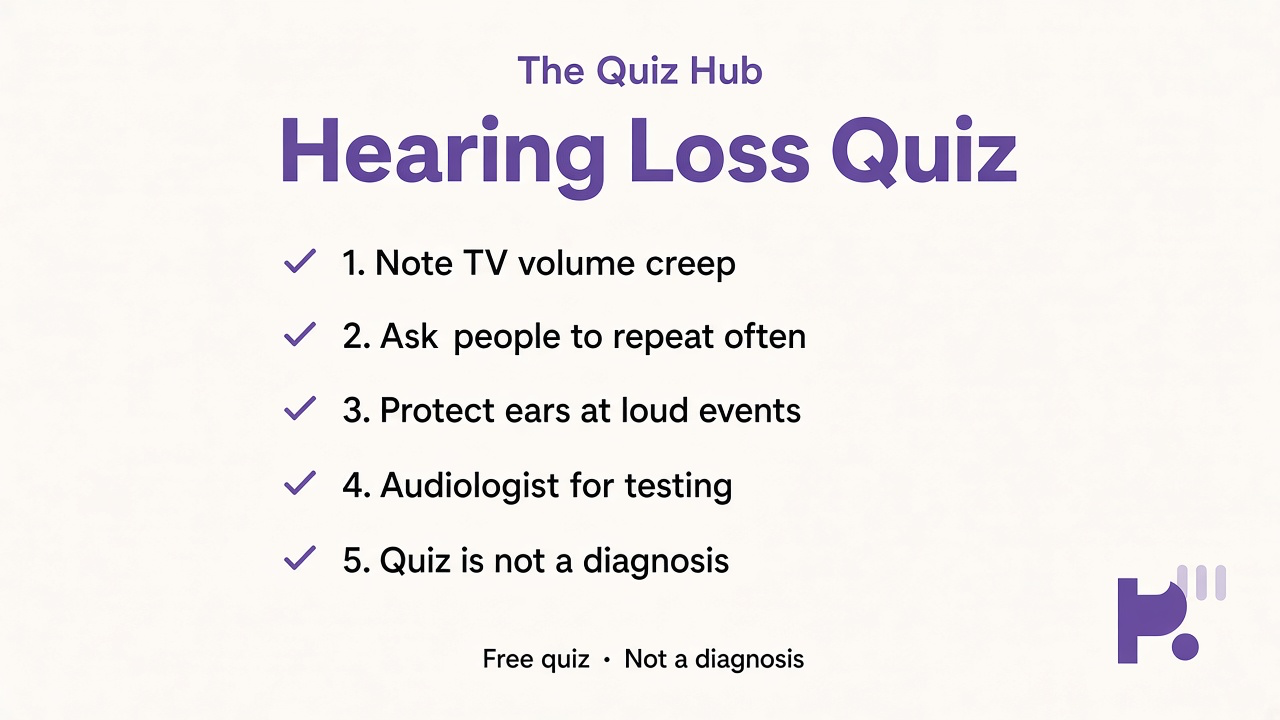
What this quiz can and cannot tell you
Can tell you
- Highlight strain, environment, and help-seeking habits worth discussing with professionals
- Separate respectful reflection from headphone dunk threads and audiogram cosplay
- Encourage symptom notes without shame spirals about asking for repeats
- Spark better clinic questions without claiming audiometry authority
Cannot tell you
- Replace audiograms, ENT exams, or hearing aid fittings from licensed audiologists
- Diagnose sensorineural, conductive, or mixed loss from couch frequency bars
- Prove sudden hearing loss is harmless from low totals alone
- Predict who needs hearing aids from one unofficial screener session
Why hearing loss quizzes need strain context, noise patience, audiologist literacy, and diagnosis separation
Readers search hearing loss quizzes when TV dialogue blurs, repeats pile up, and social feeds treat captions like a joke instead of a clue. Those goals help when people log strain calmly, protect volume, and keep frequency bars away from audiogram cosplay. They hurt when couch scores become proof you may shame strangers about earbuds. Hearing reflection works best when audiologist limits sit beside original stems.
Dr. Elena Vasquez reviews YMYL hearing screeners with a simple split: reward honest strain reporting and honest limits on diagnosis substitution myths at the same time. Conversation strain signals track repeats and mishears without character attacks. Loud environment patterns track noise fatigue without age myths alone. Audiologist help literacy tracks visits and urgent sudden-loss rules without dunk threads. Quiz-not-hearing-diagnosis limits keep screeners separate from booth testing fantasies.
Real adults mix bars. You might report frequent restaurant fatigue while still delaying audiologist booking, which often describes social courage yet administrative procrastination. Reverse items catch overconfidence: treating web bars as audiograms or skipping clinicians when strain stuck should not hide frequent strain on other days.
Pair results with siblings instead of forcing one ear meme story. Our ear anatomy quiz stays on outer, middle, and inner ear study literacy with separate stems. Our headphone quiz explores gear novelty habits rather than clinical strain frequency here. Our eyeglasses and hearing aids quiz covers assistive-device literacy when aids enter the conversation. Browse the mental health and clinical hub for more non-diagnostic screeners. Caption shares as unofficial strain reflection, book audiologists when patterns persist, and seek urgent care for sudden loss.
Noise culture moves faster than clinic appointments in busy seasons. A strain bar might spike after one concert month while help-seeking bars stay soft until you retake after booking care. When you share results, say unofficial hearing literacy habits, not audiogram verdicts.
| Test | Focus |
|---|---|
| Ear anatomy quiz | Study-tone ear structure trivia rather than past-two-weeks strain frequency here |
| Headphone quiz | Gear novelty habits rather than clinical hearing strain logs on this page |
| Eyeglasses and hearing aids quiz | Assistive-device literacy rather than conversation strain frequency stems here |
Hearing Loss Quiz FAQ
What does the Hearing Loss Quiz measure?
It measures how often you noticed conversation strain, loud-setting fatigue, audiologist help habits, and quiz-not-diagnosis limits over the past two weeks. You get an index from 0 to 100 plus four bars reflecting self-rated patterns on this screener.
Can this quiz diagnose hearing loss?
No. Only licensed audiologists and clinicians can diagnose hearing conditions after history, exam, and appropriate testing. This page stays informal reflection only.
When should I seek urgent care instead of retaking?
Sudden hearing loss in one ear, severe ear pain, head injury hearing change, or fainting with dizziness need urgent medical care the same day, not another couch session alone.
How is this different from the ear anatomy quiz?
This page uses past-two-weeks frequency items about strain and help-seeking. The ear anatomy sibling uses agree-item study literacy about structures with separate stems.
Who reviewed this quiz?
Dr. Elena Vasquez reviewed the YMYL framing, audiologist referral language, and result explanations. See our editorial policy for review standards.
Reviewed by