What the Health Attitudes Scale measures
This quiz does not administer a published health attitudes battery, predict population outcomes, or replace emergency care. It measures how much you agree with attitude statements grouped four ways: wellness optimism balance about hope without denying illness; risk perception balance about caution without panic or bravado; social health norms about sick leave, masking manners, and consented vaccine conversations; and unofficial attitudes scale limits about playful study captions and refusing to treat bar height as epidemiology proof. You rate 22 statements from strongly disagree to strongly agree, with reverse-worded traps so one lucky guess cannot inflate every bar. Your answers also feed a second chart on closeness and trust habits, because health shame sometimes pushes argumentative withdrawal. The total becomes an index from 0 to 100 where higher means more reported attitude literacy on this unofficial screener.
Wellness optimism balance
Hope without denying real illness.
Risk perception balance
Caution without panic or bravado.
Social health norms
Community manners without shame campaigns.
Unofficial attitudes scale limits
Literacy mirror; experts own technical calls.
How it works
Answer 22 agreement items
Rate each statement from Strongly disagree to Strongly agree. Tap Next after each answer.
Answers sort into four domains
Each answer feeds one of four health attitude groups, and every item also feeds a closeness and trust layer.
See your index and charts
You get a 0 to 100 index, a band, four domain bars, and a second chart for intimacy habits.
Take the Health Attitudes Scale
Answer 22 short statements to see your health attitudes reflection index, four domain bars, and a closeness and trust chart.
What your result means
Your index is the average of all 22 answers, scaled from 0 to 100, with reverse-worded items flipped first. Read unofficial limit bars together with social norm habits before you treat a high score as policy authority. Gentle reflection supports kinder conversations; clinicians and epidemiologists still own technical decisions.
| Band | Index range | Typical reading |
|---|---|---|
| Building attitudes literacy | 0 to 35 | Fewer agreed habits on optimism balance, risk respect, social norms, or unofficial scale limits. |
| Mixed attitudes literacy | 36 to 65 | Solid balance with purity slips, panic swings, or published-scale substitution myths. |
| Strong attitudes literacy | 66 to 100 | Frequent agreement with optimism, risk, social norms, and unofficial limits; still reflection only. |
Tips at a glance
A quick takeaway graphic with topic tips (not your personal quiz scores). Start the quiz for your index, bands, and charts.
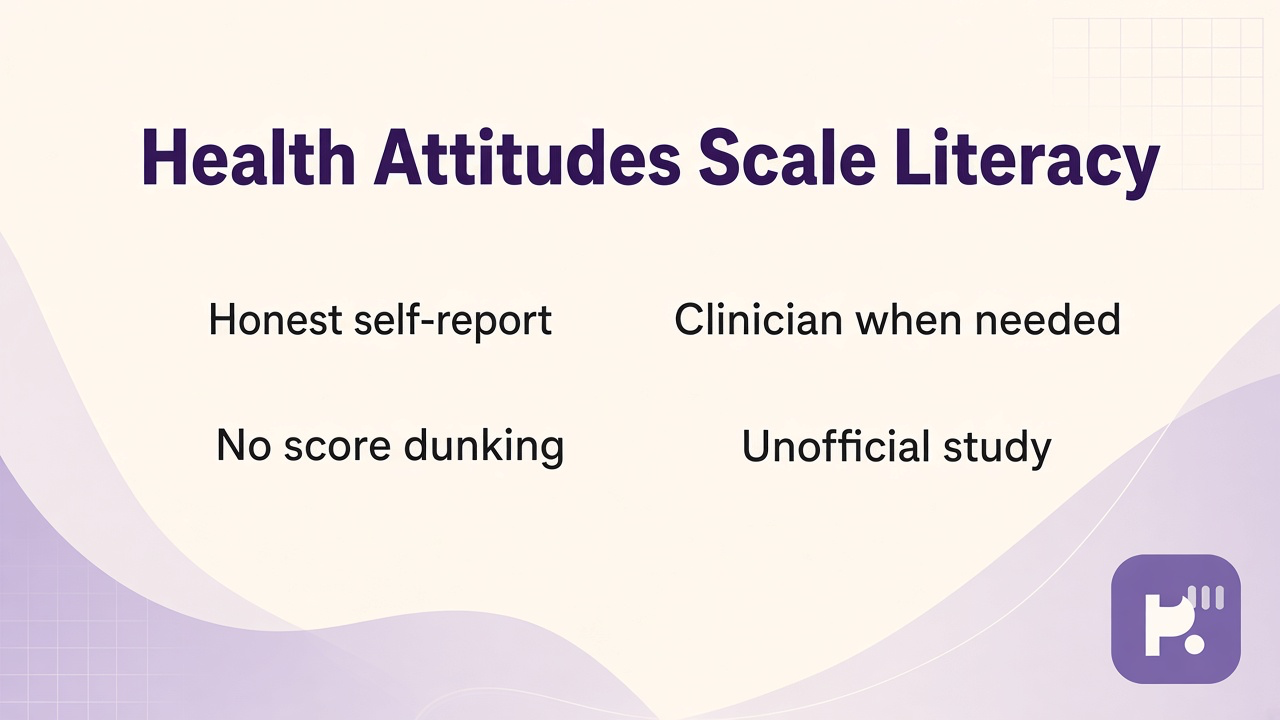
What this quiz can and cannot tell you
Can tell you
- Highlight optimism, risk, and social norm habits worth revisiting before public shame threads
- Separate playful literacy from published attitudes battery substitution myths
- Encourage consented conversations and mutual aid without purity spirals
- Spark better community health talk without claiming epidemiology authority
Cannot tell you
- Replace licensed medical advice, public health agencies, or emergency evaluation
- Prove population outcomes or individual diagnoses from one agree screener
- Give permission to shame neighbors or coworkers from bar height
- Predict outbreak risk or declare who is virtuous from attitude bars alone
Why health attitudes quizzes need optimism balance, risk respect, and unofficial limits
Search traffic around health attitudes scales usually wants a single score for optimism, risk, and community manners without reading validation footnotes. Those goals help when readers hope without denying illness, weigh risk with nuance, and keep agree bars away from published battery cosplay. They hurt when attitude totals become proof you may shame neighbors, or when purity memes skip manners because a bar looked tall.
Wellness optimism balance tracks hope paired with practical care steps. Risk perception balance tracks caution that updates when guidance changes without bravado or panic myths. Social health norms tracks sick leave respect, consented vaccine talks, and masking manners without public dunk campaigns. Unofficial attitudes scale limits keep screeners separate from published inventory ads and virtue scoreboard threads.
Community members mix bars. You might score high on optimism while social norms stay moderate when paid leave is scarce. You might score high risk balance with softer limit items, which can mean you avoid public verdicts yet still treat quiz totals like policy citations. Reverse items catch mindset-cure and zero-risk traps that should not inflate bars meant to track layered attitude manners.
Pair results with siblings instead of forcing one forever-virtuous story. Our health attitude index 523 sibling emphasizes prevention and clinician trust. Our health attitude index 524 sibling emphasizes skepticism and media literacy. Our health anxiety inventory SHAI widens illness worry frequency when body fear dominates. Browse the personality and psychology hub for more reflection tools. Retake after one community-heavy season and compare domain bars calmly.
| Test | Focus |
|---|---|
| Health attitude index 523 | Prevention and clinician trust rather than community optimism-risk lanes here |
| Health attitude index 524 | Skepticism and media literacy rather than social norm optimism items on this scale |
| Health anxiety inventory SHAI | Illness worry frequency rather than general community attitude agree stems here |
Health Attitudes Scale FAQ
What does the Health Attitudes Scale measure?
It measures how much you agree with statements about wellness optimism, risk balance, social health norms, and unofficial scale limits. You get an index from 0 to 100 plus four bars. It reflects self-rated attitude literacy on this screener, not a published battery score.
Is this a published health attitudes inventory?
No. This page is unofficial reflection inspired by common scale search intent, not a licensed validation file used in research clinics. Treat your bars as conversation starters, not policy or medical verdicts.
How is this different from Health Attitude Index 523 or 524?
This scale centers community optimism, risk, and social norm lanes. The 523 sibling uses prevention-trust stems; the 524 sibling uses skepticism-media stems rather than social norm items here.
Does a high score mean my community is healthy?
No. Higher bars describe attitude habits you reported on this quiz, not population health statistics, diagnoses, or guarantees about your neighborhood.
Who reviewed this quiz?
Dr. Priya Sharma reviewed the educational framing, unofficial scale limits, and result explanations. See our editorial policy for review standards.
Reviewed by