What the Hate Values Test measures
This test does not endorse hatred, rank strangers as evil, diagnose personality disorders, or certify moral superiority. It measures how much you agree with unofficial anti-hate humility statements grouped four ways: dehumanization refusal literacy about rejecting slurs and violence cheers; anger-without-hate habits about rage with boundaries and no collective punishment; values reflection without hate endorsement about I-language standards without supremacy cosplay; and quiz-not-moral-scoreboard limits about unofficial framing, private opt-in sharing, and zero permission to harass lower scorers. You rate 22 statements from strongly disagree to strongly agree, with reverse-worded items flipped first. Your answers also feed a second chart on closeness and trust habits. The total becomes an index from 0 to 100 where higher means more reported anti-hate humility on this screener, not proof you may punish others.
Dehumanization refusal literacy
Reject slurs and violence cheers.
Anger without hate habits
Heat with accountability boundaries.
Values reflection without hate endorsement
Standards without supremacy.
Quiz not moral scoreboard
Humility; not public shame game.
How it works
Answer 22 agreement items
Rate each statement from Strongly disagree to Strongly agree. Tap Next after each answer.
Answers sort into four domains
Each answer feeds one of four anti-hate humility groups, and every item also feeds a closeness and trust layer.
See your index and charts
You get a 0 to 100 index, a band, four domain bars, and a second chart for intimacy habits.
Take the Hate Values Test
Answer 22 short statements to see your anti-hate values humility index, four domain bars, and a closeness and trust chart.
What your result means
Your index is the average of all 22 answers, scaled from 0 to 100, with reverse-worded items flipped first. Read moral-scoreboard limit bars together with dehumanization refusal before you treat a high total as license to shame strangers. Mediators and clinicians still own plans when harm persists.
| Band | Index range | Typical reading |
|---|---|---|
| Building anti-hate humility | 0 to 35 | Fewer agreed habits on dehumanization refusal, anger boundaries, values humility, or moral-scoreboard limits. |
| Mixed anti-hate humility | 36 to 65 | Solid values curiosity with occasional pile-on slips, slur tolerance, or moral-scoreboard traps. |
| Strong anti-hate humility | 66 to 100 | Frequent agreement with refusal, anger boundaries, values humility, and limits; still not moral license. |
Tips at a glance
A quick takeaway graphic with topic tips (not your personal quiz scores). Start the quiz for your index, bands, and charts.
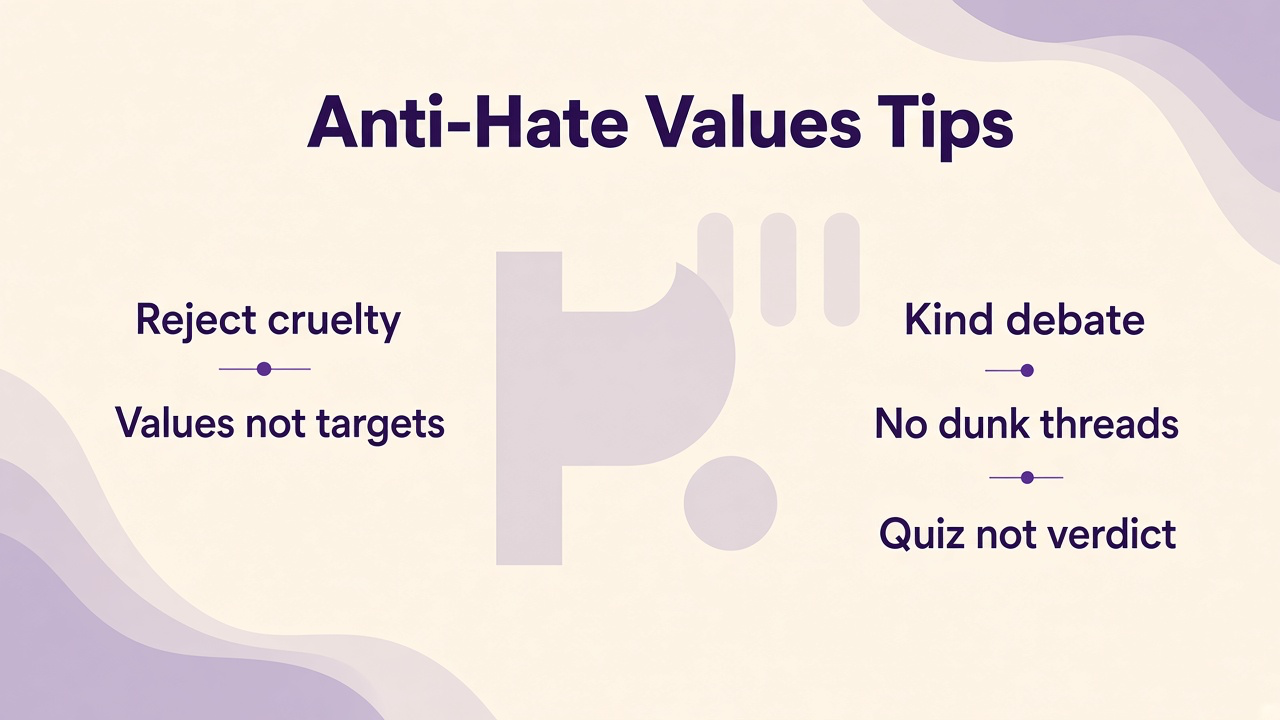
What this quiz can and cannot tell you
Can tell you
- Highlight dehumanization refusal and anger-boundary habits worth practicing before heated posts
- Separate unofficial humility reflection from hate promotion myths and public ranking threads
- Encourage opt-in values talks without surveillance or pile-on invitations
- Spark better questions about anger and ethics without claiming clinical authority
Cannot tell you
- Replace therapy, mediation, safety planning, or community accountability processes
- Prove someone deserves harassment because their bar looked lower than yours
- Endorse hatred, bigotry, violence, or supremacy from any score pattern
- Diagnose moral character or declare enemies from one agree screener
Why hate values screeners need dehumanization refusal, anger boundaries, and scoreboard humility
Search traffic around hate values language often follows outrage cycles where legitimate anger collapses into slur threads and public ranking games. Those goals help when readers refuse dehumanization, pause rage posts, and keep agree bars away from dunk scoreboards. They hurt when reflection totals become proof you may harass lower scorers or recruit pile-ons. Anti-hate humility works best when it pairs values language with unofficial limits and stays distinct from group-identity siblings that use different stems.
Dr. Priya Sharma reviews personality screeners with a simple split: reward honest refusal language and honest limits on moral scoreboard cosplay at the same time. Dehumanization refusal literacy tracks humanizing habits under stress. Anger-without-hate habits track accountability without collective punishment. Values reflection without hate endorsement tracks standards without supremacy myths. Quiz-not-moral-scoreboard limits track private sharing and humility about licensed tools.
Real people mix bars. You might score high on refusal while keeping anger moderate during election weeks. Reverse items catch overconfidence: justified dehumanization, rage exceptions, supremacy cosplay, or bar-height harassment should not inflate scores meant to track layered habits.
Pair results with siblings instead of forcing one moral story. Our group identity questionnaire explores in-group bonds with separate stems rather than anti-hate humility framing here. Our career values quiz stays on broader values curiosity rather than dehumanization refusal lanes on this page. Our moral foundations questionnaire MFQ offers another ethics tone with its own bank. Browse the personality and psychology hub for more reflection screeners. Share scores only with people who opted in, not as orders about who is evil.
News cycles move faster than pause rituals on a sticky note. A refusal bar might dip after one viral fight night while limit recall stays high until you retake gently. When you share results, say unofficial anti-hate humility habits—not moral clearance to punish anyone.
| Test | Focus |
|---|---|
| Group identity questionnaire | In-group bond literacy rather than anti-hate humility and dehumanization refusal stems here |
| Career values quiz | Broader values curiosity rather than hate-endorsement refusal on this screener |
| Moral foundations questionnaire MFQ | Moral foundations language rather than anti-hate scoreboard limits on this page |
Hate Values Test FAQ
What does the Hate Values Test measure?
It measures how much you agree with statements about dehumanization refusal, anger-without-hate habits, values reflection without hate endorsement, and quiz-not-moral-scoreboard limits. You get an index from 0 to 100 plus four bars reflecting self-rated habits on this screener.
Does this test promote hatred?
No. Stems explicitly reject dehumanization, violence cheers, and supremacy cosplay. The title refers to reflecting on values without endorsing hate.
Can I use my score to shame people online?
No. Limit items reject public moral scoreboards and harassment of lower scorers. High bars describe habits you endorsed here, not license to punish others.
Is this a clinical diagnosis?
No. This page offers informal reflection only. Licensed clinicians use separate assessments when appropriate.
Who reviewed this test?
Dr. Priya Sharma reviewed the anti-hate framing, YMYL content note, limit tone, and result explanations. See our editorial policy for review standards.
Reviewed by