What the Green Flag Quiz measures
This quiz does not certify therapists, prove compatibility, or replace couples counseling. It measures how much you agree with green-flag literacy statements grouped four ways: communication and repair green habits about ownership and follow-up after rupture; boundary and consent green habits about asking before assuming and respecting no; reliability and kindness green habits about follow-through and ordinary-day warmth; and quiz-not-partner-verdict limits about playful study captions and refusing to treat bar height as stay-or-leave proof. You rate 22 statements from strongly disagree to strongly agree, with reverse-worded traps so one lucky guess cannot inflate every bar. Your answers also feed a second chart on closeness and trust habits, because dating study sometimes pushes intimacy withdrawal when correction feels unsafe. The total becomes an index from 0 to 100 where higher means more reported literacy on this screener, not proof you should correct strangers online.
Communication and repair green habits
Repair after rupture.
Boundary and consent green habits
Ask before assume.
Reliability and kindness green habits
Show up on Tuesdays.
Quiz not partner verdict
Playful mirror; therapy elsewhere.
How it works
Answer 22 agreement items
Rate each statement from Strongly disagree to Strongly agree. Tap Next after each answer.
Answers sort into four domains
Each answer feeds one of four green flag literacy groups, and every item also feeds a closeness and trust layer.
See your index and charts
You get a 0 to 100 index, a band, four domain bars, and a second chart for intimacy habits.
Take the Green Flag Quiz
Answer 22 short statements to see your green flag literacy index, four domain bars, and a closeness and trust chart.
What your result means
Your index is the average of all 22 answers, scaled from 0 to 100, with reverse-worded items flipped first. Read unofficial verdict-limit bars together with consent habits before you treat a high score as therapy authority. Cozy reflection supports kinder study nights; licensed clinicians still own treatment paths.
| Band | Index range | Typical reading |
|---|---|---|
| Building green flag literacy | 0 to 35 | Fewer agreed habits on repair, consent, reliability, or verdict-limit items. |
| Mixed green flag literacy | 36 to 65 | Solid vocabulary with boundary slips, jealousy myths, or partner-verdict substitution. |
| Strong green flag literacy | 66 to 100 | Frequent agreement with repair, consent, reliability, and unofficial limits; still reflection only. |
Tips at a glance
A quick takeaway graphic with topic tips (not your personal quiz scores). Start the quiz for your index, bands, and charts.
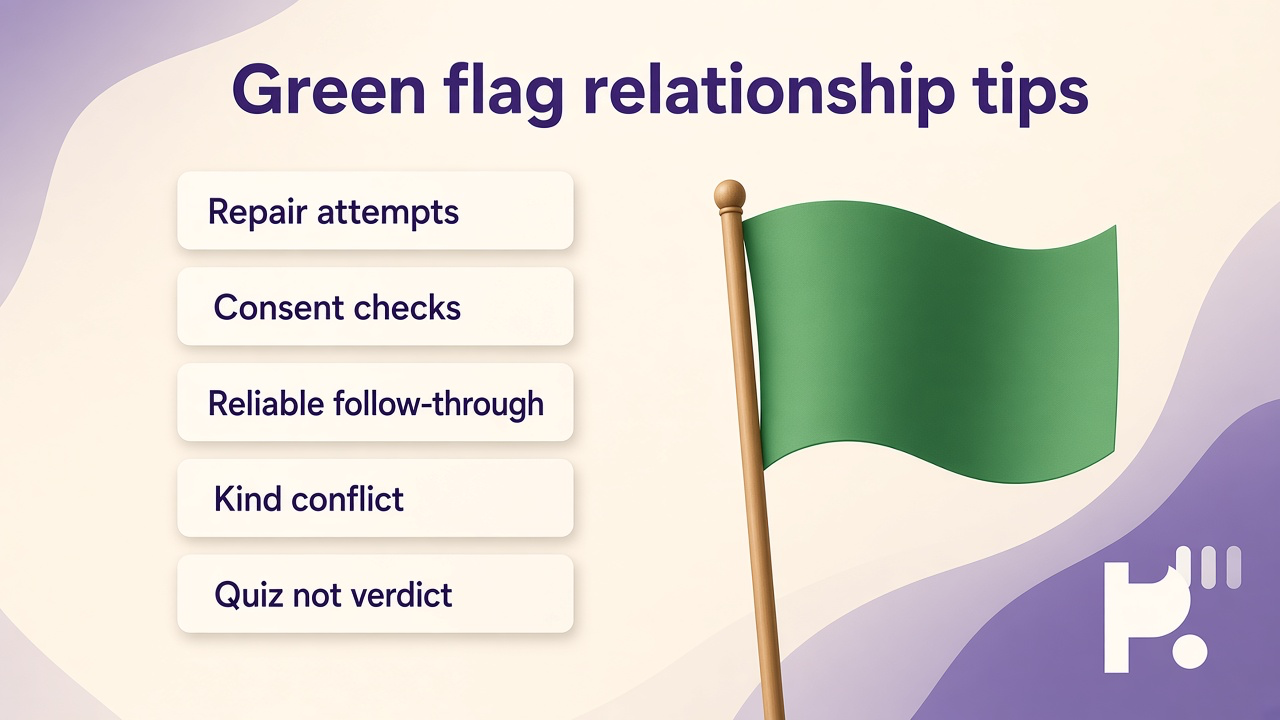
What this quiz can and cannot tell you
Can tell you
- Highlight repair, consent, and reliability habits worth revisiting before public partner diagnosis
- Separate playful literacy from surveillance myths and therapy cosplay threads
- Encourage curious questions and opt-in practice without shame spirals about missed cues
- Spark better conversations about healthy signals without claiming clinical authority
Cannot tell you
- Replace Gottman-method programs, EFT, or licensed couples therapy
- Prove abuse is absent or present from one agree screener
- Give permission to surveil, threaten, or dump a partner based on bar height
- Predict marriage outcomes or declare who must stay from literacy bars alone
Why green flag quizzes need repair habits, consent cues, reliability warmth, and verdict separation
Search traffic around green flag quizzes usually wants vocabulary after podcasts, friend advice threads, or a week when small ruptures kept getting missed, not therapist certificates or public partner verdicts. Those goals help when readers practice repair lines, ask consent questions, and keep agree bars away from surveillance cosplay. They hurt when literacy totals become proof you may mock a partner who never heard of repair language, or when meme clips skip manners because a bar looked tall. Green-flag reflection works best when it names reliability habits and unofficial limits together while staying distinct from fantasy boyfriend siblings.
Dr. Priya Sharma reviews relationships screeners with a simple split: reward honest signal language and honest limits on partner surveillance and verdict substitution at the same time. Communication and repair green habits tracks ownership after conflict. Boundary and consent green habits tracks ask-first habits without debate theater. Reliability and kindness green habits tracks ordinary-day follow-through. Quiz-not-partner-verdict limits keep screeners separate from therapy ads and screenshot diagnosis threads.
Real daters mix bars. You might score high on consent while keeping repair habits moderate, which often describes strong list recall yet flooded evenings. You might score high repair with softer verdict-limit items, which can mean you avoid public diagnosis yet still treat quiz totals like clinician notes. Reverse items catch overconfidence: mind-reading myths, one-time consent stories, or partner roast rights should not inflate bars meant to track layered study manners.
Pair results with siblings instead of forcing one forever-expert story. Our dream boyfriend quiz sibling stays on fantasy values language with stems separate from live dating repair here. Our four horsemen relationship quiz explores conflict pattern naming rather than green signal habits on this page. Our communication styles in relationships quiz covers color and pace habits rather than consent-first green stems here. Browse the relationships and dating hub for more reflection screeners. When you share tips, credit partners who opted in instead of public verdict threads.
Holiday stress and sleep debt move faster than one repair text on the fridge. A consent bar might dip after one flooded week while reliability recall stays high until you retake calmly. When you share results, say unofficial green flag literacy habits. Retake after one honest month and watch whether verdict-limit bars stay high even if enthusiasm rises.
| Test | Focus |
|---|---|
| Dream boyfriend quiz | Fantasy values language rather than live dating repair and consent stems on this page |
| Four horsemen relationship quiz | Conflict pattern naming rather than green signal literacy on this screener |
| Communication styles in relationships quiz | Communication color habits rather than consent-first green flag stems here |
Green Flag Quiz FAQ
What does the Green Flag Quiz measure?
It measures how much you agree with statements about repair habits, consent cues, reliability warmth, and quiz-not-verdict limits. You get an index from 0 to 100 plus four bars. It reflects self-rated awareness on this screener, not therapy scores.
Does a high score mean my partner is perfect?
No. High bars describe habits you endorsed here about healthy signal literacy, not proof someone else meets every standard or that you should ignore red flags.
How is this different from the dream boyfriend quiz?
This quiz centers live dating repair and consent habits. The dream boyfriend sibling uses separate fantasy values stems rather than partner signal lanes here.
Can I use results to prove my partner is the problem?
No. Limit items reject surveillance myths. High bars describe habits you endorsed here, not permission to diagnose without consent.
Who reviewed this quiz?
Dr. Priya Sharma reviewed the unofficial framing, literacy not therapy separation, and result explanations. See our editorial policy for review standards.
Reviewed by