
What the Goal Disengagement And Reengagement Scale measures
This quiz does not administer the published Goal Disengagement and Reengagement Scale, diagnose disorders, or certify grit for hiring. It measures how much you agree with unofficial pivot-literacy statements grouped four ways: goal disengagement literacy about releasing blocked aims without quit-shame myths; goal reengagement literacy about naming new meaningful aims after setbacks; flexible pursuit habits about adjusting timelines and support kindly; and unofficial GDRS limits about refusing to treat hobby bars like published validation proof. You rate 22 statements from strongly disagree to strongly agree, with reverse-worded traps plus a fear-of-intimacy stack chart. Higher index means more reported pivot literacy habits here, not clinical authority.
Goal disengagement literacy
Release without quit-shame myths.
Goal reengagement literacy
New aims without montage cosplay.
Flexible pursuit habits
Kind timeline tweaks with rest.
Unofficial GDRS limits
Inspired mirror; clinicians own diagnosis.
How it works
Answer 22 agreement items
Rate each statement from Strongly disagree to Strongly agree. Tap Next after each answer.
Answers sort into four domains
Each answer feeds one of four goal pivot literacy groups, and every item also feeds a closeness and trust layer.
See your index and charts
You get a 0 to 100 index, a band, four domain bars, and a second chart for intimacy habits.
Take the Goal Disengagement And Reengagement Scale
Answer 22 short statements to see your goal pivot literacy index, four domain bars, and a closeness and trust chart.
What your result means
Your index averages 22 agree answers on a 0 to 100 scale with reverse items flipped first. Read disengagement and reengagement bars with flexibility and unofficial limit scores before you treat a high total as proof you should judge someone else pivot.
| Band | Index range | Typical reading |
|---|---|---|
| Building goal pivot literacy | 0 to 35 | Fewer agreed habits on disengagement, reengagement, flexible pursuit, or unofficial limits. |
| Mixed goal pivot literacy | 36 to 65 | Solid pivot ideas with quit-shame traps, grit cosplay, or scale verdict slips. |
| Strong goal pivot literacy | 66 to 100 | Frequent agreement with disengagement, reengagement, flexibility, and unofficial limits; still not published GDRS. |
Tips at a glance
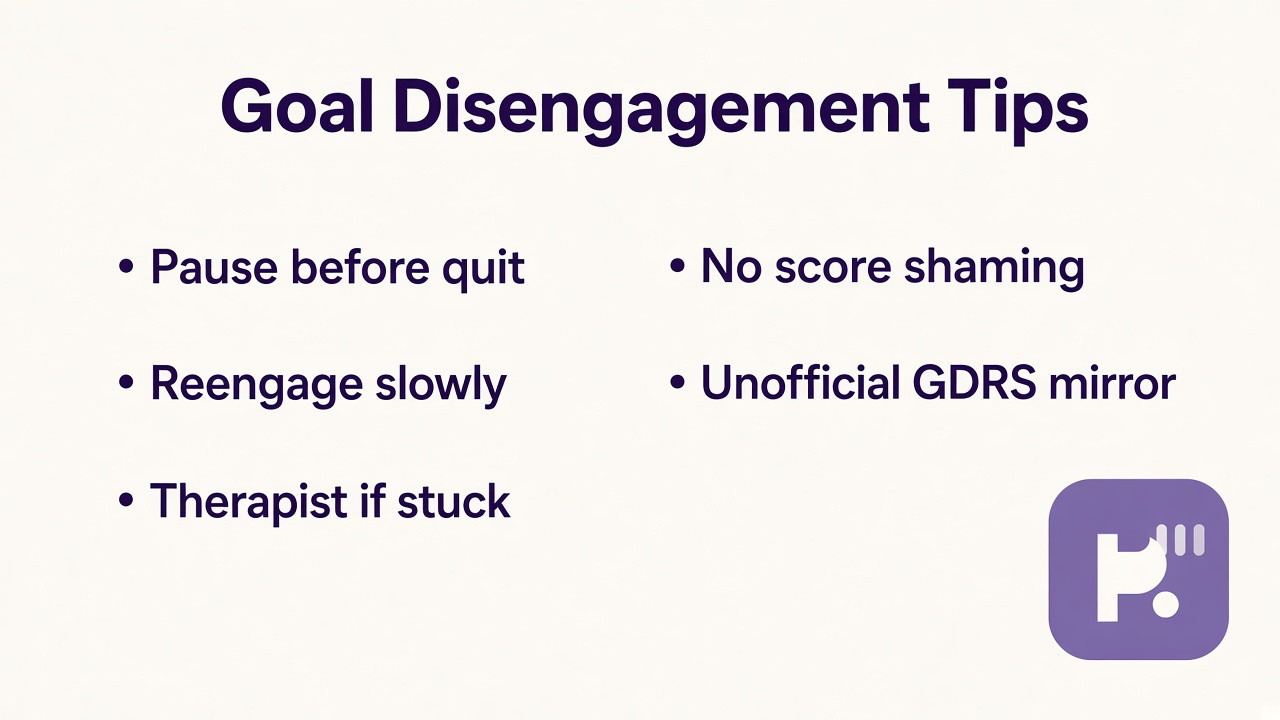
A quick takeaway graphic with topic tips (not your personal quiz scores). Start the quiz for your index, bands, and charts.
What this quiz can and cannot tell you
Can tell you
- Translate pivot language into one honest conversation about blocked goals and new aims
- Separate inspired reflection from published GDRS cosplay and therapy verdict dunk threads
- Notice quit-shame traps without public ranking campaigns
- Spark better counselor or mentor questions without claiming diagnostic authority
Cannot tell you
- Replace the published GDRS, licensed therapy, or career counseling
- Publish official psychometric reports or trademark published scale products
- Prove someone lacks character from one literacy quiz
- Give permission to shame friends who paused goals or to ignore crisis symptoms
Why goal pivot literacy needs release and recommitment before grit dunk threads
Career and wellness feeds praise endless grind while quietly shaming anyone who pauses a goal. Pivot literacy helps when readers release blocked aims kindly, name new values-linked targets, and keep hobby quiz bars away from published scale cosplay. It hurts when couch scores justify quit-shame memes or therapy verdicts on friends.
Dr. James Whitfield groups pivot habits four ways: goal disengagement literacy, goal reengagement literacy, flexible pursuit habits, and unofficial limits that keep this page distinct from published GDRS validation fantasies.
Readers mix bars after burnout, grief, or comparison seasons. Reverse items catch quit-shame, hidden small goals, and hustle dunk myths that should not inflate literacy scores.
Pair results with siblings instead of one grit story. Our burnout assessment test BAT-16 explores exhaustion frequency rather than pivot limits here. Our Gallup Q12 engagement survey stays on workplace survey rollout literacy rather than personal goal pivot stems on this page. Our am I overwhelmed quiz angles toward demand-capacity overwhelm rather than disengagement language here. Browse the personality and psychology hub for more reflection screeners. Share scores as private conversation starters with consent, not as orders about who lacks grit.
Retake after one honest season review. When unofficial limit bars stay high while reengagement bars rise, you may be separating curious study from published scale cosplay pressure.
| Test | Focus |
|---|---|
| Burnout assessment test BAT-16 | Exhaustion frequency rather than goal pivot literacy on this page |
| Gallup Q12 engagement survey | Workplace survey rollout literacy rather than personal goal pivot stems here |
| Am I overwhelmed quiz | Demand-capacity overwhelm rather than disengagement and reengagement framing on this screener |
Goal Disengagement And Reengagement Scale FAQ
What does the Goal Disengagement And Reengagement Scale measure?
It measures agreement with goal disengagement literacy, goal reengagement literacy, flexible pursuit habits, and unofficial GDRS limits. You get an index from 0 to 100 plus four bars. It reflects study habits, not published scale scores.
Is this the official published GDRS?
No. It is an unofficial literacy screener inspired by public motivation research themes, not the validated item bank.
Can this quiz replace therapy or career counseling?
No. Licensed clinicians and counselors use separate assessments, histories, and safety plans.
How is this different from burnout quizzes on this hub?
Burnout siblings focus on exhaustion frequency. This scale focuses on letting go, recommitting, and flexible pursuit literacy.
Who reviewed this quiz?
Dr. James Whitfield reviewed unofficial framing, quit-shame ethics tone, and result explanations. See our editorial policy for review standards.
Reviewed by
