What this teen gaming scale measures
This quiz does not diagnose gaming disorder, replace parental rules, or tell you that all gaming is harmful. Only a licensed clinician using interview tools, safety screening, and sometimes family input can evaluate clinical gaming concerns in minors. It measures how often you noticed gaming-related habits grouped four ways: preoccupation and craving when thoughts, notifications, or FOMO outran your plan; mood and withdrawal feelings when skipping play led to irritability or numbness instead of coping skills; school sleep and family conflict when marathons collided with homework, meals, curfew, or honest talks at home; and balance and adult help when you delayed timers, removed controls, refused referrals, or used support and hobbies when play felt out of control. You answer 22 how-often statements about the past two weeks, with reverse-worded items so one quiet weekend cannot hide frequent night sessions on school nights. Your responses also feed a second chart on closeness and trust habits, because secrecy and shame sometimes chase gaming when vulnerability feels unsafe at home. The total becomes an index from 0 to 100 where higher means more frequent reported strain on this unofficial screener, not proof you must quit every game forever.
Preoccupation and craving
How often games crowded thoughts, queues, or FOMO pulled you back.
Mood and withdrawal feelings
How often offline time brought irritability or numbness.
School, sleep, and family conflict
How often play collided with homework, rest, or house agreements.
Balance and adult help
How often timers, hobbies, and trusted adults showed up when strain spiked.
How it works
Answer 22 frequency items
Rate each statement from Never to Very often for the past two weeks. Tap Next after each answer.
Answers sort into four domains
Each answer feeds one of four pattern groups, and every item also feeds a closeness and trust layer.
See your index and charts
You get a 0 to 100 index, a band, and two bar charts you can bring to a parent, counselor, or clinician.
Take the Gaming Addiction Scales for Adolescents (GASA Inspired)
Answer 22 short statements to see your teen gaming strain index, four domain bars, and a closeness and trust chart.
What your result means
Your index is the average of all 22 answers, scaled from 0 to 100, with reverse-worded items flipped first. Higher means more frequent reported strain on this unofficial screener. Read preoccupation and balance-and-adult-help bars together before the total, because one balanced Saturday does not cancel school-night marathons.
| Band | Index range | Typical reading |
|---|---|---|
| Lower reported teen gaming strain | 0 to 35 | Fewer frequent preoccupation, mood, conflict, or help-avoidance items in the past two weeks. |
| Mixed reported teen gaming strain | 36 to 65 | Some balanced days alongside preoccupation, mood, conflict, or skipped adult help on others. |
| Higher reported teen gaming strain | 66 to 100 | Frequent preoccupation, sleep or school conflict, or missing balance habits; support may help. |
Tips at a glance
A quick takeaway graphic with topic tips (not your personal quiz scores). Start the quiz for your index, bands, and charts.
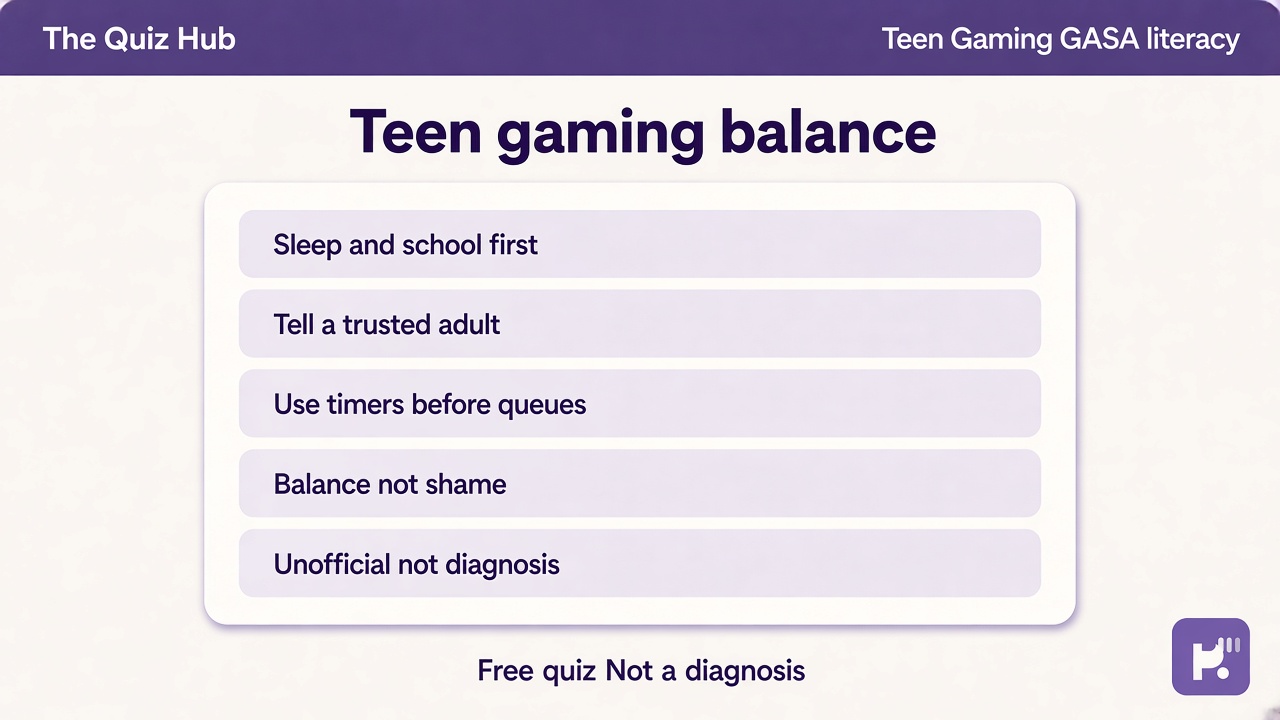
What this quiz can and cannot tell you
Can tell you
- Organize past-two-week gaming habits in plain language without shame labels
- Highlight when preoccupation, sleep conflict, or help-avoidance bars run high
- Support early conversations with parents, counselors, or clinicians
- Offer a baseline if you retake after one limit or support step
Cannot tell you
- Diagnose gaming disorder or substitute for validated GASA scoring
- Replace emergency care for suicidal crisis or abuse investigations
- Prove all gaming is safe based on one lower score
- Tell parents or schools what to do from self-report alone without context
Teen gaming balance, school, sleep, and when to ask for help
Search traffic around adolescent gaming addiction scales usually wants two things: a quick read on whether play is crowding out sleep and school, and a path to help that does not start with shame or device confiscation cosplay. Those goals help when teens and caring adults treat scores as patterns to discuss, not as permanent labels. They hurt when people treat bars like proof they are irredeemable, or when pages skip trusted-adult messaging while nudging endless grind.
Dr. Elena Vasquez reviews YMYL teen gaming screeners with a simple split: name frequency patterns honestly and point to real support. Preoccupation and craving tracks whether thoughts, daily rewards, or ranked FOMO outran the plan you set before a session. Mood and withdrawal feelings tracks irritability or numbness when offline instead of movement, sleep, or honest talks. School sleep and family conflict tracks homework, curfew, and hidden night sessions, because academic and rest harm often arrives before anyone says gaming disorder aloud. Balance and adult help tracks whether you reached for timers, hobbies, counselors, or guardians when strain spiked instead of white-knuckling alone.
This page is unofficial. It is inspired by the idea behind GASA style teen screens without cloning the published Game Addiction Scale for Adolescents item bank or scoring rules. Validated tools use fixed thresholds and trained administrators; this reflection screener uses four domain bars plus a total index so you can describe examples to intake. Reverse items catch sloppy myth agreement: believing only pros need balance, that teens never improve, or that one good weekend erases school-night marathons should not inflate bars meant to track harmful frequency.
Pair results with siblings on this hub instead of debating scores alone. Our am I addicted to video games quiz sibling uses separate frequency stems when you want that lane. Our gamertag generator quiz stays on nickname fun when rename banter fits better than strain literacy. Our gambling questionnaire for adolescents SOGS-RA inspired covers betting overlap when loot boxes and skins blur lines. Browse the mental health and clinical hub for more YMYL screeners. Caption shares as patterns, not punchlines, and skip shaming friends who game socially.
Balance is harm reduction, not a moral exam. Write stop times before you queue, keep one offline hobby visible on your desk, and treat battle-pass FOMO as design meant to pull you back. If mood collapses or you think about harming yourself, call or text 988 in the US before you retake another quiz. Retake after two weeks of one concrete change, such as a bedtime buffer, one counselor visit, or one honest family talk, and compare bars rather than chasing a perfect zero.
| Test | Focus |
|---|---|
| Am I addicted to video games quiz | Broader gaming strain frequency stems rather than GASA-inspired teen grouping here |
| Gamertag generator quiz | Nickname creativity and online kindness rather than school and sleep conflict on this page |
| Gambling questionnaire for adolescents SOGS-RA inspired | Teen betting literacy when skins and loot boxes overlap with gambling harm |
Gaming Addiction Scales for Adolescents (GASA Inspired) FAQ
What does this teen gaming scale measure?
It measures how often you noticed gaming-related habits in four areas during the past two weeks: preoccupation and craving, mood and withdrawal feelings, school sleep and family conflict, and balance or adult help. You get an index from 0 to 100 plus four domain bars. It reports self-reported frequency on an unofficial screener, not a clinical diagnosis.
Is this the official GASA?
No. GASA is a published instrument with fixed scoring. This quiz is an unofficial reflection tool with similar themes, crisis guidance, and domain bars for education, not a licensed clone.
Can this quiz diagnose gaming disorder in teens?
No. Only a licensed clinician can diagnose gaming disorder after a full evaluation that may include family input. Use this tool to notice patterns and decide whether to tell a trusted adult or seek counseling.
What should I do if my score is high?
Tell a parent or school counselor, consider counseling or structured limits, and bring this snapshot to a clinician. Call or text 988 (US) if you feel hopeless, unsafe, or in emotional crisis.
Who reviewed this quiz?
Dr. Elena Vasquez, PhD reviewed the YMYL framing, crisis resources, and non-diagnostic limits. See our editorial policy for review standards.
Reviewed by