What Functional Role Consistency measures
This quiz does not file HR complaints, certify promotions, or replace manager sign-off on job descriptions. It measures how much you agree with role clarity habit statements grouped four ways: role definition clarity about core tasks, decision rights, and handoffs without treating every ping as official duty; role conflict awareness about competing managers, clients, and teams before silent absorption; alignment and feedback habits about priority resets, scope notes, and invited feedback when roles feel fuzzy; and quiz not HR credential limits about playful reflection separate from appraisal cosplay and coworker ranking polls from bar height. You rate 22 statements from strongly disagree to strongly agree, with reverse-worded traps so one lucky guess cannot inflate every bar. Your answers also feed a second chart on closeness and trust habits, because work stress sometimes spills into friendship when boundary talks feel personal. The total becomes an index from 0 to 100 where higher means more reported role clarity habits on this screener, not proof you should rewrite org charts.
Role definition clarity
Core tasks, handoffs, and scope before title prestige.
Role conflict awareness
Noticing clashing demands before silent overload.
Alignment and feedback habits
Priority checks, scope notes, and invited feedback.
Quiz not HR credential
Reflection only; HR files and hires live elsewhere.
How it works
Answer 22 agreement items
Rate each statement from Strongly disagree to Strongly agree. Tap Next after each answer.
Answers sort into four domains
Each answer feeds one of four role clarity groups, and every item also feeds a closeness and trust layer.
See your index and charts
You get a 0 to 100 index, a band, four domain bars, and a second chart for intimacy habits.
Take the Functional Role Consistency
Answer 22 short statements to see your functional role consistency index, four domain bars, and a closeness and trust chart.
What your result means
Your index is the average of all 22 answers, scaled from 0 to 100, with reverse-worded items flipped first. Read quiz-not-HR credential bars together with conflict awareness before you treat a high definition score as permission to judge teammates. Cozy reflection supports kinder boundary talk; managers and HR still own official role files.
| Band | Index range | Typical reading |
|---|---|---|
| Building role clarity habits | 0 to 35 | Fewer agreed habits on role definition, conflict awareness, alignment checks, or unofficial HR limits on this screener. |
| Mixed role clarity habits | 36 to 65 | Solid definition awareness with conflict silence, alignment slips, title-equals-duty traps, or HR ranking myths. |
| Strong role clarity habits | 66 to 100 | Frequent agreement with definition, conflict, alignment, and unofficial limits; still reflection only. |
Tips at a glance
A quick takeaway graphic with topic tips (not your personal quiz scores). Start the quiz for your index, bands, and charts.
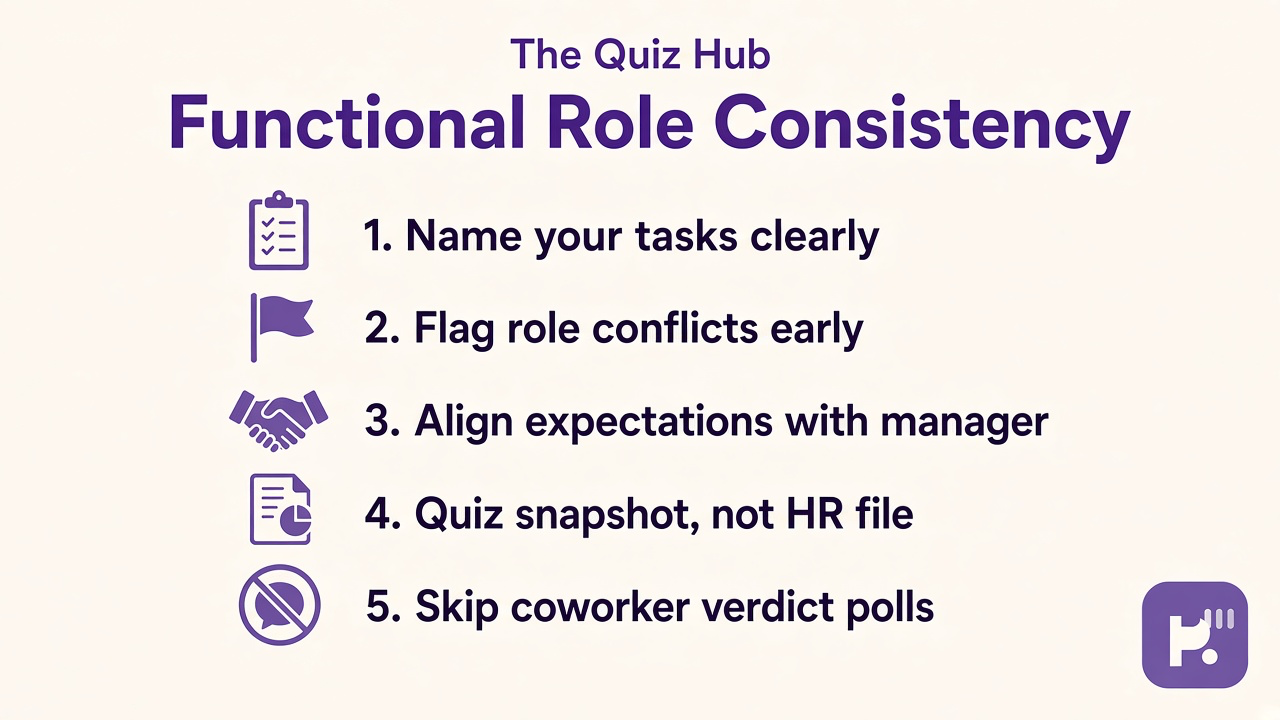
What this quiz can and cannot tell you
Can tell you
- Highlight definition, conflict, and alignment habits worth revisiting before you say yes to every ping
- Separate unofficial reflection from appraisal scores and promotion myths
- Encourage priority questions and scope notes without public shame spirals
- Spark better conversations about handoffs without claiming legal or HR advice authority
Cannot tell you
- Replace official job descriptions, union contracts, performance reviews, or hiring panels
- Prove a coworker deserves termination or exile from one couch screener
- Substitute for executive coaching, therapists, or legal counsel when harm appears
- Predict promotion timing or declare who should lead every team from trivia bars alone
Why role clarity quizzes need conflict checks and HR separation
Search traffic around functional role consistency usually wants a light mirror after a reorg, a new title, or a week when every Slack ping felt like a performance test, not an HR clearance letter or a firing poll. Those goals help when readers name tasks, notice conflicts, and keep study scores away from coworker dunk threads. They hurt when literacy bars become proof you may rewrite someone else job, or when helpful instincts skip priority talks because a couch screener looked tall. Role clarity play works best when it names alignment habits and unofficial limits together while staying distinct from feedback style and career adapt siblings.
Dr. Priya Sharma reviews personality psychology screeners with a simple split: reward honest boundary vocabulary and honest limits on HR substitution myths at the same time. Role definition clarity tracks core tasks and handoffs without title prestige traps. Role conflict awareness tracks clashing demands before silent overload. Alignment and feedback habits tracks priority resets and scope notes. Quiz not HR credential keeps screeners separate from appraisal files, promotion ads, and ranking fantasies.
Real workers mix bars. You might score high on definition while keeping conflict items moderate, which often describes clear task lists before escalation habits land. You might score high clarity with softer HR-limit items, which can mean good scope talk yet occasional ranking meme shares. Reverse items catch overconfidence: senior title equals every favor, conflict never happens, feedback is insulting, teammate job rewrites, or automatic promotion myths should not inflate bars meant to track layered reflection manners.
Pair results with siblings instead of forcing one org story. Our feedback style quiz explores giving-notes habits with separate stems rather than role definition framing on this page. Our career adapt abilities scale CAAS stays on adaptability inventory habits rather than unofficial role clarity limits here. Our from author John P Campbell covers job performance model literacy rather than day-to-day scope ping habits on this screener. Browse the personality and psychology hub for more reflection screeners. Share scores as private notes with consent, not as orders about who lacks professionalism.
Reorgs and sprint plans rotate faster than updated job posts on internal wikis. A conflict bar might dip after one chaotic week while definition stays high until you retake calmly. When you share results, say unofficial role clarity habits. When you borrow tips, credit managers who welcome priority questions and teammates who co-write handoffs. Retake after one alignment chat and watch whether HR-limit bars stay high even if definition enthusiasm rises, which often means you separated cozy study joy from appraisal substitution pressure.
| Test | Focus |
|---|---|
| Feedback style quiz | Giving feedback habits rather than role definition and conflict awareness on this page |
| Career adapt abilities scale CAAS | Career adaptability inventory rather than day-to-day scope clarity habits here |
| From author John P Campbell | Job performance model literacy rather than ping and handoff habits on this screener |
Functional Role Consistency FAQ
What does Functional Role Consistency measure?
It measures how much you agree with statements about role definition clarity, role conflict awareness, alignment and feedback habits, and quiz-not-HR credential limits. You get an index from 0 to 100 plus four bars. It reflects self-rated work habits on this screener, not official job descriptions or hiring decisions.
Is this an HR or performance review test?
No. This page focuses on reflection habits. Employers, HR teams, and managers use separate official processes for reviews and job files.
How is this different from the feedback style quiz?
This quiz centers scope, conflict, and alignment habits. The feedback style quiz sibling uses separate stems aimed at giving notes etiquette rather than role boundary vocabulary here.
Can I use my score to rank coworkers?
No. Quiz not HR credential items reject ranking myths. High bars describe habits you endorsed here, not permission to shame teammates or claim promotion authority.
Who reviewed this quiz?
Dr. Priya Sharma reviewed the study play framing, role clarity not HR separation, and result explanations. See our editorial policy for review standards.
Reviewed by