What Feedback Style Quiz measures
This quiz does not file HR complaints, certify managers, or score your moral worth as a friend. It measures how much you agree with giving-feedback habit statements grouped four ways: kind clear delivery about specific behavior-impact-request wording without insults or vague guilt; consent to coach about asking whether someone wants advice, brainstorming, or listening; private before public about offline repair before quote-tweet corrections; and quiz not HR limits about playful captions, practice prompts, and refusing viral communication rankings from bar height. You rate 22 statements from strongly disagree to strongly agree, with reverse-worded traps so one lucky guess cannot inflate every bar. Your answers also feed a second chart on closeness and trust habits, because criticism fear sometimes blocks honest repair conversations. The total becomes an index from 0 to 100 where higher means more reported feedback style literacy on this screener, not proof you should correct strangers who never opted in.
Kind clear delivery
Behavior, impact, and request without insults or guilt trips.
Consent to coach
Ask before advice; respect not right now.
Private before public
Direct notes before pile-ons and screenshot roasts.
Quiz not HR limits
Unofficial reflection; performance files live elsewhere.
How it works
Answer 22 agreement items
Rate each statement from Strongly disagree to Strongly agree. Tap Next after each answer.
Answers sort into four domains
Each answer feeds one of four feedback habit groups, and every item also feeds a closeness and trust layer.
See your index and charts
You get a 0 to 100 index, a band, four domain bars, and a second chart for intimacy habits.
Take the Feedback Style Quiz
Answer 22 short statements to see your feedback style literacy index, four domain bars, and a closeness and trust chart.
What your result means
Your index is the average of all 22 answers, scaled from 0 to 100, with reverse-worded items flipped first. Read quiz-not-HR bars together with consent-to-coach before you treat a high score as manager authority. Playful reflection supports kinder notes; formal HR and licensed mediators still own documented performance and safety processes.
| Band | Index range | Typical reading |
|---|---|---|
| Building feedback style literacy | 0 to 35 | Fewer agreed habits on kind clarity, consent to coach, private-first norms, or quiz-not-HR limits on this screener. |
| Mixed feedback style literacy | 36 to 65 | Solid clarity in some domains with sarcasm-as-honesty myths, unsolicited coaching, public pile-ons, or manager cosplay from bar height. |
| Strong feedback style literacy | 66 to 100 | Frequent agreement with kind clarity, consent, privacy, and unofficial limits; still reflection only. |
Tips at a glance
A quick takeaway graphic with topic tips (not your personal quiz scores). Start the quiz for your index, bands, and charts.
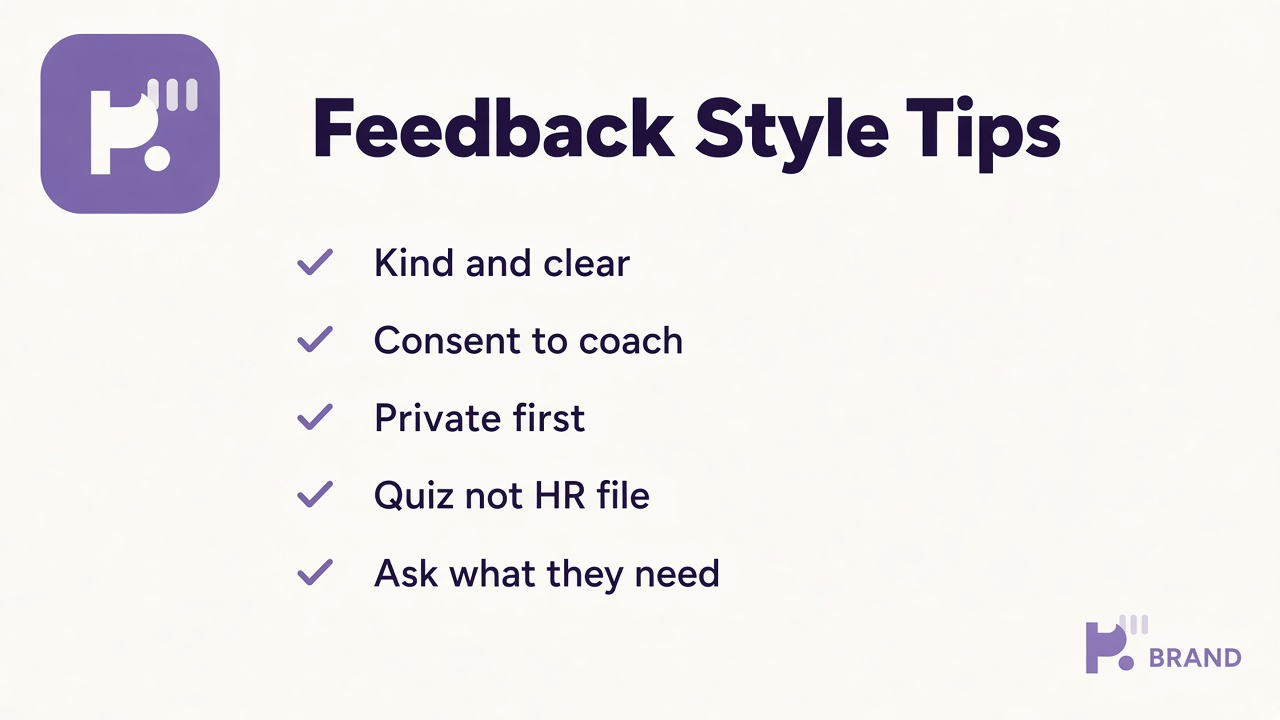
What this quiz can and cannot tell you
Can tell you
- Highlight kind specificity, consent, and private-first habits worth revisiting before the next critique
- Separate unofficial reflection from HR files or viral worst-communicator rankings
- Encourage ask-before-advice norms in friend groups and teams
- Spark better repair conversations without claiming coaching credentials
Cannot tell you
- Replace HR investigations, union processes, or licensed mediation for harassment claims
- Prove management readiness, promotion fitness, or relationship worth from one couch screener
- Give permission to publicly roast coworkers, relatives, or strangers from bar height
- Diagnose social anxiety, ADHD, or personality disorders from feedback habit bars alone
Why giving-feedback mirrors need consent and unofficial framing
Search traffic around feedback style quizzes usually wants two things: a quick label for how direct they are, and shareable scores for group chats. Those goals help when readers name behavior specifically, ask before coaching, and keep sensitive notes private. They hurt when mirror bars become HR cosplay, or when public call-outs get framed as honesty. Feedback literacy works best when it names clarity, consent, privacy, and unofficial limits together.
Dr. Priya Sharma reviews personality psychology communication screeners with a simple split: reward honest delivery habits and honest limits on unofficial advice at the same time. Kind clear delivery tracks behavior-impact-request wording without insults. Consent to coach tracks ask-before-advice and respect for not right now. Private before public tracks offline repair before audience corrections. Quiz not HR keeps screeners separate from performance files and viral ranking games.
Real players mix bars. You might score high on kind delivery while keeping private-first moderate, which often describes clear writers who still vent in public threads. You might score high consent with softer limit items, which can mean you ask friends yet still post mirrors like communication diplomas. Reverse items catch overconfidence: sarcasm as toughening-up, vague guilt trips, unsolicited redesigns, public call-outs for speed, typo screenshot roasts, or perfect scores licensing performance warnings should not inflate bars meant to track kind feedback habits.
Pair results with siblings on this hub instead of forcing one communication story. Our assertiveness quiz explores boundary and voice language with stems separate from giving-feedback consent on this page. Our confidence test widens to self-trust habits when labels beyond coaching humility matter. Our emotional intelligence test (EIT) angles toward attunement literacy when room-read skills ride beside critique delivery. Browse the personality and psychology hub for more light screeners. Caption shares as unofficial reflection and skip sentencing strangers who never asked for your notes.
Seasons and stressors rotate faster than meeting calendars. A private-first bar might dip after one viral dunk week while kind delivery stays steady until you retake calmly. When you share results, say unofficial feedback mirror. When you borrow tips, credit friends who asked before advising and managers who modeled repair without shame. Retake after one conflict-heavy month and watch whether consent bars stay high even if clarity rises, which often means you separated playful reflection from actual HR authority.
| Test | Focus |
|---|---|
| Assertiveness quiz | Boundary and voice language rather than giving-feedback consent and privacy stems on this page |
| Confidence test | Self-trust habits rather than kind specificity and quiz-not-HR limits here |
| Emotional intelligence test (EIT) | Attunement literacy rather than private-before-public coaching norms on this screener |
Feedback Style Quiz FAQ
What does Feedback Style Quiz measure?
It measures how much you agree with statements about kind clear delivery, consent to coach, private before public, and quiz-not-HR limits. You get an index from 0 to 100 plus four bars. It describes self-reported giving-feedback habits on this screener, not HR authority.
Is this an HR assessment or 360 review?
No. Quiz-not-HR items keep the page unofficial. Employers and licensed mediators own formal performance processes; this screener is couch reflection and habit prompts only.
Does a high score mean I should correct coworkers publicly?
No. Private-first and consent items reject public pile-on myths. High bars mean you related to habit statements here, not that you hold override power over someone else improvement timeline.
How is this different from criticism sensitivity tests?
This page focuses on habits when you give feedback, not how hurt you feel when you receive it. Clinical criticism-sensitivity screeners on other hubs use separate stem banks and frequency scales.
Who reviewed this quiz?
Dr. Priya Sharma reviewed the unofficial framing, consent tone, private-first limits, and quiz-not-HR boundaries. See our editorial policy for review standards.
Reviewed by