What the From Author Isabel Briggs Myers quiz measures
This quiz does not administer the Myers-Briggs Type Indicator, certify Myers-Briggs company products, or predict job fit from one session. It measures how much you agree with unofficial Myers-literacy statements grouped four ways: MBTI history literacy about Katharine Briggs, Isabel Briggs Myers, Jung-influenced themes, and research debate without trademark endorsement cosplay; four-dichotomy vocabulary literacy about E-I, S-N, T-F, and J-P preference language without destiny myths or mbti-test cosplay; type humility literacy about consent, anti-bullying, cultural narrowness updates, and zero hobby diagnosis from fan bars; and unofficial Myers limits about Isabel Briggs Myers-inspired unofficial framing, refusal to treat agree bars as licensed MBTI scores, separation from mbti-test and determining-your-mbti-type frequency siblings, consented sharing, and zero Myers-Briggs company marketing claims. You rate 22 statements from strongly disagree to strongly agree, with reverse-worded items flipped first. Your answers also feed a second chart on closeness and trust habits, because type shame sometimes blocks asking for help. The total becomes an index from 0 to 100 where higher means more reported literacy habits on this screener, not proof you hold official type credentials.
MBTI history literacy
Briggs-Myers origins without company endorsement.
Four-dichotomy vocabulary literacy
Preference language without destiny or hiring cosplay.
Type humility literacy
Consent and anti-bullying; types are not verdicts.
Unofficial Myers limits
Educational reflection; not mbti-test inventory files.
How it works
Answer 22 agreement items
Rate each statement from Strongly disagree to Strongly agree. Tap Next after each answer.
Answers sort into four domains
Each answer feeds one of four Myers literacy groups, and every item also feeds a closeness and trust layer.
See your index and charts
You get a 0 to 100 index, a band, four domain bars, and a second chart for intimacy habits.
Take the From Author Isabel Briggs Myers
Answer 22 short statements to see your Myers MBTI literacy index, four domain bars, and a closeness and trust chart.
What your result means
Your index is the average of all 22 answers, scaled from 0 to 100, with reverse-worded items flipped first. Read humility bars together with history and dichotomy scores before you treat a high total as proof you need no support. Educational reflection supports kinder type talk; licensed clinicians, career counselors, and HR still matter when bullying or discrimination feels active.
| Band | Index range | Typical reading |
|---|---|---|
| Building Myers MBTI literacy | 0 to 35 | Fewer agreed habits on MBTI history, dichotomy vocabulary, type humility, or unofficial Myers limits on this screener. |
| Mixed Myers MBTI literacy | 36 to 65 | Solid vocabulary in some domains with dunk slips, company endorsement myths, hiring gatekeeping, or inventory confusion corners. |
| Strong Myers MBTI literacy | 66 to 100 | Frequent agreement with history, dichotomy, humility, and unofficial limits; still not Myers-Briggs company scores or bullying license. |
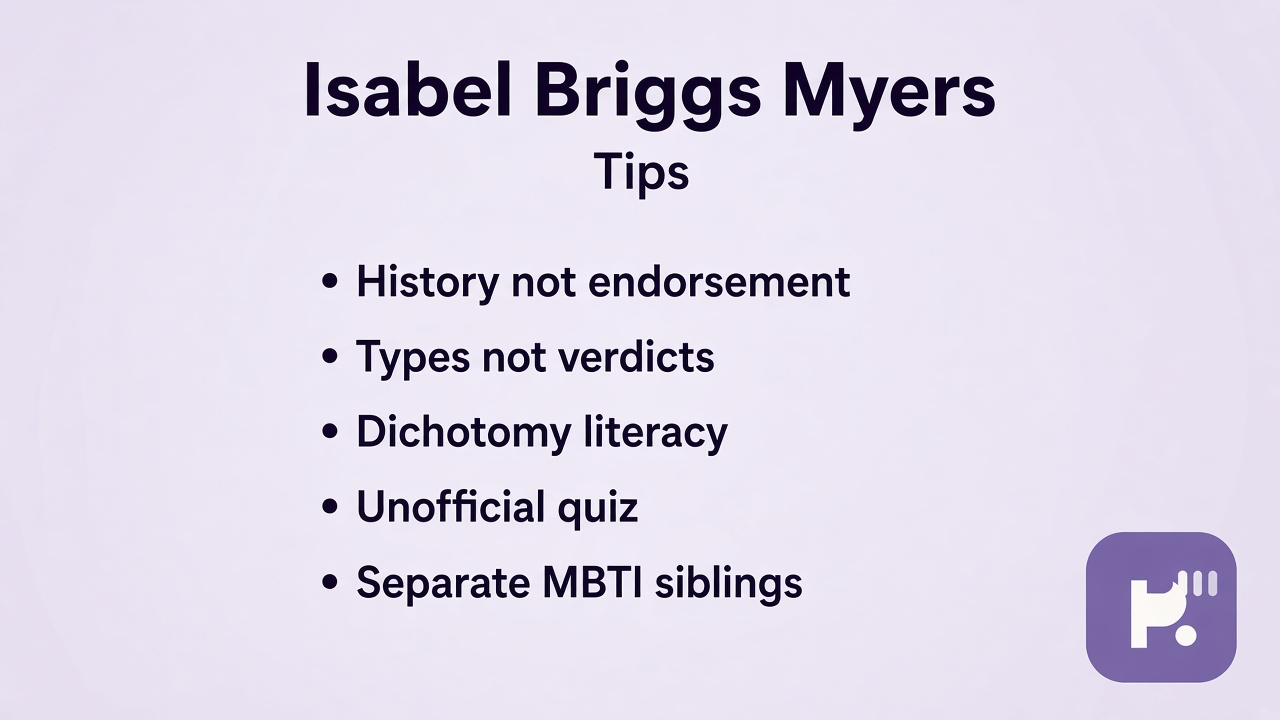
Tips at a glance
A quick takeaway graphic with topic tips (not your personal quiz scores). Start the quiz for your index, bands, and charts.
What this quiz can and cannot tell you
Can tell you
- Translate MBTI history and dichotomy vocabulary into one honest conversation starter
- Separate Isabel Briggs Myers author literacy from mbti-test inventory siblings on this hub
- Question memes that turn four-letter codes into hiring verdicts or public dunk scripts
- Encourage preference curiosity with consent instead of type roast threads
Cannot tell you
- Endorse or certify Myers-Briggs company products or trademarked assessments
- Prove someone is unhireable or inferior from one agree screener
- Replace psychologists, career counselors, or HR when harassment uses type language
- Copy mbti-test or determining-your-mbti-type frequency stems on this author page
Why Myers author quizzes need history literacy without Myers-Briggs company endorsement
Search traffic around Isabel Briggs Myers often follows type podcasts and career threads citing four-letter codes while social feeds collapse history into brand ads or bullying scripts. Those goals help when readers place Briggs-Myers work in context, name dichotomies as preferences, and refuse screenshot verdicts. They hurt when literacy bars become proof someone may gatekeep jobs online, or when hobby totals replace counselors when harm is already present. Myers literacy works best when it pairs history vocabulary with unofficial limits and stays distinct from mbti-test inventory siblings on this hub.
Dr. Priya Sharma reviews personality screeners with a simple split: reward honest history and dichotomy language and honest refusal of company endorsement cosplay and type dunk memes at the same time. MBTI history literacy tracks Katharine Briggs, Isabel Briggs Myers, and research debate without trademark marketing. Four-dichotomy vocabulary literacy tracks E-I, S-N, T-F, and J-P language without lazy-versus-controlling myths. Type humility literacy tracks consent and anti-bullying without hobby diagnosis. Unofficial Myers limits track unofficial framing, sibling separation, and humility about licensed batteries.
Real people mix bars. You might score high on dichotomy vocabulary while keeping humility moderate, which often describes readers who know the letters yet still share dunk memes. You might score high literacy with softer limit items, which can mean you avoid public polls yet still treat quiz totals like official scores. Reverse items catch overconfidence: mandatory company endorsement, job gatekeeping from letters, application shortcuts, or mbti-test stem copying should not inflate scores meant to track layered habits.
Pair results with siblings on this hub instead of forcing one type story. Our MBTI test uses separate dichotomy frequency inventory stems rather than Isabel Briggs Myers author-literacy framing on this page. Our determining your MBTI type explores another MBTI-style path with its own stems rather than unofficial author limits here. Our Big Five personality test stays on five-factor trait language when continuous scores help more than four-letter shorthand. Browse the personality and psychology hub for more reflection screeners. Share scores as private conversation starters with consent, not as orders about who lacks types.
Hiring seasons and group chats move faster than one calm preference question on a sticky note. A humility bar might dip after one dunk-heavy week while limit recall stays high until you retake gently. When you share results, say unofficial literacy habits. When you borrow tips, credit Briggs-Myers history summaries where they helped you and people who deserve privacy off-screen. Retake after one learning month and watch whether unofficial limit bars stay high even if dichotomy items rise, which often means you separated curious reading from MBTI inventory cosplay pressure.
| Test | Focus |
|---|---|
| MBTI test | Separate dichotomy frequency inventory stems rather than Isabel Briggs Myers author-literacy framing on this page |
| Determining your MBTI type | Another MBTI-style self-report path with its own stems rather than unofficial Myers history limits here |
| Big Five personality test | Five-factor trait language rather than Briggs-Myers history and unofficial limit vocabulary on this screener |
From Author Isabel Briggs Myers FAQ
What does the From Author Isabel Briggs Myers quiz measure?
It measures how much you agree with statements about MBTI history literacy, four-dichotomy vocabulary literacy, type humility literacy, and unofficial Myers limits. You get an index from 0 to 100 plus four bars. It reflects self-reported awareness habits on this screener, not Myers-Briggs company assessment scores.
Is this quiz endorsed by The Myers-Briggs Company?
No. We are not affiliated with The Myers-Briggs Company or its trademarks. This page offers informal literacy inspired by public summaries of Briggs-Myers type history themes.
How is this different from the MBTI test on this site?
The MBTI test sibling uses separate dichotomy frequency inventory stems with clarity-style results. This author page uses agree literacy items with zero shared wording from that inventory bank.
Can type literacy justify bullying coworkers online?
No. Humility and limit items reject four-letter dunk memes, job gatekeeping, and public diagnosis without consent.
Who reviewed this quiz?
Dr. Priya Sharma reviewed the unofficial framing, not-company-endorsement separation, limit tone, and result explanations. See our editorial policy for review standards.
Reviewed by