What the From Author Irving L Janis quiz measures
This quiz does not certify policy compliance, predict reorg outcomes, or declare which teammate is a mindguard from one session. It measures how much you agree with unofficial Janis-literacy statements grouped four ways: groupthink vocabulary literacy about illusion of unanimity, self-censorship, mindguards, and collective rationalization without casual insult cosplay; unanimous pressure literacy about rushed consensus, polite silence, structured dissent, and loyalty-test pressure without harmony-over-safety myths; meeting decision humility about refusing weaponized labels, facilitation pairing, face-saving updates, and zero public accusation tournaments; and unofficial Janis limits about inspired framing, refusal to treat agree bars as audit scores, separation from cognitive-bias frequency siblings, consented sharing, and zero screenshot firing demands. You rate 22 statements from strongly disagree to strongly agree, with reverse-worded items flipped first. Your answers also feed a second chart on closeness and trust habits, because meeting shame sometimes blocks asking for help. The total becomes an index from 0 to 100 where higher means more reported literacy habits on this screener, not proof you are facilitation-certified forever.
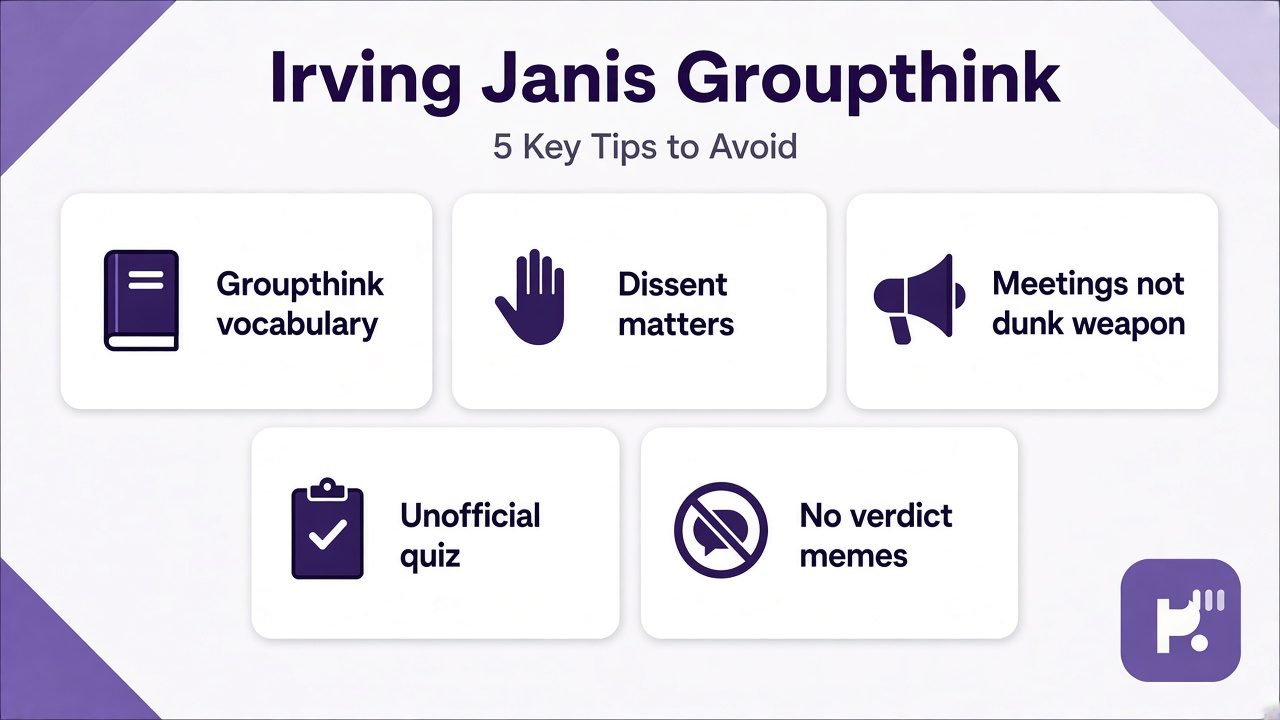
Groupthink vocabulary literacy
Janis symptom language without meeting insult cosplay.
Unanimous pressure literacy
Dissent curiosity without loyalty-test myths.
Meeting decision humility
Own your influence; labels are not weapons.
Unofficial Janis limits
Educational reflection; not policy audit or dunk memes.
How it works
Answer 22 agreement items
Rate each statement from Strongly disagree to Strongly agree. Tap Next after each answer.
Answers sort into four domains
Each answer feeds one of four Janis literacy groups, and every item also feeds a closeness and trust layer.
See your index and charts
You get a 0 to 100 index, a band, four domain bars, and a second chart for intimacy habits.
Take the From Author Irving L Janis
Answer 22 short statements to see your Janis groupthink literacy index, four domain bars, and a closeness and trust chart.
What your result means
Your index is the average of all 22 answers, scaled from 0 to 100, with reverse-worded items flipped first. Read humility bars together with vocabulary and pressure scores before you treat a high total as proof you need no facilitation support. Educational reflection supports kinder meeting talk; mediators, HR, and licensed clinicians still matter when retaliation or fear feels unmanageable.
| Band | Index range | Typical reading |
|---|---|---|
| Building Janis groupthink literacy | 0 to 35 | Fewer agreed habits on groupthink vocabulary, unanimous pressure themes, meeting humility, or unofficial Janis limits on this screener. |
| Mixed Janis groupthink literacy | 36 to 65 | Solid vocabulary in some domains with dunk slips, dissent shame, mindguard insults, or policy verdict corners. |
| Strong Janis groupthink literacy | 66 to 100 | Frequent agreement with vocabulary, pressure, humility, and unofficial limits; still not policy audits or meeting judge license. |
Tips at a glance
A quick takeaway graphic with topic tips (not your personal quiz scores). Start the quiz for your index, bands, and charts.
What this quiz can and cannot tell you
Can tell you
- Translate groupthink vocabulary before the next consensus rush spiral
- Separate Irving L. Janis author literacy from cognitive-bias frequency siblings on this hub
- Question content that treats every tense meeting as cult proof from one bar
- Encourage premortem conversations with consent instead of public dunk threads
Cannot tell you
- Certify policy audits or licensed organizational assessment scores
- Prove a coworker must be fired from one agree screener
- Excuse harassment by calling it groupthink science on this page
- Replace mediators, ombuds offices, or therapy when fear blocks speaking up
Why Janis groupthink quizzes need vocabulary literacy without meeting dunk weapons
Search traffic around Irving L. Janis often follows leadership syllabi citing groupthink while social feeds collapse the term into a dunk button on every awkward stand-up. Those goals help when readers name illusion of unanimity, self-censorship, and pressure toward conformity as warning patterns. They hurt when literacy bars become proof someone may roast dissenters online, or when hobby totals replace mediators when fear is already present. Janis literacy works best when it pairs symptom vocabulary with unofficial limits and stays distinct from cognitive-bias frequency siblings on this hub.
Dr. Priya Sharma reviews organizational screeners with a simple split: reward honest groupthink and pressure language and honest refusal of meeting weapon memes and public verdict cosplay at the same time. Groupthink vocabulary literacy tracks classic Janis symptom themes without casual insults. Unanimous pressure literacy tracks rushed consensus and structured dissent without loyalty-test myths. Meeting decision humility tracks facilitation pairing and accountability without screenshot tournaments. Unofficial Janis limits track framing, mediator lookup prompts, and consented sharing when shame blocks help.
Real people mix bars. You might score high on vocabulary while keeping humility moderate, which often describes readers who know the word groupthink yet still forward accusation threads. You might score high literacy with softer limit items, which can mean you avoid public polls yet still treat quiz totals like reorg files. Reverse items catch overconfidence: skipping listening, banning dissent, cult insults for coworkers, or bar-height firing demands should not inflate scores meant to track layered habits.
Pair results with siblings on this hub instead of forcing one meeting story. Our cognitive biases in online communication sibling explores separate groupthink-chat frequency stems rather than Irving L. Janis author-literacy framing on this page. Our from author Henri Tajfel stays on social identity literacy with its own stems rather than unanimous pressure limits here. Our from author Amy C Edmondson uses psychological safety vocabulary when team fear themes help more than Janis symptom lists. Browse the personality and psychology hub for more reflection screeners. Share scores as private conversation starters with consent, not as orders about who is cult-like.
Reorg seasons and group chats move faster than one calm premortem question on a sticky note. A pressure bar might dip after one loyalty-test week while limit recall stays high until you retake gently. When you share results, say unofficial literacy habits. When you borrow tips, credit Janis summaries where they helped you and people who deserve privacy off-screen. Retake after one project cycle and watch whether unofficial limit bars stay high even if vocabulary items rise, which often means you separated curious study from meeting dunk pressure.
| Test | Focus |
|---|---|
| Cognitive biases in online communication | Separate online groupthink frequency stems rather than Janis author-literacy framing on this page |
| From author Henri Tajfel | Social identity literacy rather than unanimous pressure and meeting humility limits here |
| From author Amy C Edmondson | Team psychological safety literacy rather than unofficial Janis limits on this screener |
From Author Irving L Janis FAQ
What does the From Author Irving L Janis quiz measure?
It measures how much you agree with statements about groupthink vocabulary literacy, unanimous pressure literacy, meeting decision humility, and unofficial Janis limits. You get an index from 0 to 100 plus four bars. It reflects self-reported awareness habits on this screener, not certified policy audit scores.
Does a high score prove my team has groupthink?
No. Vocabulary items teach public-summary symptom language. Humility items stress that labels are not weapons and that facilitation still matters. One screener cannot audit your organization.
Is this the same as the cognitive biases quiz on this site?
No. This page focuses on Irving L. Janis author-literacy themes and refusal of meeting dunk memes. The cognitive biases sibling uses separate frequency stems including an online groupthink-chat domain.
Can I use groupthink language to win arguments in Slack?
No. Humility and limit items reject public accusation tournaments and screenshot verdict cosplay. Use literacy to invite safer dissent, not to shame teammates.
Who reviewed this quiz?
Dr. Priya Sharma reviewed the unofficial framing, groupthink not dunk separation, limit tone, and result explanations. See our editorial policy for review standards.
Reviewed by