What the From Author Brad J Bushman quiz measures
This quiz does not prove a game caused a crime, deliver forensic violence risk scores, or declare whether someone should be banned from hobbies from one session. It measures how much you agree with unofficial media-violence-literacy statements grouped four ways: General Aggression Model literacy about arousal, hostile cognition, and learning pathways without destiny narratives for every player or catharsis myths that erase support needs; media effect-size humility about small meta-analytic averages, confidence intervals, multi-factor harm contexts, and traps that hoax all findings or treat one clip as sole cause; game-blame and moral panic limits about refusing console scapegoats, hearing parental worry without mockery, content-rating dialogue, and zero dox or harassment of gamers; and unofficial Bushman research limits about coursework-not-court framing, clinician lookup when harm fantasies appear, consented sharing, and refusal to bully players because a researcher criticized violent media. You rate 22 statements from strongly disagree to strongly agree, with reverse-worded items flipped so agreeable mood cannot hide panic-or-dismissal habits. Your answers also feed a second chart on closeness and trust habits, because shame about gaming sometimes blocks asking for help. The total becomes an index from 0 to 100 where higher means more reported literacy habits on this screener, not proof you won every policy debate forever.
General Aggression Model literacy
Pathways and learning cues; skip one-button blame memes.
Media effect size humility
Small averages beside trauma, access, and bullying factors.
Game blame moral panic limits
No sole-cause crime stories; no player harassment.
Unofficial Bushman research limits
Study reflection; not court exhibits or inventory cosplay.
How it works
Answer 22 agreement items
Rate each statement from Strongly disagree to Strongly agree. Tap Next after each answer.
Answers sort into four domains
Each answer feeds one of four media violence literacy groups, and every item also feeds a closeness and trust layer.
See your index and charts
You get a 0 to 100 index, a band, four domain bars, and a second chart for intimacy habits.
Take the From Author Brad J Bushman
Answer 22 short statements to see your media violence literacy index, four domain bars, and a closeness and trust chart.
What your result means
Your index is the average of all 22 answers, scaled from 0 to 100, with reverse-worded items flipped first. Read effect-size bars together with game-blame limits before you treat a high total as proof you need no empathy for worried parents. Educational reflection supports calmer policy talk; clinicians and crisis lines still own safety when harm urges feel vivid or someone is in danger.
| Band | Index range | Typical reading |
|---|---|---|
| Building media violence literacy | 0 to 35 | Fewer agreed habits on GAM recall, effect-size humility, game-blame limits, or unofficial research limits on this screener. |
| Mixed media violence literacy | 36 to 65 | Solid GAM recall in some domains with catharsis myths, hoax-dismissal traps, single-cause crime stories, or dox-adjacent harassment corners. |
| Strong media violence literacy | 66 to 100 | Frequent agreement with GAM recall, effect-size humility, blame limits, and unofficial research humility; still not court proof or harassment license. |
Tips at a glance
A quick takeaway graphic with topic tips (not your personal quiz scores). Start the quiz for your index, bands, and charts.
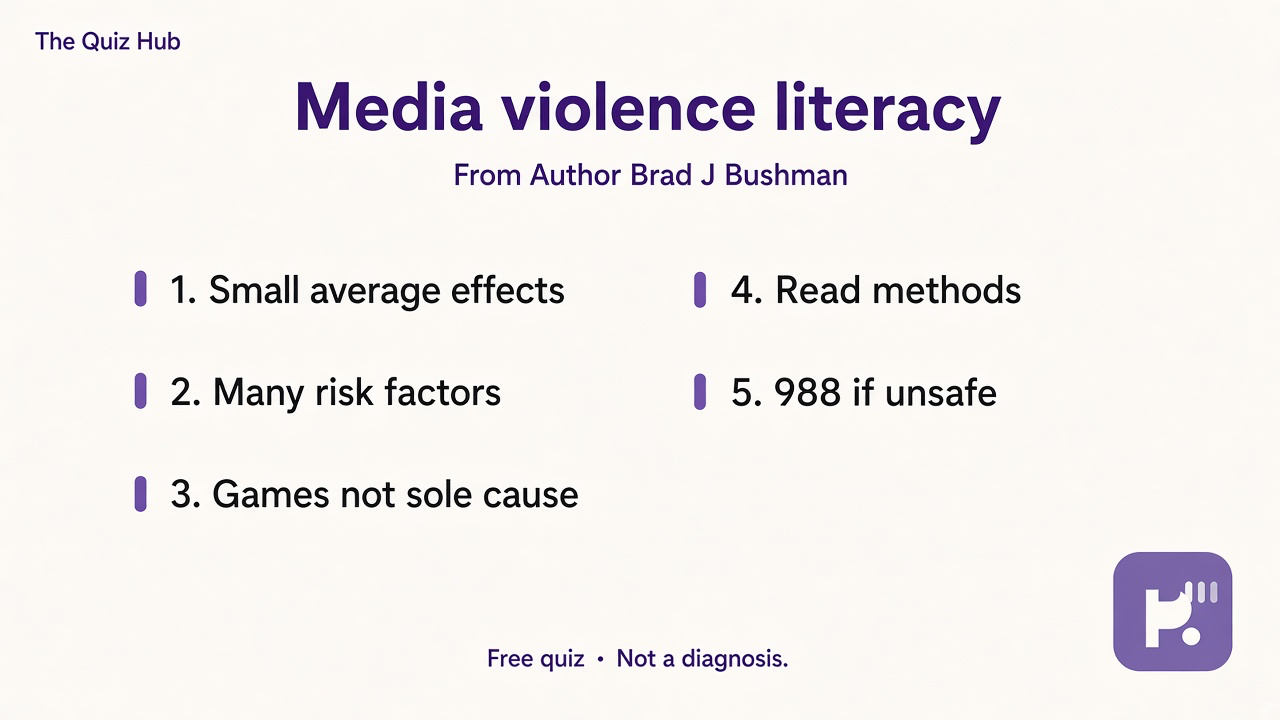
What this quiz can and cannot tell you
Can tell you
- Highlight General Aggression Model and effect-size vocabulary worth practicing before the next crime headline
- Separate unofficial Bushman-inspired literacy from court exhibits, moral panic posts, or player harassment
- Encourage multi-factor harm conversations without hoax-dismissal or sole-cause game bans
- Spark better questions about media aggression research without claiming forensic or clinical authority
Cannot tell you
- Replace violence risk evaluation, anger management therapy, or investigative findings about specific crimes
- Prove or disprove that a game caused an event from one agree screener
- Give permission to dox, bully, or ban players based on bar height or hobby choice
- Certify that you completed any licensed aggression battery or peer-reviewed lab protocol
Why Bushman-inspired media violence quizzes need literacy and blame refusal
Search traffic around Brad J. Bushman often follows crime headlines that replay lab clips while social feeds collapse aggression research into game bans or hoax memes. Those goals help when readers name General Aggression Model pathways, cite small average effects honestly, and refuse player harassment. They hurt when literacy bars become proof someone may dox streamers, or when hobby totals replace reading investigative reports before blaming a SKU. Media violence literacy works best when it pairs research vocabulary with unofficial limits and stays distinct from hostility-inventory author quizzes on this hub.
Dr. Priya Sharma reviews aggression screeners with a simple split: reward honest GAM and effect-size language and honest refusal of sole-cause crime stories and gamer bullying at the same time. General Aggression Model literacy tracks arousal, cognition, and learning links without destiny narratives for every fan. Media effect-size humility tracks meta-analytic averages beside trauma and access factors without hoax traps or one-clip causation myths. Game-blame and moral panic limits track scapegoat refusal and parental listening without console moral panic cartoons. Unofficial Bushman research limits track coursework framing, clinician prompts when harm fantasies appear, and zero harassment licenses.
Real people mix bars. You might score high on GAM recall while keeping effect-size humility moderate, which often describes students who know pathway names yet still want single-cause headlines for clicks. You might score high literacy with softer limit items, which can mean you avoid court cosplay yet still treat quiz totals like policy mandates. Reverse items catch overconfidence: felony destiny for all players, catharsis-as-only-support, hoaxing small effects, or dox-adjacent bullying should not inflate scores meant to track layered habits.
Pair results with siblings on this hub instead of forcing one media violence story. Our from author a h buss quiz covers hostility-inventory literacy with anger and intimidation stems separate from GAM framing here. Our from author arnold h buss quiz explores temperament anger literacy rather than media effect sizes on this page. Our fight or flight quiz sorts body alarm habits rather than unofficial Bushman limits on this screener. Browse the mental health and clinical hub for more reflection screeners. Share scores as conversation starters with consent, not as orders about who should lose their hobby.
Crime news and sleeper-deprived raid nights move faster than one calm effect-size sentence on a fridge note. A GAM bar might dip after one flooded week while blame-limit recall stays high until you retake gently. When you share results, say unofficial literacy habits. When you borrow tips, credit researchers who taught you pathway vocabulary and players who deserve privacy off-screen. Retake after one hard month and watch whether unofficial limit bars stay high even if GAM items rise, which often means you separated curious study from moral-panic pressure.
| Test | Focus |
|---|---|
| From author a h buss | Hostility-inventory anger and intimidation literacy rather than GAM media framing on this page |
| From author arnold h buss | Temperament anger literacy rather than media effect-size humility here |
| Fight or flight quiz | Body alarm and threat sorting rather than unofficial Bushman research limits on this screener |
From Author Brad J Bushman FAQ
What does the From Author Brad J Bushman quiz measure?
It measures how much you agree with statements about General Aggression Model literacy, media effect-size humility, game-blame and moral panic limits, and unofficial Bushman research limits. You get an index from 0 to 100 plus four bars. It reflects self-reported awareness habits on this screener, not forensic findings about a crime.
Does this prove video games cause violence?
No. Effect-size and blame-limit items emphasize small averages and many contextual factors. This page teaches research literacy, not single-cause verdicts about any title or player.
Does media literacy mean violent games are harmless for every teen?
No. Literacy means reading evidence with humility, hearing parental concerns, and discussing ratings and co-play without hoax-dismissal or destiny myths. Context and support still matter.
Can I harass gamers because Bushman criticized violent media?
No. Limit items explicitly reject dox, bullying, and hobby-community scapegoating. Literacy means fair dialogue, not punishment based on bar height.
Who reviewed this quiz?
Dr. Priya Sharma reviewed the unofficial framing, literacy not sole blame separation, YMYL warning, and result explanations. See our editorial policy for review standards.
Reviewed by