What this food intolerance symptoms quiz measures
This page does not administer IgE skin tests, celiac biopsies, or other licensed allergy batteries, and it cannot diagnose food allergy, celiac disease, IBD, or IBS from one score. It measures how often you noticed habits clinicians and registered dietitians discuss when digestive symptoms disrupt daily life, organized four ways: symptom log literacy when you noted meals, portions, and onset times instead of blaming random foods from memory; trigger timing awareness when you tracked delay patterns, stress context, and emergency red flags without mixing intolerance with anaphylaxis; clinician not web label when shame blocked labs, dietitian visits, or honest timelines; and quiz not diagnosis limits when unofficial screeners replaced professional care, skipped clinicians when symptoms stuck, or ignored 988 when hopelessness peaked. You answer 22 how-often statements about the past month, with reverse-worded items so one named pattern, symptom note, clinician booking, or crisis lookup cannot hide frequent shame or elimination panic on other days. Your responses also feed a second chart on closeness and trust habits, because food fear sometimes blocks asking for help. The total becomes an index from 0 to 100 where higher means more frequent reported intolerance-literacy strain on this screener. Your responses suggest intensity to discuss with support; they do not prove you meet clinical allergy or celiac criteria.
Symptom log literacy
How often meals, portions, and onset times were noted as data.
Trigger timing awareness
How often delay patterns and red flags were sorted without panic labels.
Clinician not web label
How often shame after symptoms blocked professional outreach.
Quiz not diagnosis limits
How often care teams and crisis awareness beat couch-cert myths.
How it works
Answer 22 frequency items
Rate each statement from Never to Very often for the past month. Tap Next after each answer.
Answers sort into four domains
Each answer feeds one of four intolerance-literacy groups, and every item also feeds a closeness and trust layer.
See your index and charts
You get a 0 to 100 index, a band, and two bar charts you can bring to a physician, gastroenterologist, or RD.
Take the Food Intolerance Symptoms Quiz
Answer 22 short statements to see your food intolerance symptom literacy index, four domain bars, and a closeness and trust chart.
What your result means
Your index is the average of all 22 answers, scaled from 0 to 100, with reverse-worded items flipped first. Higher means more frequent reported intolerance-literacy strain on this screener. Read quiz-not-diagnosis bars together with logging habits before you treat any total as diagnostic proof. Persistent hopelessness, blood in stool, fainting, or throat swelling deserve urgent medical care and crisis support, not only self-help tips.
| Band | Index range | Typical reading |
|---|---|---|
| Lower reported intolerance-literacy strain | 0 to 35 | Fewer frequent symptom-log gaps, shame blocks, or quiz-as-diagnosis myths in the past month. |
| Mixed reported intolerance literacy | 36 to 65 | Some logging and timing stretches alongside food dread, forum myths, or limit slips on other days. |
| Higher reported intolerance-literacy strain | 66 to 100 | Frequent digestive dread, shame blocks, or crisis-ignored patterns; professional support may help more than another solo retake. |
Tips at a glance
A quick takeaway graphic with topic tips (not your personal quiz scores). Start the quiz for your index, bands, and charts.
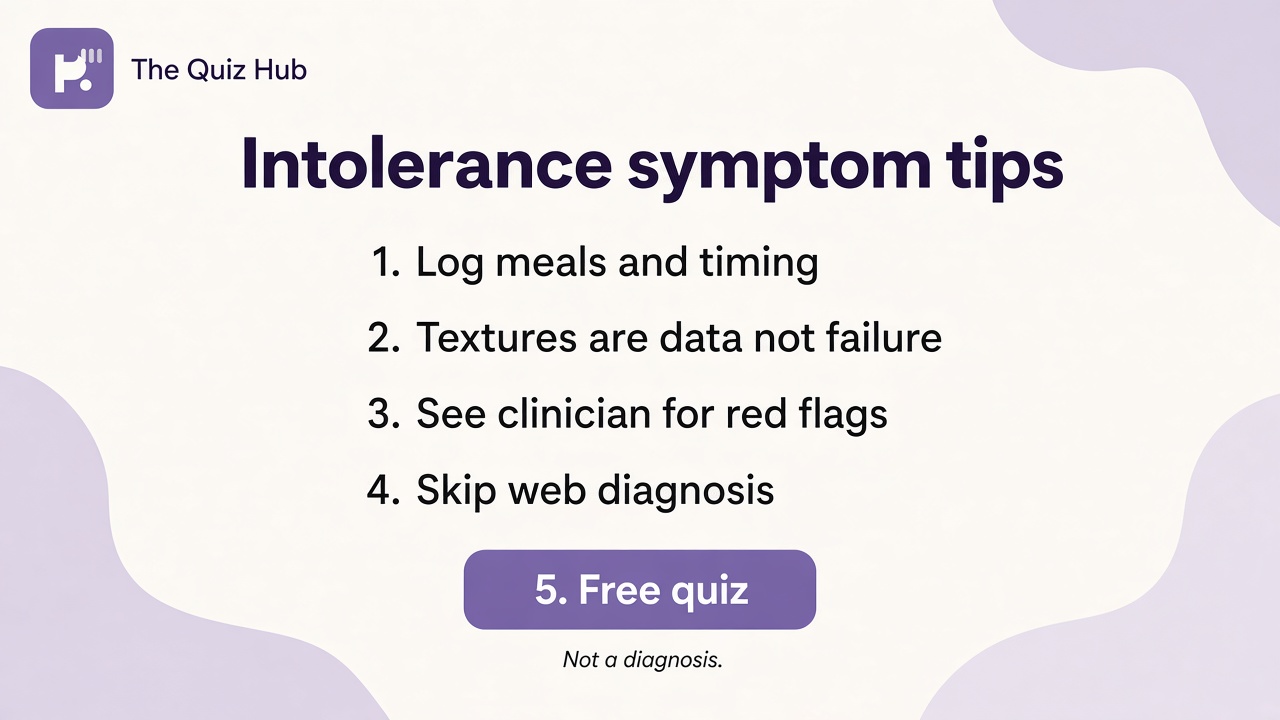
What this quiz can and cannot tell you
Can tell you
- Name digestive symptoms, timing patterns, and shame spikes in plain language for clinical intake
- Highlight when physician, gastroenterologist, or RD outreach is missing
- Support honest overlap conversations with clinicians without forcing one online allergy label
- Offer a baseline if you retake after one week of one plain symptom log
Cannot tell you
- Diagnose food allergy, celiac disease, IBD, or IBS from one score
- Replace skin tests, breath tests, endoscopy, or licensed elimination protocols
- Certify that you completed treatment or mastered intolerance management
- Substitute for emergency care when anaphylaxis, blood in stool, or safety fears feel urgent
Digestive symptoms, timing literacy, and quiz-not-diagnosis limits
People search intolerance symptom pages when bloating, cramps, or headaches follow certain meals and forums offer conflicting elimination lists. Clinicians and registered dietitians discuss symptom timelines, portion context, and red-flag sorting without turning every gurgle into a public diagnosis game. This online screener uses that literacy lens unofficially; it cannot replace interview-based allergy assessment or tell you which tests fit without your medical history.
Symptom log literacy covers noting what you ate, how much, and when symptoms began instead of blaming the last ingredient you remember. Trigger timing awareness covers delayed reactions, stress weeks, and separating intolerance patterns from emergency allergy signs. Clinician not web label covers refusing to treat MD or RD visits as failure and bringing examples to professionals instead of meme captions alone.
Real humans mix bars. You might score high food dread with strong clinician outreach, which can mean pain yet you still book sessions. You might score high shame with strong limit habits, which can mean distress yet you still call 988 instead of isolating. Reverse items catch overconfidence: symptom notes, timing patience, clinician bookings, crisis lookups, and refusing dramatic elimination posts should not inflate a strain index meant to track frequency of literacy gaps and shame blocks.
Pair results with siblings on this hub instead of forcing one digestive story. Our food label quiz sibling on the cognitive hub tracks serving-size reading habits with wholly separate stems. Our food safety quiz covers cross-contamination literacy rather than symptom logging language here. Our emotional eating quiz tracks mood-driven eating patterns rather than intolerance timing here. Browse the mental health and clinical test hub for more YMYL screeners with study-not-diagnosis framing.
Higher scores mean more frequent self-reported intolerance-literacy strain on this tool, not proof you failed at eating. Bring domain bars to a clinician or RD so sessions start with examples, not shame. If hopelessness spikes, skip online debate and prioritize 988 or a clinician. Retake after one week of one plain symptom log when safe and compare bars, not only the total.
| Test | Focus |
|---|---|
| Food label quiz | Serving-size and ingredient panel reading rather than digestive symptom frequency on this page |
| Food safety quiz | Cross-contamination and temperature habits rather than intolerance symptom logging stems here |
| Emotional eating quiz | Mood-driven eating frequency rather than digestive timing literacy on this screener |
Food Intolerance Symptoms Quiz FAQ
What does this food intolerance symptoms quiz measure?
It measures how often you noticed symptom log literacy, trigger timing awareness, clinician not web label habits, and quiz-not-diagnosis limit habits during the past month. You get an index from 0 to 100 plus four domain bars. Your responses suggest self-reported frequency for reflection, not a clinical food allergy or celiac diagnosis.
Is food intolerance the same as a food allergy?
Not always. Allergies involve immune mechanisms and can include rapid, severe reactions; intolerances often involve digestion and delayed symptoms. Only qualified clinicians sort tests and red flags. This quiz supports literacy and help-seeking prompts, not diagnostic labels.
Should I start a strict elimination diet based on my score?
Talk with a physician or registered dietitian before long eliminations, especially if you have growth, nutrition, or red-flag symptoms. This screener can help you describe patterns; it cannot prescribe diets.
When should I seek urgent medical care?
Seek emergency care for throat swelling, trouble breathing, fainting, or signs of severe allergic reaction, and prompt medical evaluation for blood in stool, persistent vomiting, or rapid unexplained weight loss. Call or text 988 (US) if emotional crisis feels urgent.
How is this different from the food label or food safety quizzes?
Food label and food safety quizzes on this site use agreement stems about panels and kitchen habits on the cognitive hub. This YMYL page focuses on past-month frequency of digestive symptom literacy without those stems.
What should I do if my score is high or I feel hopeless?
Call or text 988 (US) if crisis feels immediate, or contact a physician, gastroenterologist, or RD with domain examples from your results. Prioritize support over retakes when hopelessness or red-flag symptoms spike.
Who reviewed this quiz?
Dr. Elena Vasquez, PhD reviewed the YMYL framing, crisis resources, unofficial diagnosis limits, sibling separation from food label and food safety wording, and result explanations. See our editorial policy for review standards.
Reviewed by