What this fibromyalgia quiz measures
This page does not administer published ACR fibromyalgia criteria worksheets or any insurer-ready rheumatology form, and it cannot diagnose fibromyalgia, central sensitization, autoimmune disease, or mood conditions from one score. It measures how often you noticed habits clinicians and pain teams often discuss when widespread symptoms strain daily life, organized four ways: widespread pain flares when aching spread across regions, migrated without injury, or lingered most days; sleep and stiffness burden when night pain, long morning stiffness, or unrestorative sleep tracked with body symptoms; sensory and fibro fog when light touch, noise, temperature swings, or word-finding slips stacked with pain; and fibromyalgia quiz limits when unofficial screeners replaced clinician visits, skipped 988 during despair spikes, or mocked invisible pain. You answer 22 how-often statements about the past month, with reverse-worded items so one good sleep week, one symptom log, one clinician plan, or one crisis lookup cannot hide frequent strain on other days. Your responses also feed a second chart on closeness and trust habits, because shame about invisible pain sometimes blocks asking for help. The total becomes an index from 0 to 100 where higher means more frequent reported fibromyalgia-style symptom patterns on this screener. Your responses suggest intensity to discuss with support; they do not prove you must accept dismissal from every clinic.
Widespread pain flares
How often aching spread, migrated, or lingered across body regions.
Sleep and stiffness burden
How often nights and mornings tracked with pain more than screen guilt alone.
Sensory and fibro fog
How often touch, light, noise, temperature, or thinking slips rode with flares.
Fibromyalgia quiz limits
How often clinician planning, 988 awareness, and quiz humility beat diagnosis myths.
How it works
Answer 22 frequency items
Rate each statement from Never to Very often for the past month. Tap Next after each answer.
Answers sort into four domains
Each answer feeds one of four symptom-pattern groups, and every item also feeds a closeness and trust layer.
See your index and charts
You get a 0 to 100 index, a band, and two bar charts you can bring to a clinician or counselor.
Take the Fibromyalgia Quiz
Answer 22 short statements to see your fibromyalgia symptom pattern index, four domain bars, and a closeness and trust chart.
What your result means
Your index is the average of all 22 answers, scaled from 0 to 100, with reverse-worded items flipped first. Higher means more frequent reported widespread pain, stiffness, sensory, or fog habits on this screener. Read fibromyalgia quiz limits with sleep-and-stiffness bars before you treat any total as diagnostic proof. Persistent hopelessness or safety worries deserve crisis support, not only pacing tips.
| Band | Index range | Typical reading |
|---|---|---|
| Lower reported symptom pattern strain | 0 to 35 | Fewer frequent multi-site pain, stiffness, sensory, or fibro-fog patterns in the past month. |
| Mixed reported symptom pattern strain | 36 to 65 | Some manageable pain days alongside stronger sleep, sensory, fog, or limit-myth spikes on other days. |
| Higher reported symptom pattern strain | 66 to 100 | Frequent widespread pain, stiffness, sensory, or fog patterns; professional evaluation and crisis lines may help more than another solo retake. |
Tips at a glance
A quick takeaway graphic with topic tips (not your personal quiz scores). Start the quiz for your index, bands, and charts.
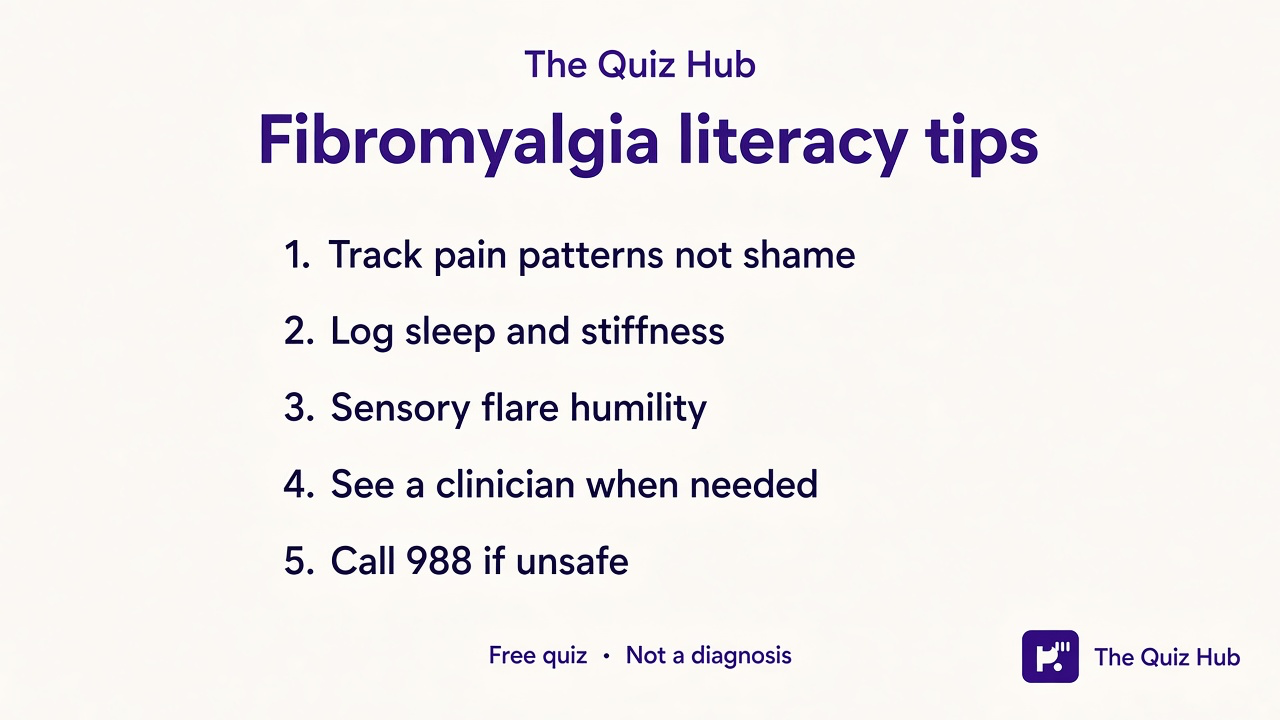
What this quiz can and cannot tell you
Can tell you
- Name multi-site pain, stiffness, and sensory flare patterns in plain language for medical intake
- Highlight when clinician planning, symptom logs, or crisis outreach habits are missing
- Support honest pain conversations without forcing one online label
- Offer a baseline if you retake after one week of pain-and-sleep tracking
Cannot tell you
- Diagnose fibromyalgia, lupus, thyroid disease, or depression from one score
- Replace rheumatology exams, labs, sleep studies, or licensed pain programs
- Certify disability status or worker compensation outcomes from one bar chart
- Substitute for crisis care when hopelessness or safety fears feel urgent
Widespread pain, stiffness, and quiz-not-diagnosis limits
Traffic to fibromyalgia screeners mixes real multi-site ache with fear that doctors will only blame stress. Clinicians discuss how widespread pain plus sleep, stiffness, and sensory spikes can overlap with many conditions, which is why exam-based workups matter more than hobby totals. This online screener uses that reflection lens unofficially; it cannot replace interview-based assessment or tell you which treatment path fits without your history and safety context.
Widespread pain flares cover aching on both sides of the torso, pain that migrates without a new injury, and pressure from ordinary straps feeling sharp during tender weeks. Sleep and stiffness burden cover night waking when stillness hurts, mornings that stay gluey longer than thirty minutes, and long sleep that still feels physically rough. Sensory and fibro fog cover light and noise intolerance, temperature swings, and word-finding slips that ride with pain rather than random forgetfulness alone.
Real people mix bars. You might score high pain with strong limit outreach, which can mean strain yet you still plan clinician visits instead of debating alone. You might score high sensory fog with moderate sleep burden, which often describes flare seasons yet you still keep symptom notes sometimes. Reverse items catch overconfidence: pain logs, clinician timelines, crisis lookups, and quiz humility should not inflate a strain index meant to track frequency of symptoms.
Pair results with siblings on this hub instead of forcing one label story. Our fatigue assessment scale FAS tracks past-month drain domains with separate wording, not multi-site pain migration here. Our fatigue severity scale FSS-9 uses a shorter past-week lens when clinicians ask for a different recall window. Our central sensitization inventory CSI R angles toward touch amplification habits rather than fibromyalgia-specific stiffness language on this page. Browse the mental health and clinical test hub for more YMYL screeners with study-not-diagnosis framing.
Higher scores mean more frequent self-reported symptom patterns on this tool, not proof you must give up on medical care. Bring domain bars to intake so visits start with dated examples, not shame. If hopelessness spikes, skip online verdict wars and prioritize 988 or a clinician. Retake after one week of honest pain-and-sleep tracking when safe and compare bars, not only the total.
| Test | Focus |
|---|---|
| Fatigue assessment scale FAS | Past-month physical, mental, and motivation fatigue domains rather than migrating widespread pain patterns on this quiz |
| Fatigue severity scale FSS-9 | Shorter past-week fatigue severity lens rather than this past-month fibromyalgia-style four-domain bank |
| Central sensitization inventory CSI R | Touch amplification and flare-trigger habits rather than fibromyalgia-specific stiffness and sleep wording here |
Fibromyalgia Quiz FAQ
What does the fibromyalgia quiz measure?
It measures how often you noticed widespread pain flares, sleep and stiffness burden, sensory and fibro fog habits, and fibromyalgia limit habits during the past month. You get an index from 0 to 100 plus four domain bars. Your responses suggest self-reported frequency for reflection, not a clinical diagnosis.
Does a high score mean I have fibromyalgia?
A high score means you reported frequent symptom patterns on this unofficial screener. Only a licensed clinician can evaluate fibromyalgia or rule out other causes after history, exam, and appropriate tests. Bring bar examples to a visit instead of treating totals as proof.
How is this different from the fatigue assessment scale on this site?
The FAS sibling tracks general fatigue domains with its own stem bank. This fibromyalgia quiz focuses on migrating widespread ache, stiffness-linked sleep, sensory spikes, and fibro-style fog language. Stems do not overlap; use each screener separately.
Why are some items worded about clinicians or 988?
Limit items track whether unofficial screeners replace medical care or crisis support. Agreeing that you brought timelines to clinicians, used 988 when despair felt urgent, or refused to treat bars as diagnosis should not inflate a symptom strain index.
What should I do if my score is high or I feel hopeless?
Call or text 988 (US) if crisis feels immediate, or contact a licensed clinician with domain examples from your results. Prioritize support over retakes when hopelessness or safety fears spike.
Who reviewed this quiz?
Dr. Elena Vasquez, PhD reviewed the YMYL framing, crisis resources, unofficial instrument limits, sibling separation from fatigue and CSI wording, and result explanations. See our editorial policy for review standards.
Reviewed by