What the Fatigue Severity Scale (FSS-9) Screener measures
This quiz does not diagnose chronic fatigue syndrome, depression, sleep apnea, anemia, thyroid disease, or any other condition. Only a qualified clinician using history, exam, and validated tools when needed can do that. It measures how often you noticed fatigue patterns clinicians discuss when FSS-style screeners ask about the past week, grouped four ways: physical energy drain about heaviness and recovery after rest; mental fatigue and fog about concentration and recall; daily task strain about chores, errands, and work feeling harder than your baseline; and FSS clinical limits about honest scoring, avoiding malingering myths, seeking care, and refusing to treat couch bars as licensed FSS-9 proof. You answer 22 how-often statements about the past week, with reverse-worded items so one good day cannot hide frequent strain across other days. Your responses also feed a second chart on closeness and trust habits, because exhaustion and shame about needing help often travel together. The total becomes an index from 0 to 100 where higher means more frequent reported fatigue severity strain on this screener, not proof you are faking illness.
Physical energy drain
How often rest felt thin, movement felt heavy, or recovery lagged after ordinary effort.
Mental fatigue and fog
How often focus, memory, or mental stamina felt cloudier than your clearer days.
Daily task strain
How often chores, errands, social plans, or work blocks felt harder than usual.
FSS clinical limits
How often you sought care, avoided malingering labels, and kept unofficial limits visible.
How it works
Answer 22 frequency items
Rate each statement from Never to Very often for the past week. Tap Next after each answer.
Answers sort into four domains
Each answer feeds one of four fatigue groups, and every item also feeds a closeness and trust layer.
See your index and charts
You get a 0 to 100 index, a band, and two bar charts you can bring to a clinician.
Take the Fatigue Severity Scale (FSS-9) Screener
Answer 22 short statements to see your fatigue severity strain index, four domain bars, and a closeness and trust chart.
What your result means
Your index is the average of all 22 answers, scaled from 0 to 100, with reverse-worded items flipped first. Higher means more frequent reported fatigue strain on this screener. Read physical drain with daily task bars together before the total, since sleep can look moderate while chores still feel impossible.
| Band | Index range | Typical reading |
|---|---|---|
| Lower reported fatigue severity strain | 0 to 35 | Fewer frequent physical drain, mental fog, daily task strain, or quiz-as-clinic myths in the past week. |
| Mixed reported fatigue severity strain | 36 to 65 | Some domains spike while rest, focus, or help-seeking look steadier on better days this week. |
| Higher reported fatigue severity strain | 66 to 100 | Frequent physical drain, mental fog, daily task strain, or care avoidance; consider professional support. |
Tips at a glance
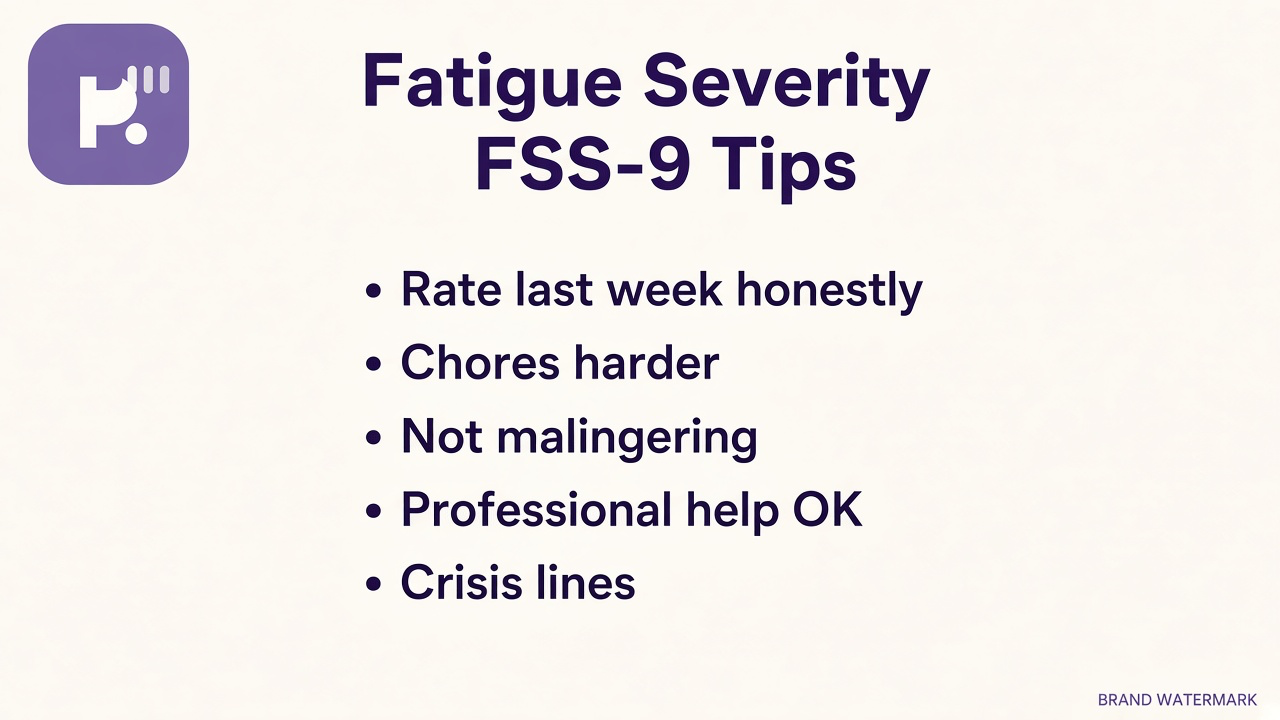
A quick takeaway graphic with topic tips (not your personal quiz scores). Start the quiz for your index, bands, and charts.
What this quiz can and cannot tell you
Can tell you
- Organize past-week fatigue into physical, mental, task, and help-seeking buckets
- Give you language for primary care or therapy intake about exhaustion patterns
- Highlight when fatigue may be outpacing rest and pacing strategies
- Offer a baseline if you retake after one medical or sleep intervention
Cannot tell you
- Diagnose chronic fatigue syndrome, ME/CFS, or other disorders without evaluation
- Replace the validated nine-item FSS or other instruments administered by clinicians
- Account for medications, post-viral illness, or shift work on its own
- Prove you should ignore persistent symptoms based on one lower score
Fatigue severity: past week honesty, harder chores, and clinical limits
Clinicians who use fatigue severity scales often ask about a recent window, not a single good afternoon. The widely cited Fatigue Severity Scale uses nine items about how fatigue interferes with motivation, exercise, work, and family life. Our unofficial screener borrows that past-week honesty without copying the validated clinic form or scoring rules. Frequency matters because two people can both say they are tired while one still finishes groceries and the other postpones basics for days.
Physical energy drain and mental fog sit in separate lanes here because body heaviness and cloudy thinking do not always move together. Post-viral weeks, anemia, sleep apnea, mood dips, and medication changes can each raise one bar without the other. Daily task strain items ask whether ordinary chores, errands, or work blocks felt harder than your baseline, which is the lived signal many patients describe before they have a diagnosis name.
FSS clinical limits keep the page honest: high bars are not proof of malingering, and low bars are not permission to skip follow-up when symptoms persist. Treating an entertainment screener like a licensed FSS-9 battery can delay real workups. If fatigue limits work, parenting, driving safely, or self-care, medical and mental health evaluation belongs on the calendar, not only in search results.
Pair results with siblings on this hub instead of forcing one tiredness story. Our why am I so tired quiz emphasizes sleep, stress, physical signals, and lifestyle rhythm across a slightly longer item set. Our chronic fatigue syndrome quiz stays on CFS concern themes with separate stems. Our degree of chronic fatigue screener adds another frequency lens when you want comparison bars. Browse the mental health and clinical hub for more reflection tools. Caption shares as self-report only and bring examples to intake instead of debating totals alone.
Weeks vary faster than lab results. A task strain bar might spike after flu while physical drain eases when you retake calmly. When you share results, say unofficial FSS-style reflection. When you borrow tips, credit clinicians who ordered sleep studies or thyroid panels without shaming patients who still look fine in photos. Retake after one treatment trial and watch whether mental fog bars fall even if physical drain lingers, which often means you separated brain fog from deconditioning stories.
| Test | Focus |
|---|---|
| Why am I so tired quiz | Sleep, stress, physical signals, and lifestyle rhythm rather than FSS-style past-week severity split here |
| Chronic fatigue syndrome quiz | CFS symptom concern themes rather than daily task and FSS limit framing on this page |
| Degree of chronic fatigue | Chronic fatigue frequency index rather than four-domain FSS-inspired split here |
Fatigue Severity Scale (FSS-9) Screener FAQ
What does this FSS-9 screener measure?
It measures how often you noticed physical drain, mental fog, daily task strain, and care-seeking habits in the past week. You get an index from 0 to 100 plus four domain bars. It reports self-reported frequency, not a clinical diagnosis.
Is this the official Fatigue Severity Scale (FSS-9)?
No. This is an unofficial screener inspired by FSS-9 themes. It is not the validated clinic instrument and cannot replace tools administered or interpreted by licensed professionals.
Does a high score mean I am faking or lazy?
No. Severe fatigue can reflect medical, sleep, mood, or neurological issues that deserve evaluation. This tool maps how often strain showed up here, not your character or work ethic.
What should I do if my score is high?
Book a clinician visit, track sleep and activity, and bring examples of how fatigue limits daily life. Call or text 988 (US) if you feel unsafe or are thinking about self-harm.
Who reviewed this quiz?
Dr. Elena Vasquez reviewed the YMYL framing, medical limits, and crisis resource guidance. See our editorial policy for review standards.
Reviewed by