What Fake Smile Quiz measures
This quiz does not train polygraph operators, certify lie detection, or replace couples therapy when trust is broken. It measures how much you agree with humility statements grouped four ways: micro-expression humility about hints versus verdicts, influencer overclaim, and misread recovery stories; context before verdict about fatigue, grief, cameras, cultural greetings, and formal settings; ask do not accuse about curious offline questions, felt-experience language, and skipping public mind-reading pile-ons; and quiz not polygraph about unofficial screeners, captioning shares as warm-up, and refusing deception-examiner cosplay from bar height. You rate 22 statements from strongly disagree to strongly agree, with reverse-worded traps so one lucky guess cannot inflate every bar. Your answers also feed a second chart on closeness and trust habits, because expression obsession sometimes chases winning arguments over honest listening. The total becomes an index from 0 to 100 where higher means more reported smile-reading humility on this screener, not proof you caught someone lying.
Micro-expression humility
Hints not verdicts, influencer skepticism, and misread recovery.
Context before verdict
Fatigue, culture, cameras, and formal settings before labels.
Ask do not accuse
Curious offline questions instead of public fake-smile trials.
Quiz not polygraph
Warm-up reflection only; lie labs and polygraph schools own professional work.
How it works
Answer 22 agreement items
Rate each statement from Strongly disagree to Strongly agree. Tap Next after each answer.
Answers sort into four domains
Each answer feeds one of four fake smile reading groups, and every item also feeds a closeness and trust layer.
See your index and charts
You get a 0 to 100 index, a band, four domain bars, and a second chart for intimacy habits.
Take the Fake Smile Quiz
Answer 22 short statements to see your fake smile reading humility index, four domain bars, and a closeness and trust chart.
What your result means
Your index is the average of all 22 answers, scaled from 0 to 100, with reverse-worded items flipped first. Read quiz-not-polygraph bars together with ask-do-not-accuse habits before you treat a high score as permission to accuse someone. Humility supports kinder questions; counselors still matter when trust feels unsafe.
| Band | Index range | Typical reading |
|---|---|---|
| Building smile-reading humility | 0 to 35 | Fewer agreed habits on micro-expression humility, context before verdict, ask-do-not-accuse questions, or quiz-not-polygraph limits on this screener. |
| Mixed smile-reading humility | 36 to 65 | Solid context or humility with asymmetry-as-guilt myths, influencer-truth traps, public accusation slips, or polygraph cosplay in others. |
| Strong smile-reading humility | 66 to 100 | Frequent agreement with humility, context, ask-do-not-accuse habits, and quiz-not-polygraph limits; still reflection only. |
Tips at a glance
A quick takeaway graphic with topic tips (not your personal quiz scores). Start the quiz for your index, bands, and charts.
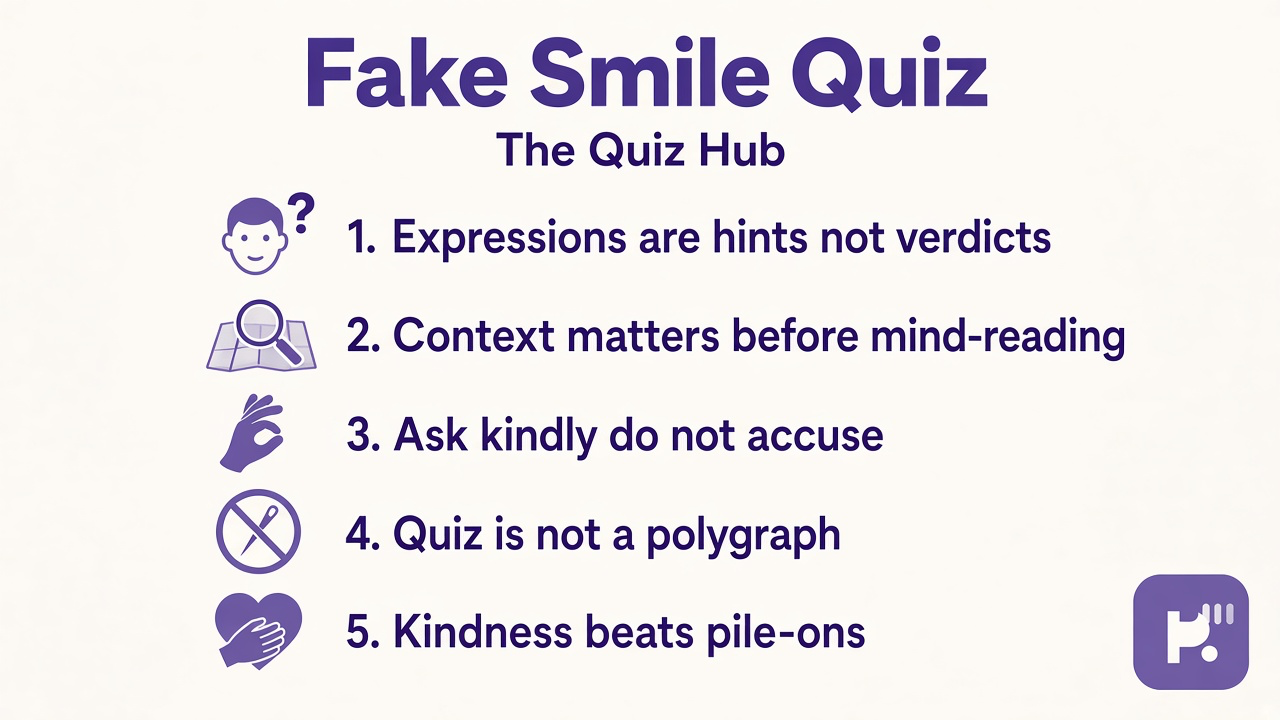
What this quiz can and cannot tell you
Can tell you
- Highlight humility, context, and ask-do-not-accuse habits worth revisiting before the next hard conversation
- Separate unofficial expression literacy from polygraph cosplay or mind-reading dunking
- Encourage offline curiosity when smiles feel off instead of public verdict posts
- Spark honest talk with friends about warm-up captions on shares
Cannot tell you
- Certify lie detection, polygraph readiness, or deception lab hiring from one online screener
- Prove someone lied or stayed honest from one grin on a photo
- Replace couples therapy, mediation, or licensed support when conflict turns unsafe
- Turn humility scores into surveillance, partner interrogations, or screenshot shaming
Fake smile reading before polygraph cosplay
Search traffic around fake smile quizzes usually wants two things: quick language for awkward grins, and relief from threads that treat every expression like a deception lab clip. Those goals help when readers name humility limits, notice context, and ask curious offline questions. They hurt when bars become polygraph cosplay, or when pile-ons accuse relatives from one screenshot. Expression literacy works best when it names social kindness and unofficial limits together.
Dr. Elena Vasquez reviews self-image screeners with a simple split: reward honest humility about micro-expressions and honest limits on polygraph fantasy at the same time. Micro-expression humility tracks hints versus verdicts, influencer skepticism, and misread stories without ranking readers as naive forever. Context before verdict tracks fatigue, grief, cameras, cultural greetings, and formal settings without excusing harm you already address offline. Ask do not accuse tracks curious questions and private check-ins without public mind-reading trials. Quiz not polygraph keeps screeners separate from lie-detector training and bar height.
Real readers mix bars. You might score high on context while keeping ask-do-not-accuse moderate, which often describes careful setting readers who still vent in group chats. You might score high humility with softer limit items, which can mean good influencer skepticism plus occasional accusation slips. Reverse items catch sloppy answers: one grin proving secrets, influencer reads as science, context never mattering, upset friends always faking, public accusation as honesty proof, skipping kind questions while bars look high, or perfect scores licensing deception-examiner cosplay should not inflate charts meant to track layered humility knowledge.
Pair results with siblings on this hub instead of forcing one trust story. Our body language test stays on wider nonverbal cues with stems separate from fake-smile humility on this page. Our face shape quiz covers hairline and jaw literacy when mirror talk rides beside expression reads. Our dress quiz pairs appearance confidence habits with low-stakes self-image reflection. Browse the self image and appearance hub for more gentle screeners. Caption shares as warm-up, ask offline kindly, and skip bait threads on friends who never opted in.
Holiday photos and job seasons refresh faster than forum arguments. When you share results, say humility and context beat scoreboard. When you borrow tips, credit friends who modeled curious questions and classmates who disagreed without lie labels. Retake after one stressful social month and watch whether quiz-not-polygraph bars stay high even if context recall rises, which often means you separated book rules from actual table manners online.
| Test | Focus |
|---|---|
| Body language test | Broader nonverbal cue literacy rather than fake-smile humility and polygraph limits on this page |
| Face shape quiz | Hairline, cheek, and jaw mirror language rather than smile verdict and ask-do-not-accuse habits here |
| Dress quiz | Outfit confidence and appearance play rather than expression-reading humility drills on this page |
Fake Smile Quiz FAQ
What does Fake Smile Quiz measure?
It measures how much you agree with statements about micro-expression humility, context before verdict, ask-do-not-accuse habits, and quiz-not-polygraph limits. You get an index from 0 to 100 plus four bars. It describes self-reported expression-reading habits on this screener, not polygraph certification or proof someone lied.
Can this quiz tell if someone is lying?
No. Quiz-not-polygraph items explicitly reject lie-detector cosplay. Brief smiles are imperfect hints that deserve context and kind questions, not automatic guilty labels from one online bar height.
Why include context items with humility statements?
Fatigue, grief, cameras, and cultural greetings shape grins. Context items keep setting and mood visible so results stay honest about whether you endorse mind-reading myths.
Does a high score mean I should confront someone about their smile?
Not as a public trial. Ask-do-not-accuse items favor curious offline questions over screenshot pile-ons. High bars mean you related to humility statements here, not that you hold deception science credentials.
Who reviewed this quiz?
Dr. Elena Vasquez reviewed the soft self-image framing, anti-accusation limits, and separation from polygraph training claims. See our editorial policy for review standards.
Reviewed by