What this fear of personal death scale FPDS measures
This page does not administer the published Fear of Personal Death Scale or its official scoring keys, and it cannot predict when you will die or diagnose anxiety disorders from one total. It measures how often you noticed habits counselors, chaplains, and therapists often discuss when mortality fear rises, organized four ways: mortality awareness when death thoughts were named as human without fortune-telling; spiral awareness when news, nights, or symptoms triggered loops you could soften; meaning and presence when connection, values, or gentle spiritual resources anchored scary weeks; and FPDS limits when unofficial screeners stayed separate from published-scale cosplay, doom sharing, and skipped crisis care when despair spiked. You answer 22 how-often statements about the past two weeks, with reverse-worded items so one grounding night cannot hide frequent hypervigilance on other days. Your responses also feed a second chart on closeness and trust habits, because death anxiety sometimes blocks asking for support. The total becomes an index from 0 to 100 where higher means more frequent reported anxiety strain or limit gaps on this screener.
Mortality awareness
How often death thoughts were normal without doom predictions.
Spiral awareness
How often loops were named and softened instead of fed all night.
Meaning and presence
How often values, connection, or care visits anchored scary weeks.
FPDS limits
How often reflection stayed humble versus prediction myths or skipped crisis care.
How it works
Answer 22 frequency items
Rate each statement from Never to Very often for the past two weeks. Tap Next after each answer.
Answers sort into four domains
Each answer feeds one of four death-anxiety groups, and every item also feeds a closeness and trust layer.
See your index and charts
You get a 0 to 100 index, a band, and two bar charts you can bring to a counselor or chaplain.
Take the Fear of Personal Death Scale FPDS
Answer 22 short statements to see your personal death anxiety index, four domain bars, and a closeness and trust chart.
What your result means
Your index is the average of all 22 answers, scaled from 0 to 100, with reverse-worded items flipped first. Higher means more frequent reported spirals, hypervigilance, joy cancellation, or limit gaps on this screener. Read FPDS-limit bars with meaning habits before you treat any total as a lifespan forecast. Persistent hopelessness or feeling unsafe deserves crisis support, not only grounding pep talks.
| Band | Index range | Typical reading |
|---|---|---|
| Lower reported death anxiety strain | 0 to 35 | Fewer frequent doom spirals, symptom-search marathons, joy cancellation, or quiz-as-prediction myths in the past two weeks. |
| Mixed reported death anxiety habits | 36 to 65 | Some calm stretches alongside spiral nights, avoidance, meaning dips, or unofficial-scale myths on other days. |
| Higher reported death anxiety strain | 66 to 100 | Frequent spirals, symptom hypervigilance, joy cancellation, or quiz-as-FPDS prediction habits; skilled support may help more than another solo retake. |
Tips at a glance
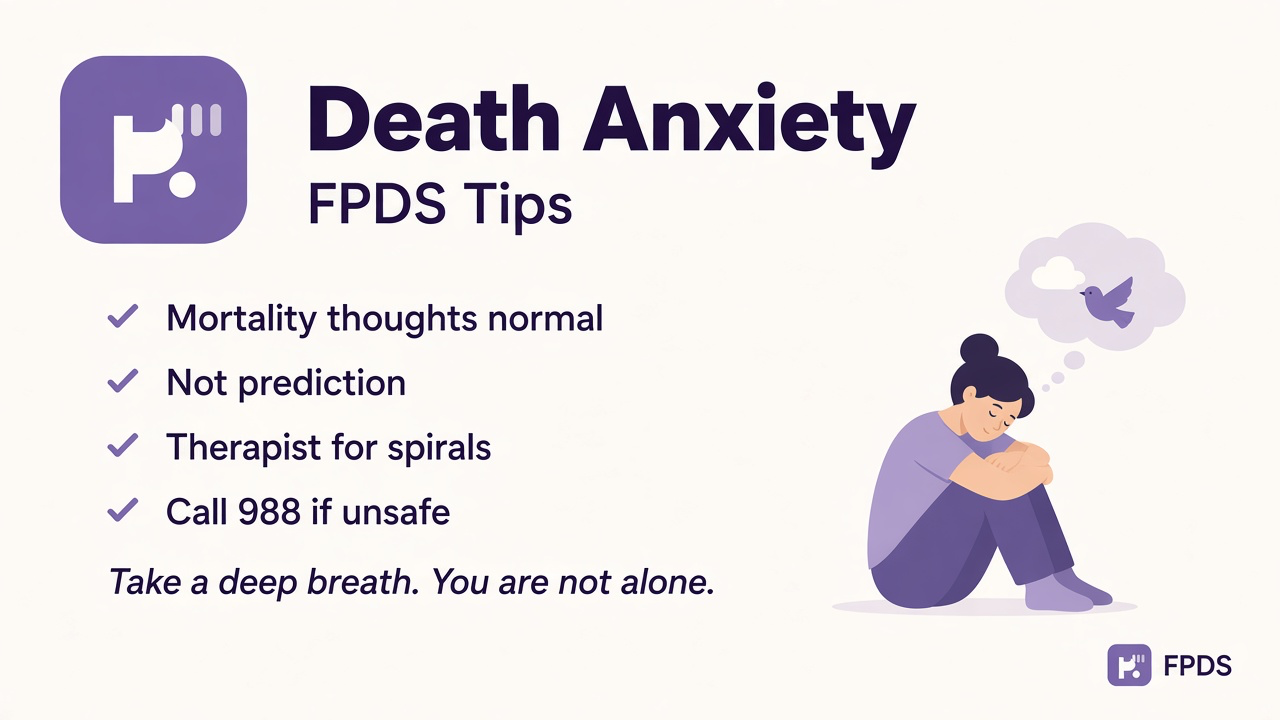
A quick takeaway graphic with topic tips (not your personal quiz scores). Start the quiz for your index, bands, and charts.
What this quiz can and cannot tell you
Can tell you
- Name spiral, grounding, and support habits in plain language for therapist intake
- Highlight when prediction myths or published-FPDS cosplay blocked care
- Support honest overlap conversations with clinicians without forcing one online label
- Offer a baseline if you retake after two weeks of spiral interrupts and one support reach-out
Cannot tell you
- Administer or score the published Fear of Personal Death Scale FPDS clinical form
- Predict when you will die or diagnose panic disorder from one score
- Replace grief therapy, hospice planning, or medical evaluation when symptoms need clinicians
- Substitute for crisis care when hopelessness or safety fears feel urgent
Normal thoughts, spiral catches, meaning, and no predictions
People search death anxiety pages after funerals, health scares, or sleepless nights when every headline feels personal. Therapists discuss mortality fear as a human theme that can swell into panic loops, not as proof you are broken for noticing finitude. This online screener uses that gentle reflection lens unofficially; it cannot replace interview-based assessment or forecast your lifespan.
Mortality awareness covers brief thoughts that pass, milestone birthdays, and refusing the myth that one thought schedules your end. Spiral awareness covers symptom searches, night rehearsals, and grounding steps. Meaning and presence covers connection, valued small acts, therapy, chaplain care, and practical checkups without hour-by-hour catastrophe stories.
FPDS limits covers rejecting published-scale cosplay, refusing to scare relatives with quiz totals, and planning 988 or therapy instead of doom debates. Pair results with siblings on this hub instead of forcing one label story. Our fear of compassion scale sibling explores warmth avoidance when kindness feels risky separate from mortality spirals here. Our Fay acceptance of others scale sibling angles toward curiosity about difference rather than death-timeline fear on this page. Our fear test sibling stays playful on general fear habits rather than clinical death-anxiety frequency here. Browse the mental health and clinical test hub for more YMYL screeners with study-not-diagnosis framing.
Higher scores mean more frequent self-reported strain on this tool, not a medical expiration date. Bring domain bars to intake so sessions start with examples, not terror. If hopelessness or feeling unsafe spikes, skip online debate and prioritize 988 or a clinician. Retake after two weeks of spiral interrupts and one support reach-out when safe and compare bars, not only the total.
| Test | Focus |
|---|---|
| Fear of compassion scale | Kindness avoidance rather than mortality spiral frequency on this page |
| Fay acceptance of others scale | Acceptance-of-difference habits rather than personal death anxiety stems here |
| Fear test | General fear habit agree items rather than clinical death-anxiety frequency here |
Fear of Personal Death Scale FPDS FAQ
What does this fear of personal death scale FPDS measure?
It measures how often you noticed mortality awareness habits, spiral catching, meaning and presence anchors, and FPDS-limit boundaries during the past two weeks. You get an index from 0 to 100 plus four domain bars. Your responses suggest self-reported frequency for adult reflection, not a clinical diagnosis, medical prognosis, or published FPDS score.
Does a high score mean I am going to die soon?
No. This tool cannot predict lifespan or cause of death. High scores describe how often you reported certain worry habits on this screener. Talk with a clinician if fear disrupts sleep, safety, or daily roles.
Is it normal to think about death sometimes?
Many adults notice occasional mortality thoughts during grief, health scares, or milestone years without those thoughts being omens. Persistent spirals that steal sleep or joy are worth discussing with skilled support.
Is this the official Fear of Personal Death Scale?
No. Published FPDS instruments use validated item banks and trained scoring in research settings. This page is an unofficial screener with its own stems inspired by public death-anxiety themes for reflection only, not a licensed clinical form.
What should I do if death anxiety feels overwhelming or unsafe?
Call or text 988 (US) if hopelessness, self-harm thoughts, or feeling unsafe feel urgent. Schedule a counselor, therapist, or chaplain visit with domain examples, and try one grounding step plus one support call this week. Prioritize crisis care over retakes when strain spikes.
Who reviewed this screener?
Dr. Elena Vasquez reviewed the YMYL framing, gentle tone, crisis resources, quiz-not-prediction limits, and result explanations. See our editorial policy for review standards.
Reviewed by