What Fashion Designer Quiz measures
This quiz does not admit you to design school, register trademarks, or replace paid pattern-making lessons. It measures how much you agree with designer habit statements grouped four ways: creative process about research, iteration, and deadlines that beat perfectionism; technical craft about fabric literacy, construction awareness, and body-kind fit adjustments; kind critique about specific feedback, anti-roast norms, and generous credit; and unofficial designer limits about playful reflection, refusing portfolio licensing myths, and skipping gatekeeping from bar height. You rate 22 statements from strongly disagree to strongly agree, with reverse-worded items flipped first so one lucky guess cannot inflate every bar. Your answers also feed a second chart on closeness and trust habits, because creative identity talk sometimes spikes argument nights when scores feel personal. The total becomes an index from 0 to 100 where higher means more reported designer habits on this screener, not proof you should open a label tomorrow.
Creative process
Sketch loops, references, and revision beats lightning-bolt myths.
Technical craft
Fabric touch, seams, and fit on moving bodies.
Kind critique
Useful feedback, anti-roast norms, and credit.
Unofficial designer limits
Fun reflection only; credentials and runway invites live elsewhere.
How it works
Answer 22 agreement items
Rate each statement from Strongly disagree to Strongly agree. Tap Next after each answer.
Answers sort into four domains
Each answer feeds one of four designer habit groups, and every item also feeds a closeness and trust layer.
See your index and charts
You get a 0 to 100 index, a band, four domain bars, and a second chart for intimacy habits.
Take the Fashion Designer Quiz
Answer 22 short statements to see your fashion designer habit index, four domain bars, and a closeness and trust chart.
What your result means
Your index is the average of all 22 answers, scaled from 0 to 100, with reverse-worded items flipped first. Read unofficial designer limit bars together with kind critique before you treat a high score as a portfolio license. Playful reflection supports kinder making; schools and clients still own real credentials and contracts.
| Band | Index range | Typical reading |
|---|---|---|
| Building designer habits | 0 to 35 | Fewer agreed habits on creative process, technical craft, kind critique, or unofficial designer limits on this screener. |
| Mixed designer habits | 36 to 65 | Solid creative process with sacred-first-draft myths, construction denial, public roast critique, tracing entitlement, or gatekeeping from bar height. |
| Strong designer habits | 66 to 100 | Frequent agreement with creative process, technical craft, kind critique, and unofficial designer limits; still fun only. |
Tips at a glance
A quick takeaway graphic with topic tips (not your personal quiz scores). Start the quiz for your index, bands, and charts.
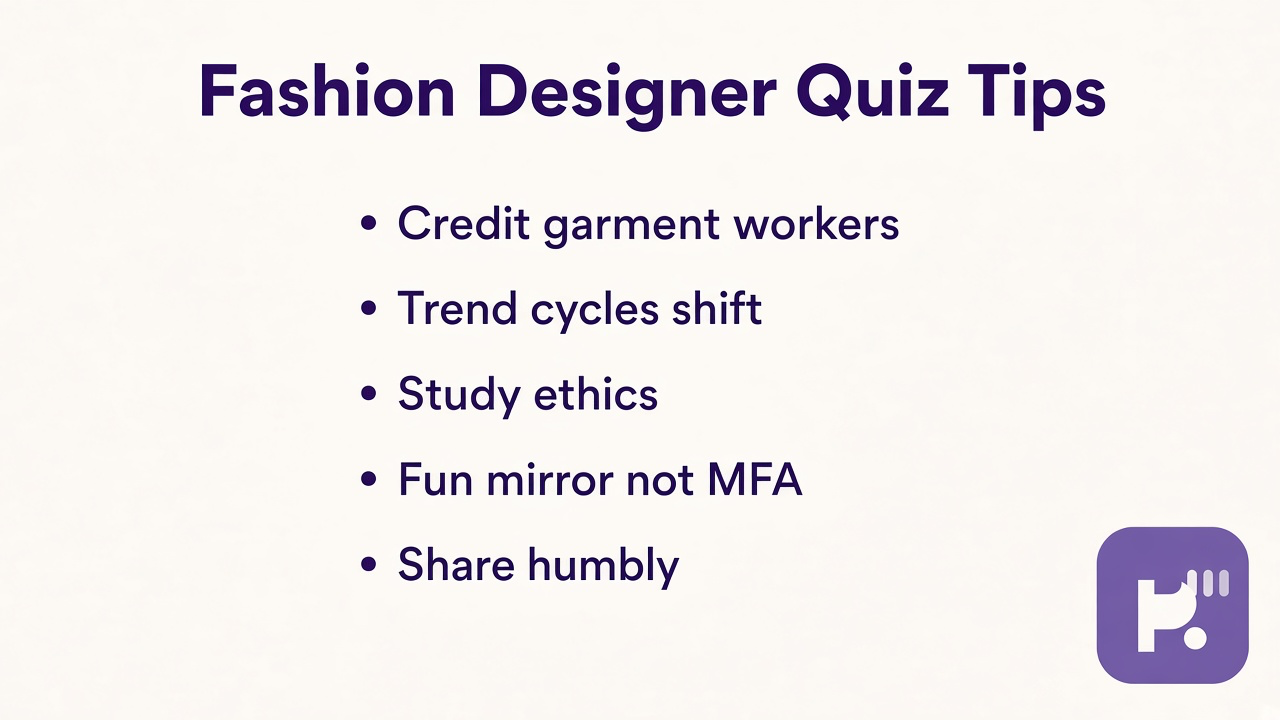
What this quiz can and cannot tell you
Can tell you
- Highlight creative, craft, critique, and limit habits worth revisiting before the next project season
- Separate unofficial reflection from runway gatekeeping or school admission fantasies
- Encourage iteration and fabric literacy without public roast culture
- Spark better studio chats about habits without claiming design authority
Cannot tell you
- Replace design school admission, trademark lawyers, or paid technical classes
- Prove runway readiness, client readiness, or copyright compliance from one couch screener
- Give permission to trace indie artists or shame hobby sewists after one bar
- Predict real collection outcomes from habit bars alone without training and market context
Why designer habit quizzes need unofficial framing
Search traffic around fashion designer quizzes usually wants two things: a label that says you are creative, and a score to flex when friends debate who should sew cosplay. Those goals help when readers iterate sketches, touch fabric, and keep critique kind. They hurt when bars become gatekeeping weapons, or when tracing small artists feels justified by a high index. Designer literacy works best when it names craft kindness and unofficial limits together.
Dr. Elena Vasquez reviews self-image creative screeners with a simple split: reward honest making habits and honest limits on unofficial reflection at the same time. Creative process tracks research, revision, and small deadlines without lightning-bolt myths. Technical craft tracks drape, seams, and body-kind fit without couture-day-one shame. Kind critique tracks specific feedback and credit without public roast threads. Unofficial designer limits keep screeners separate from school admission letters, trademark advice, and runway credential cosplay.
Real players mix bars. You might score high on creative process while keeping technical craft moderate, which often describes illustrators who are still building sewing confidence. You might score high kind critique with softer unofficial limit items, which can mean you welcome feedback yet still post gatekeeping memes about who counts as a designer. Reverse items catch overconfidence: sacred first drafts, mood boards replacing research, optional construction, roast culture, tracing with high bars, or perfect indexes licensing forum policing should not inflate bars meant to track layered designer habits.
Pair results with siblings on this hub instead of forcing one credential story. Our aesthetic quiz spreads broader visual vibe language when mood boards matter more than seam allowances. Our dress quiz stays on body-kind outfit habits with stems separate from construction curiosity on this page. Our am I alternative quiz explores subculture style signals when your design references pull from music and street scenes. Browse the self image and appearance hub for more reflection tools. Caption shares as fun only and skip policing strangers who never asked for studio advice.
Projects and deadlines rotate faster than short-video trends. A craft bar might spike after one sewing class while creative process sleeps until you retake calmly. When you share results, say unofficial reflection. When you borrow tips, credit teachers who posted fair critique norms and friends who shared muslin photos without mockery. Retake after one crunch week and watch whether kind critique bars stay high even if creative recall rises, which often means you separated cozy identity talk from actual studio manners.
| Test | Focus |
|---|---|
| Aesthetic quiz | Broader visual aesthetic labels rather than construction and critique stems on this page |
| Dress quiz | Body-kind dress habits rather than designer iteration and fabric literacy here |
| Am I alternative quiz | Alternative style identity rather than studio habit limits on this page |
Fashion Designer Quiz FAQ
What does Fashion Designer Quiz measure?
It measures how much you agree with statements about creative process, technical craft, kind critique, and unofficial designer limits. You get an index from 0 to 100 plus four bars. It describes self-reported making habits on this screener, not design school grades or runway bookings.
Is this a design school admission test?
No. Unofficial designer limit items keep the page playful. Schools and admissions offices own real decisions; this screener is couch reflection and habit noticing only.
Does a high score mean I can copy trends without credit?
No. Kind critique and limit items reject tracing and gatekeeping. High bars mean you related to habit statements here, not that you hold a license to steal indie work.
Why mix technical craft items with critique items?
Designer search intent blends fantasy sketches with real studio behavior. Split bars keep fabric and fit habits separate from feedback culture so results stay honest about which parts you endorse.
Who reviewed this quiz?
Dr. Elena Vasquez reviewed the creative habit framing, kind critique tone, and unofficial limit boundaries. See our editorial policy for review standards.
Reviewed by