What this am I alternative quiz measures
This am I alternative quiz estimates how often alternative style patterns show up in your self-report about fashion, music, visual edge, and alt scene identity. Twenty original frequency items group into four domains drawn from youth subculture and self-presentation research: fashion nonconformity, music subculture, visual edge, and alt scene identity. Each item also maps to a fear-of-intimacy stack layer so you can see whether vulnerability pull-back, trust hesitation, self-disclosure limits, or closeness anxiety rides alongside guardedness in concerts, scene events, or sharing niche taste. Your alternative style index inverts mainstream pull-back patterns into a 0 to 100 score where higher numbers mean more frequent alt self-expression signals.
Fashion nonconformity
Choosing thrift, vintage, DIY, and edgy wardrobes over fast-fashion conformity and approval-first dressing.
Music subculture
Feeling at home in punk, indie, metal, or underground music scenes rather than hiding niche taste.
Visual edge
Comfort with dyed hair, piercings, tattoos, dramatic makeup, and bold styling that draws attention.
Alt scene identity
Seeing yourself as alternative, fitting into DIY or subculture spaces, and rejecting cookie-cutter social norms.
How it works
Three steps from first question to your alternative style report with fear-of-intimacy stack. Click Start Quiz to open the interactive quiz in a full-screen modal.
Answer 20 frequency items
Rate how often each mainstream pull-back, hidden playlist, toned-down look, or weak alt identity habit shows up, from Never to Almost always. You click Next after each answer; nothing auto-advances.
Items map to style domains and intimacy stack
Your answers accumulate percentages for fashion nonconformity, music subculture, visual edge, and alt scene identity, plus four fear-of-intimacy stack layers.
View band, domain bars, and stack chart
Results show Lower, Mixed, or Higher Alternative Signals with domain bars, stack layers, and reflection prompts.
Take the am I alternative quiz
Rate 20 statements about fashion nonconformity, music subculture, visual edge, and alt scene identity. Your answers produce an alternative style index from 0 to 100, four domain scores, a fear-of-intimacy stack chart, and a band label for reflection.
Opens in a focused modal. No account required. Results stay on screen.
What your alternative style result means
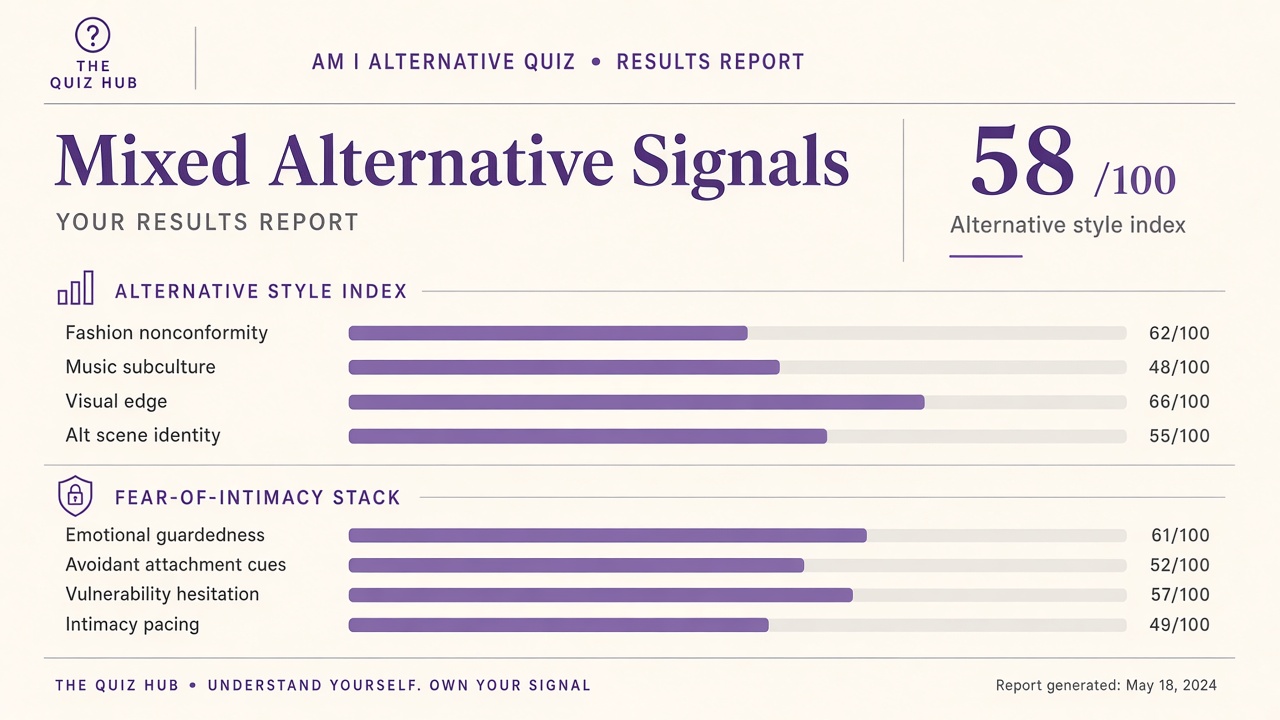
Your alternative style index is the inverted total across all 20 mainstream pull-back and low-alt habit items on a 0 to 100 scale. Higher scores mean fewer avoidance signals and more alternative self-expression patterns on this screener. Domain bars show style levels so you can see whether fashion nonconformity, music subculture, visual edge, or alt scene identity drives your result most. The fear-of-intimacy stack chart shows parallel layers for vulnerability pull-back, trust hesitation, self-disclosure limits, and closeness anxiety when alt spaces feel exposing.
| Band | Index range | Typical reading |
|---|---|---|
| Lower Alternative Signals | 0 to 35 | More mainstream conformity and hidden niche taste; dress codes or social anxiety can still play a role |
| Mixed Alternative Signals | 36 to 65 | Blend of alt taste in some settings and pull-back in others; domain and stack charts show where you struggle most |
| Higher Alternative Signals | 66 to 100 | Frequent unconventional style and scene identity signals; check stack if sharing taste publicly still feels guarded |
What your alternative style report looks like
After all 20 items, you get an alternative style index from 0 to 100, a band label, four domain bars for fashion nonconformity, music subculture, visual edge, and alt scene identity, plus a fear-of-intimacy stack chart with vulnerability, trust, disclosure, and closeness anxiety layers.
What this quiz can and cannot tell you
Can tell you
- How often alternative style and mainstream pull-back patterns showed up in this self-report screener
- An alternative style index and four domain bars for fashion, music, visual edge, and scene identity
- A fear-of-intimacy stack showing which closeness-guarding layer feels strongest in alt settings
- A starting point for style experiments or comparing with sibling tests
Cannot tell you
- Whether you are permanently mainstream, fake alt, or not alt enough for any scene
- Whether low scores are rooted in dress codes, conservative workplaces, or wise social caution without context
- Your subculture credibility compared with peers or online gatekeepers
- What aesthetic label you must use without honest self-reflection and community connection
Alternative style, subculture taste, and guarded self-expression
People search am I alternative when they love thrift finds but hide playlists at work, enjoy bold hair color but skip scene events, or wonder why friends call them edgy while they still feel mainstream inside. Sociologist Dick Hebdige studied subcultures like punk and mod as style-based resistance in his 1979 book Subculture: The Meaning of Style. The Birmingham Centre for Contemporary Cultural Studies framed youth style as symbolic identity work, though this quiz is not a clinical identity assessment. Dick Hebdige's work overlaps with how fashion, music, and scene belonging signal who feels outside dominant culture.
The Quiz Hub built this am I alternative quiz as an original self-report screener inspired by those themes plus FOIS-style intimacy avoidance layers in alt spaces, not a reproduction of any single published instrument. Readers often compare it to sibling tools on this site. Our am I goth quiz screens gothic subculture affinity across dark fashion and post-punk taste rather than broad alternative style habits. The am I emo quiz focuses on emo music and emotional punk identity rather than general alt fashion and scene belonging. The fear of intimacy quiz measures general vulnerability pull-back across closeness, not concert anxiety or alt label comfort.
| The Quiz Hub test | What it adds |
|---|---|
| Am I goth quiz | Gothic subculture affinity across dark fashion and romantic melancholy, not broad punk-indie-thrift alternative domains |
| Am I emo quiz | Emo music and emotional punk identity signals, not general alt scene belonging or visual edge domains |
| Aesthetic quiz | Primary and secondary aesthetic type matching, not alternative style index with fear-of-intimacy stack |
| Am I cool quiz | Social image and trend alignment habits, not music subculture or alt scene identity domains |
| Am I basic quiz | Mainstream trend conformity signals, inverted framing from the alternative style lens |
| This am I alternative quiz | Alternative style index plus fear-of-intimacy stack for fashion, music, visual edge, and alt scene identity |
Sample item types include frequency ratings such as whether you tone down piercings before family events, or whether you feel kinship with people who reject cookie-cutter style. High fear-of-intimacy stack with low fashion nonconformity often lands in Lower or Mixed Alternative Signals bands. A conservative workplace season can score in Mixed Alternative Signals even when you still express alt taste in private playlists. Read how we review quizzes in our editorial policy or browse more tools on our personality psychology hub.
Am I alternative quiz FAQ
What does alternative mean on this quiz?
Alternative here means your self-reported answers lean toward unconventional fashion, underground music taste, bold visual self-presentation, and comfort with alt scene identity more than toward mainstream conformity, hiding niche taste, or distancing from subculture labels. It does not mean you must dress a certain way every day or that mainstream hobbies lack value. This am I alternative quiz maps those patterns to an alternative style index from 0 to 100 for reflection, not a scene passport.
What does this am I alternative quiz measure?
Twenty original frequency items ask how often mainstream pull-back, hidden playlists, toned-down visual edge, or weak alt identity show up when you think about style and self-presentation. Each item also feeds a parallel fear-of-intimacy stack with vulnerability pull-back, trust hesitation, self-disclosure limits, and closeness anxiety layers adapted to alt spaces and sharing niche taste. You receive an alternative style index from 0 to 100 and a band from Lower through Higher Alternative Signals.
What is the fear-of-intimacy stack on this quiz?
The fear-of-intimacy stack is a second results chart inspired by FOIS-style intimacy avoidance themes, adapted to alternative style settings. Each of the 20 items also maps to one of four stack layers: vulnerability pull-back, trust hesitation, self-disclosure limits, and closeness anxiety. The stack index summarizes how often guarded closeness or exposure fear rides alongside hesitation in concerts, scene events, or sharing alt taste publicly.
How is this different from the goth quiz?
The am I goth quiz screens gothic subculture affinity across dark fashion, post-punk music, romantic melancholy, and goth scene belonging rather than broad alternative style habits. This am I alternative quiz uses a wider punk, indie, thrift, and visual-edge frame focused on whether you reject mainstream conformity, own niche music taste, push bold looks, and identify with alt scenes, plus the fear-of-intimacy stack chart rather than goth-specific domains.
Can this quiz tell me if I am alt enough for a subculture?
No. The alternative style index describes self-reported pattern signals on this abbreviated screener. It cannot gatekeep scene membership, rank credibility, or predict how others read your look. Dress codes, conservative workplaces, and social anxiety can all lower scores without meaning you lack authentic alt taste.
Who reviewed this content?
Dr. James Whitfield, PhD, reviewed the test framing and result explanations. See our editorial policy for review standards.
Reviewed by