What this Everyday Use quiz measures
This page does not grade AP Lit essays, certify classroom participation, or prove you should spoil Walker for strangers from one agree screener. It measures how much you agree with statements in four groups: heritage quilt theme about daily use versus display, quilt scraps as memory, and resisting one-sibling-wins-all myths; narrator voice about Mama's first-person sightlines, plainspoken tone, sensory yard details, and rejecting mind-reading every character traps; family conflict context about education, naming, fire scars, rural Black family framing, and resisting perfect-villain dunk comics; and quiz not AP essay about warm-up framing, rejecting spoiler and thesis-substitute myths, instructor-owned drafts, and refusing fan totals as bibliography proof. You rate 22 statements from strongly disagree to strongly agree, with reverse-worded myths so autopilot responding cannot inflate every bar. Your answers also feed a second chart on closeness and trust habits, because story shame sometimes blocks asking classmates for reread help. The total becomes an index from 0 to 100 where higher means more endorsed Everyday Use literacy on this screener, not AP scores or harassment license.
Heritage quilt theme
Daily use versus display, quilt scraps as memory, and theme beyond one buzzword.
Narrator voice
Mama first person, plainspoken tone, sensory details, and claim versus quiet show.
Family conflict context
Sisters, education, naming, scars, and rural family framing without dunk memes.
Quiz not AP essay
Unofficial warm-up, spoiler-aware shares, and bars that do not replace rubrics.
How it works
Answer 22 agreement items
Rate each statement from Strongly disagree to Strongly agree. Tap Next after each answer.
Answers sort into four domains
Each answer feeds one of four Everyday Use literacy groups, and every item also feeds a closeness and trust layer.
See your index and charts
You get a 0 to 100 index, a band, and two bar charts you can compare after one instructor-led reread week.
Take the Everyday Use Quiz
Answer 22 short statements to see your Everyday Use story literacy index, four domain bars, and a closeness and trust chart.
What your result means
Your index is the average of all 22 answers, scaled from 0 to 100, with reverse-worded myth items flipped first. Read quiz-not-AP-essay with narrator bars before you treat any total as essay proof or spoiler license. Persistent shame about literature class deserves instructor help, not only meme reframes.
| Band | Index range | Typical reading |
|---|---|---|
| Building Everyday Use literacy | 0 to 35 | Fewer agreed facts on heritage quilt theme, narrator voice, family context, or quiz limit statements on this screener. |
| Mixed Everyday Use literacy | 36 to 65 | Solid habits in some domains with perfect-villain myths, mind-reading traps, or AP essay overclaim snagging a bar. |
| Stronger Everyday Use literacy | 66 to 100 | Frequent agreement on heritage, narrator, family context, and quiz limits; still not AP certification. |
Tips at a glance
A quick takeaway graphic with topic tips (not your personal quiz scores). Start the quiz for your index, bands, and charts.
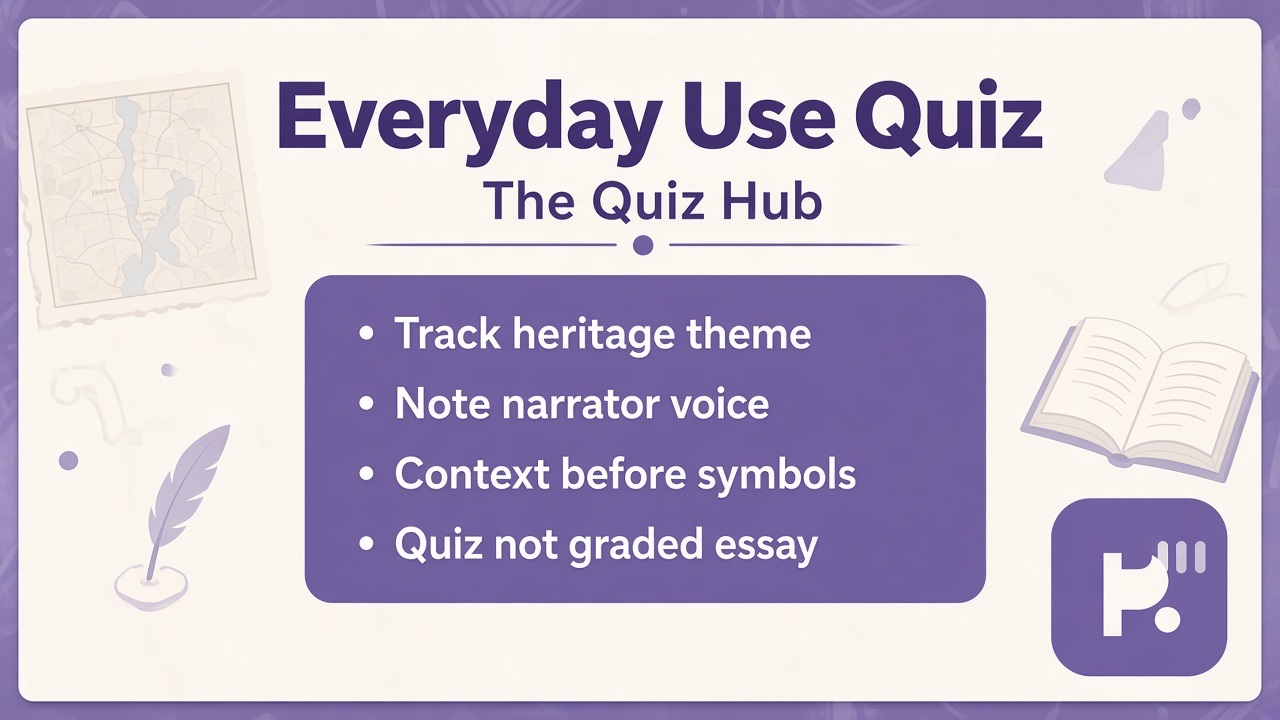
What this quiz can and cannot tell you
Can tell you
- Highlight heritage, narrator, and family context habits worth trying before the next Walker discussion
- Separate unofficial literacy from AP rubrics and graded thesis feedback
- Encourage spoiler-aware sharing and kind close reading without classroom dunking
- Spark better seminar questions without web score hiring or shame claims
Cannot tell you
- Replace school essays, AP exams, annotated editions, or instructor grading
- Prove AP readiness or publishing skill from story agree bars alone
- Excuse spoiler dumps or sibling insult threads because heritage bars scored high once
- Substitute for therapy when online rank arguments disrupt sleep and friendships
Quilt heritage, Mama's voice, and quiz-not-AP-essay limits
Students search Everyday Use quizzes before syllabus discussions, quilt theme essays, and group chats that treat recall like AP immunity. Those goals help when bars stay reflection notes for heritage theme, narrator voice, and family context. They hurt when people spoil plot turns or claim agree totals replaced thesis feedback.
Dr. James Whitfield reviews fun novelty literacy screeners with a simple split: reward honest agreement with widely taught reading habits and honest limits on credential overclaim at the same time. Heritage quilt theme keeps daily use versus display visible beside one-sibling-wins-all traps. Narrator voice keeps Mama's first-person sightlines visible beside mind-reading every character myths. Family conflict context keeps education, naming, and scar context visible beside perfect-villain dunk comics. Quiz not AP essay keeps rubric and spoiler language honest so readers know instructors own graded writing.
Real readers mix bars. You might score high on heritage theme while narrator bars wobble, which often describes theme buzzwords without yard-scene rereads. You might score high on family context with moderate limits, which can mean solid sister framing yet little experience captioning unofficial shares. Reverse items catch sloppy answers: heritage as public winner-take-all, Mama narrating every inner thought for Dee, Dee as pure evil with no context, spoiler licenses, or fan totals as bibliography proof should not inflate bars meant to track layered literacy habits.
Pair results with siblings on this hub instead of forcing one story bank everywhere. Our English literature quiz stays on broader lit study habits with stems separate from this Walker page. Browse the fun and novelty test hub for more low-stakes screeners that skip AP credential posing. Caption shares as reading warm-up, not essay badges.
Semesters move faster than recap threads. Everyday Use arrives in short story units, but narrator rereads stay useful all year. When you share results, say spoilers need opt-in tags. When you borrow tips, credit classmates who lent you annotated editions. Retake after one cited paragraph lands in your draft and watch whether quiz-not-AP-essay bars stay high even when heritage bars rise, which often means you separated performative rank from actual close-reading habits.
| Test | Focus |
|---|---|
| English literature quiz | General lit study habits and citation framing rather than Everyday Use specific heritage and narrator stems on this page |
| Fun and novelty hub | More playful quizzes that avoid AP essay credential posing |
Everyday Use Quiz FAQ
What does this Everyday Use quiz measure?
It measures how much you agree with statements about heritage quilt theme, narrator voice, family conflict context, and quiz not AP essay limits. You get an index from 0 to 100 plus four bars. It describes self-rated story literacy on this screener, not AP exam scores.
Does a high score mean my AP essay will earn top marks?
No. High bars mean you related to reading habit statements here. Instructor rubrics, draft feedback, and formal exams follow their own rules. Quiz not AP essay items explicitly reject thesis-substitute myths.
Will this quiz spoil the whole story for me?
Items focus on theme, voice, and study habits rather than a full plot recap. Still use spoiler tags when you discuss live reading with friends who have not finished the assignment.
How is this different from the English literature quiz?
The English literature sibling focuses on general author context, quotes, and study limits across many works. This page focuses on Everyday Use heritage, Mama narration, and sister context with a separate stem bank.
Who reviewed this quiz?
Dr. James Whitfield, PhD reviewed the story literacy framing, AP and spoiler limit language, and result explanations. See our editorial policy for review standards.
Reviewed by