What this event planning quiz measures
This quiz does not issue marriage licenses, approve venue permits, certify event planners, or replace insurance and alcohol service rules from one agree screener. It measures how much you agree with checklist habits grouped four ways: timeline and milestones about early shared timelines, named deposit and headcount dates, co-host updates, buffer days, and weekly reviews instead of day-before vendor myths; budget and vendor buffers about quote tracking, contingency funds, comparing big-ticket options, payment logs, and rejecting skip-agreement fantasies; guest communication about timely invites, allergy and access asks, confirmed headcounts, schedule clarity, ride-home details, and thanking helpers; and quiz not permit limits about playful reflection, rejecting fire-code ignore myths, treating alcohol and curfew as legal venue questions, and sharing bars as self-coaching not contract skips. You rate 22 statements from strongly disagree to strongly agree, with reverse-worded myths so agreeing that adrenaline saves last-minute vendor booking, that fees never surprise you, that guests should mind-read schedule changes, or that high bars bless fire-code ignores cannot inflate every bar. Your answers also feed a second chart on closeness and trust habits, because planning stress sometimes blocks asking co-hosts for help. The total becomes an index from 0 to 100 where higher means more reported checklist habits on this screener, not legal credentials or harassment license over vendors.
Timeline and milestones
Shared dates, deposits, headcount, buffer days, weekly reviews.
Budget and vendor buffers
Quotes, contingency, comparisons, payments, saying no to add-ons.
Guest communication
Invites, access asks, headcount confirms, schedule clarity, thanks.
Quiz not permit limits
Checklist fun; not licenses, permits, or contract skips.
How it works
Answer 22 agreement items
Rate each statement from Strongly disagree to Strongly agree. Tap Next after each answer.
Answers sort into four domains
Each answer feeds one of four event planning checklist groups, and every item also feeds a closeness and trust layer.
See your index and charts
You get a 0 to 100 index, a band, and two bar charts you can share as playful self-coaching with consent.
Take the Event Planning Quiz
Answer 22 short statements to see your event planning checklist habit index, four domain bars, and a closeness and trust chart.
What your result means
Your index is the average of all 22 answers, scaled from 0 to 100, with reverse-worded items flipped first. Higher means more reported checklist habits on this screener. Read quiz-not-permit bars with budget bars before you treat any total as legal proof or planner certification.
| Band | Index range | Typical reading |
|---|---|---|
| Building checklist habits | 0 to 35 | Fewer agreed habits on timelines, budget buffers, guest messages, or quiz-not-permit limits on this screener. |
| Mixed checklist habits | 36 to 65 | Solid habits in some domains with last-minute vendor myths, ghosted guests, or permit shortcuts in others. |
| Stronger checklist habits | 66 to 100 | Frequent agreement with timeline, budget, guest, and permit-limit habits; still not planner certification. |
Tips at a glance
A quick takeaway graphic with topic tips (not your personal quiz scores). Start the quiz for your index, bands, and charts.
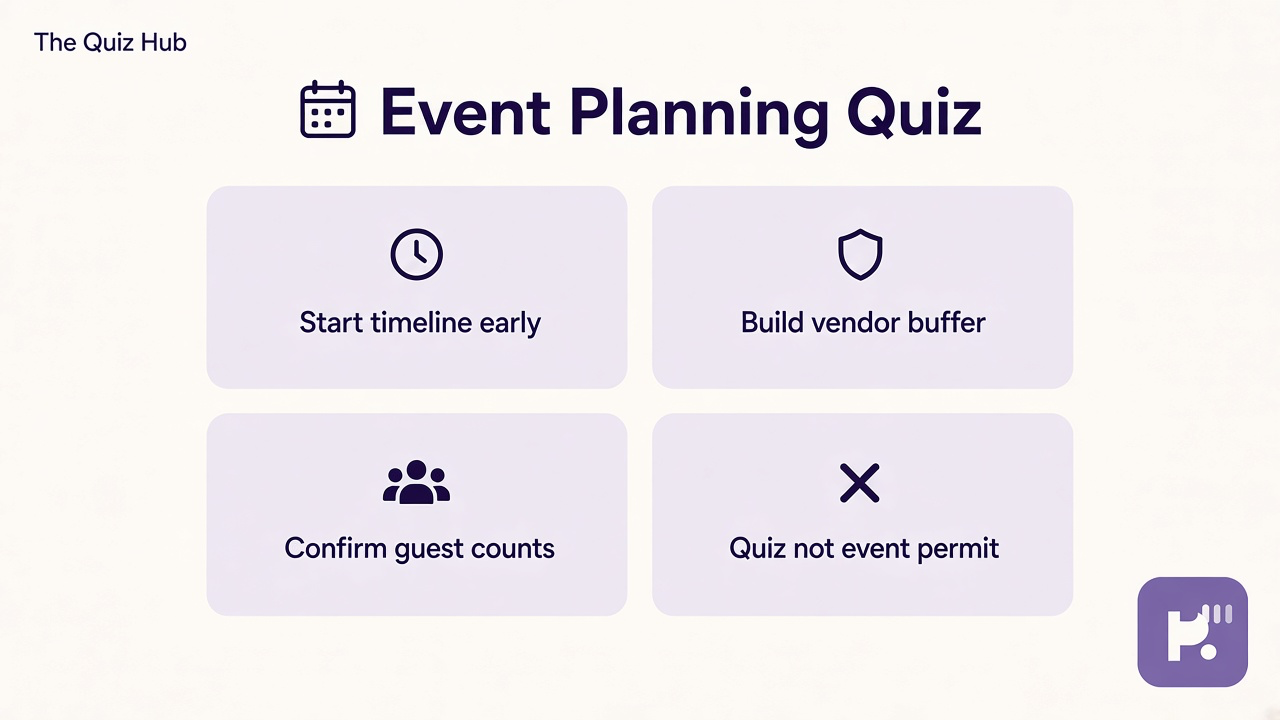
What this quiz can and cannot tell you
Can tell you
- Highlight timeline, budget, and guest message habits worth trying before the next party or wedding crunch
- Encourage contingency buffers and written headcount confirms without vendor shame threads
- Separate playful reflection from permit, license, and insurance paperwork in plain language
- Spark better questions for co-hosts, venues, and caterers about shared expectations
Cannot tell you
- Replace marriage licenses, fire inspections, alcohol permits, or venue legal review
- Certify you as a professional event planner from one agree screener
- Excuse skipping vendor contracts because checklist bars scored high once
- Substitute for therapy when planning fights turn cruel or financially coercive at home
Checklist habits without permit or license myths
People search event planning quizzes when showers, reunions, and weddings collide with vendor quotes and RSVP maybe replies. The gap online is not lack of Pinterest boards; it is thin guidance on contingency buffers, confirmed headcounts, and hosts who need timelines without treating fan screeners like permit offices.
Dr. James Whitfield reviews fun novelty screeners with a simple split: reward honest agreement with practical checklist habits and honest limits on legal overclaim at the same time. Timeline and milestones keeps shared dates, deposit markers, and buffer days visible beside day-before vendor myths. Budget and vendor buffers keeps quote logs and contingency funds visible beside skip-agreement fantasies. Guest communication keeps invites, access asks, and ride-home clarity visible beside ghosted schedule changes. Quiz not permit limits keeps licenses, fire codes, and insurance language honest so readers know official paperwork differs from fan pages.
Real readers mix bars. You might score high on guest messages while budget buffers wobble, which often describes kind hosts who forget contingency math. You might score high on timelines with moderate permit limits, which can mean solid dates yet little experience captioning unofficial shares. Reverse items catch sloppy answers: adrenaline saves last-minute booking, vendors never surprise you, guests should mind-read times, or quiz bars bless fire-code ignores should not inflate bars meant to track layered checklist habits.
Pair results with siblings on this hub instead of forcing one party story everywhere. Our etiquette quiz sibling covers RSVP and host grace when guest lists need parallel manners habits. The Erin Condren planner quiz stays on paper planner fan reflection rather than vendor contract lanes here. Browse the fun and novelty test hub for more low-stakes screeners that skip credential posing. Caption shares as checklist practice, not permit proof.
Seasons change faster than vendor reply times. School years, holidays, and committee handoffs shift which habits feel alive. When you share results, say unofficial fun beats legal shortcuts. When you borrow tips, credit friends who lent you spreadsheet templates. Retake after one planning month and notice whether quiz-not-permit bars stay high even when timeline bars rise, which often marks healthier hosting than dunking strangers for one late RSVP.
| Test | Focus |
|---|---|
| Etiquette quiz | RSVP and host grace habits rather than vendor timeline and budget buffers on this slug |
| Erin Condren planner quiz | Paper planner fan reflection rather than party vendor checklist depth here |
| Fun and novelty hub | More playful quizzes that avoid permit or planner credential posing |
Event Planning Quiz FAQ
What does this event planning quiz measure?
It measures how much you agree with checklist habits across timeline and milestones, budget and vendor buffers, guest communication, and quiz-not-permit limits. You get an index from 0 to 100 and four bars. It is playful self-coaching, not certified planner training.
Does a high score mean I can skip venue permits or a marriage license?
No. Bars describe checklist habits you reported here. Clerks, venues, and insurers follow their own rules. Quiz-not-permit items explicitly reject license and fire-code shortcut myths.
How is this different from the etiquette quiz?
The etiquette sibling focuses on RSVPs, table courtesy, and kind corrections. This page focuses on timelines, vendor budgets, headcount confirms, and permit-limit habits with a separate stem bank.
Why include budget buffer and vendor agreement items?
Intent brief readers asked for contingency and quote habits beside timeline tips. Budget bars keep surprise-fee myths visible so guest kindness does not mask empty buffer funds.
Who reviewed this quiz?
Dr. James Whitfield, PhD reviewed the playful framing, permit and license limit language, and result explanations. See our editorial policy for review standards.
Reviewed by