What this etiquette quiz measures
This quiz does not certify debutante training, cannot rank social class from one agree screener, and cannot override accessibility needs or cultural context with generic rules. It measures how much you agree with social grace habits grouped four ways: host and guest about RSVPs, gifts, thank-yous, dietary asks when hosting, and helping tired hosts; table and phone about phones during meals, headphone courtesy, waiting to eat when that is the norm, basic chewing manners, and apologizing when notifications distract; kind corrections about private kindness, quick apologies, good-intent assumptions, teaching kids without mocking adults, and accepting anxiety or sensory needs; and quiz not etiquette police about playful reflection, refusing VIP insult myths, respecting cultural and disability context, and sharing bars as self-coaching not coworker rank. You rate 22 statements from strongly disagree to strongly agree, with reverse-worded myths so agreeing that late no-text arrivals are fine, that speakerphone tables are polite, that stranger shame posts educate, or that perfect bars grant VIP insult rights cannot inflate every bar. Your answers also feed a second chart on closeness and trust habits, because manners stress sometimes masks fear of rejection. The total becomes an index from 0 to 100 where higher means more reported social grace habits on this screener, not social class credentials.
Host and guest
RSVP, gifts, thank-yous, help when hosting.
Table and phone
Phones down, volume care, meal courtesy.
Kind corrections
Private kindness, apologies, context.
Quiz not etiquette police
Playful habits; no class gatekeeping.
How it works
Answer 22 agreement items
Rate each statement from Strongly disagree to Strongly agree. Tap Next after each answer.
Answers sort into four domains
Each answer feeds one of four social grace groups, and every item also feeds a closeness and trust layer.
See your index and charts
You get a 0 to 100 index, a band, and two bar charts you can share as playful self-coaching with consent.
Take the Etiquette Quiz
Answer 22 short statements to see your social grace habit index, four domain bars, and a closeness and trust chart.
What your result means
Your index is the average of all 22 answers, scaled from 0 to 100, with reverse-worded items flipped first. Higher means more reported courteous habits on this screener. Read kind corrections with quiz-not-police bars before you treat a high host score as license to shame strangers.
| Band | Index range | Typical reading |
|---|---|---|
| Building social grace habits | 0 to 35 | Fewer agreed facts on RSVP, table courtesy, kind corrections, or quiz-not-police limits. |
| Mixed social grace habits | 36 to 65 | Solid courtesy in some domains with late arrivals, speakerphone, shame posts, or VIP myths in others. |
| Strong social grace habits | 66 to 100 | Frequent agreement with courteous habits and playful limits; still not class certification. |
Tips at a glance
A quick takeaway graphic with topic tips (not your personal quiz scores). Start the quiz for your index, bands, and charts.
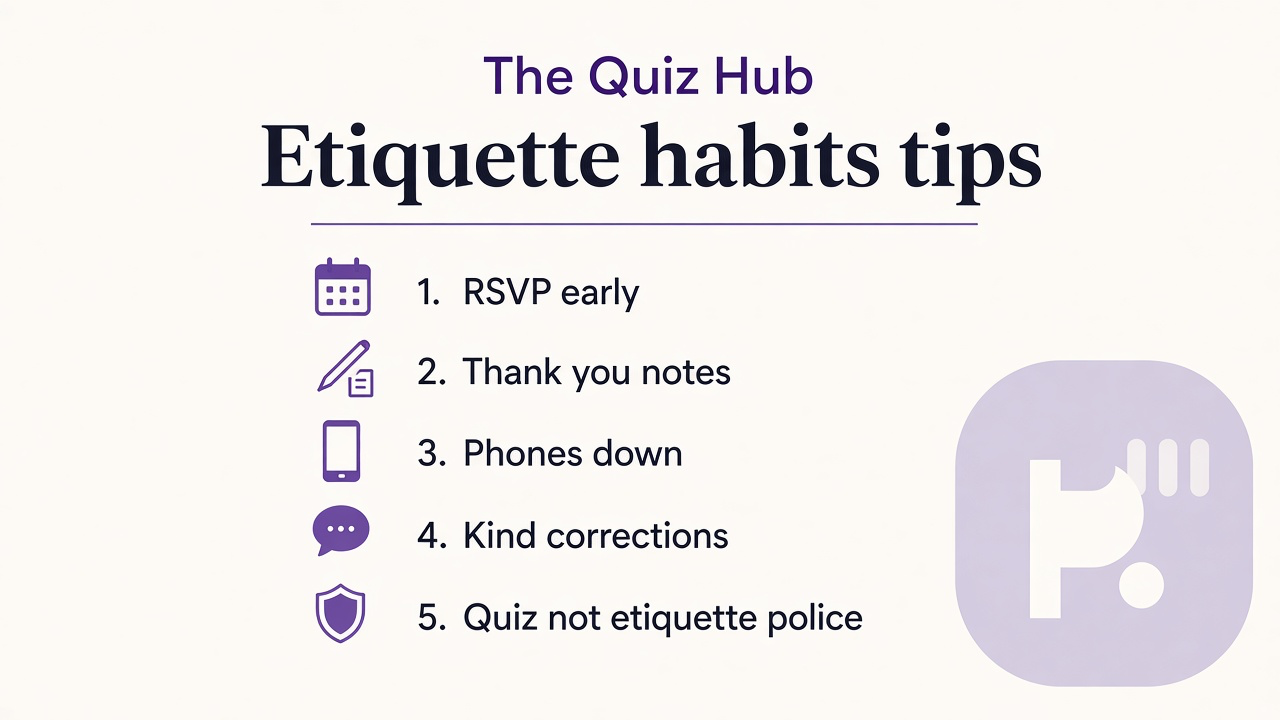
What this quiz can and cannot tell you
Can tell you
- Highlight RSVP, thank-you, and phone habits worth practicing before the next event
- Encourage kind private corrections without public shame threads
- Separate playful reflection from class gatekeeping in plain language
- Spark better questions for hosts, roommates, or family about shared expectations
Cannot tell you
- Prove social class, wealth, or worth from one agree screener
- Override accessibility, sensory, or cultural etiquette differences with one rule list
- License dunking strangers online for napkin choices or accent manners
- Replace professional event planning, hospitality training, or therapy for social anxiety
Social grace without etiquette police captions
People search etiquette quizzes when party season collides with phone habits and thank-you note guilt. The gap online is not lack of rules lists; it is thin guidance on kind corrections, cultural context, and hosts who need RSVPs without shame theater.
Host and guest habits cover on-time RSVPs, modest gifts, thank-you messages, dietary awareness when you host, and helping exhausted hosts clean up. Table and phone habits cover screens during meals, headphone courtesy, basic chewing manners, and apologizing when notifications pull you away.
Kind corrections cover private kindness, quick apologies, good-intent assumptions, teaching kids without mocking adults, and accepting that anxiety or sensory needs sometimes override perfect posture. Quiz not etiquette police covers refusing VIP insult myths, respecting culture and disability context, and sharing bars as self-coaching.
Reverse items catch late no-text arrivals, restaurant speakerphone pride, stranger shame posts, and perfect-bar VIP fantasies. Those myths should not inflate bars meant to track playful grace.
Pair results with siblings on this hub instead of forcing manners debates everywhere. Our netiquette quiz sibling covers online courtesy when group chats need parallel habits. Browse the fun and novelty test hub for more low-stakes screeners that skip class gatekeeping. Retake after one month of RSVP and thank-you practice; grace grows slowly and that is normal.
| Test | Focus |
|---|---|
| Netiquette quiz | Online courtesy habits rather than in-person host and table grace on this slug |
| Fun and novelty hub | More playful quizzes that avoid etiquette police or class rank tone |
Etiquette Quiz FAQ
What does this etiquette quiz measure?
It measures how much you agree with social grace habits across host and guest routines, table and phone courtesy, kind corrections, and quiz-not-etiquette-police limits. You get an index from 0 to 100 and four bars. It is playful self-coaching, not etiquette certification.
Does a high score mean I am upper class or better than coworkers?
No. Bars describe courteous habits you reported here. Wealth, culture, and accessibility needs shape real-world manners beyond one screener.
Should I correct strangers manners online?
The quiz favors private, kind corrections and rejects public shame posts. Context, culture, and disability matter more than dunking napkin photos.
Why are some statements worded as myths?
Reverse-worded myths catch overconfidence. Agreeing that late no-text arrivals are fine, that speakerphone tables are polite, that stranger fail posts educate, or that quiz bars grant VIP insult rights should not inflate your grace index.
Who reviewed this quiz?
Dr. James Whitfield, PhD reviewed the playful framing, anti-gatekeeping limits, and result explanations. See our editorial policy for review standards.
Reviewed by