What this ethnonational attitudes page measures
This page does not administer the published Ethnonational Attitudes Scale, cannot predict how you or strangers will vote, cannot access voter files or campaign databases, and cannot justify harassment from one frequency total. It measures how often you noticed civic media and debate habits clinicians, educators, and conflict mediators often discuss during heated identity news cycles, organized four ways: headline cross-check when you read before resharing, compare sources, question anonymous screenshots, and slow chain forwards; kind debate when you listen first, refuse slurs and dehumanizing group labels, avoid collective blame for distant governments, apologize when jokes hurt, and invite quieter voices; media balance when you notice outrage algorithms, log off before cruel posts, diversify inputs, and pace binge scrolling; and quiz not ballot when you refuse voter-file myths, keep ballot choices private, reject published-scale copycat scoring, and share bars as habit notes only. You answer 22 how-often statements about the past month, with reverse-worded items so one calm weekend cannot hide frequent outrage shares on other days. Your responses also feed a second chart on closeness and trust habits, because political stress sometimes shrinks curiosity. The total becomes an index from 0 to 100 where higher means more frequent reported civil discourse habits on this screener. Your responses suggest intensity to discuss with friends or counselors; they do not tell you how to vote.
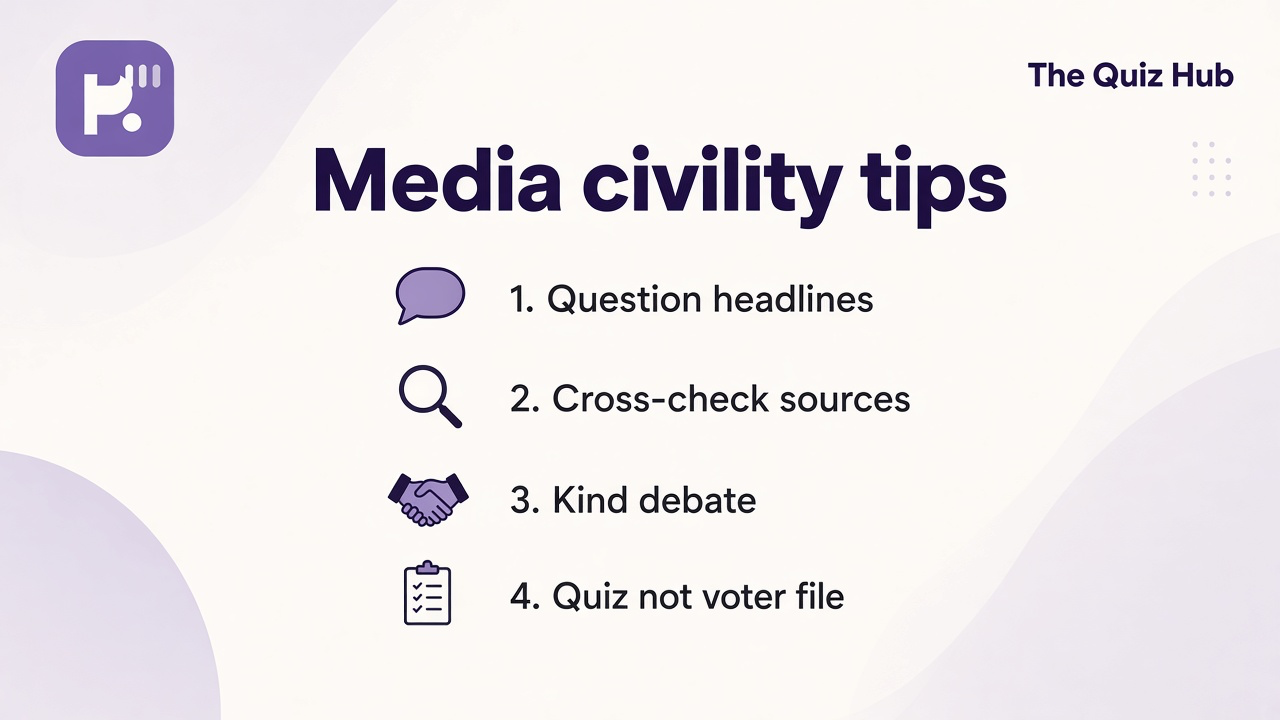
Headline cross-check
Read first, multi-source, slow chain forwards.
Kind debate
Listen, no slurs, ideas not collective blame.
Media balance
Varied feeds, log off before heat posts.
Quiz not ballot
Habit reflection; not voter file or published scale.
How it works
Answer 22 frequency items
Rate each statement from Never to Very often for the past month. Tap Next after each answer.
Answers sort into four domains
Each answer feeds one of four civil discourse groups, and every item also feeds a closeness and trust layer.
See your index and charts
You get a 0 to 100 index, a band, and two bar charts for personal reflection with consent.
Take the Ethnonational Attitudes Scale
Answer 22 short statements to see your civil discourse habit index, four domain bars, and a closeness and trust chart.
What your result means
Your index is the average of all 22 answers, scaled from 0 to 100, with reverse-worded items flipped first. Higher means more frequent reported civil discourse habits on this screener. Read kind debate with quiz-not-ballot bars before you treat totals as political trophies or voter intelligence.
| Band | Index range | Typical reading |
|---|---|---|
| Building civil discourse habits | 0 to 35 | Fewer frequent headline checks, kind debate, media balance, or quiz-not-ballot habits in the past month. |
| Mixed civil discourse habits | 36 to 65 | Some careful stretches alongside outrage shares, harsh debate, or quiz-as-voter-file myths on others. |
| Stronger civil discourse habits | 66 to 100 | Frequent headline checks, kind debate, media balance, and quiz-not-ballot habits; still not published scale or ballot data. |
Tips at a glance
A quick takeaway graphic with topic tips (not your personal quiz scores). Start the quiz for your index, bands, and charts.
What this quiz can and cannot tell you
Can tell you
- Name headline, debate, and media habits in plain language for reflection or study groups
- Highlight when read-before-share or listen-first skills are missing during news spikes
- Separate unofficial civility reflection from campaign data myths
- Offer a baseline if you retake after one media-break experiment
Cannot tell you
- Predict votes, rank patriotism, or access voter files from one frequency screener
- Replace the published Ethnonational Attitudes Scale or peer-reviewed civic attitude research
- Justify harassment, doxxing, or threats toward national or ethnic groups
- Tell you which candidates or parties to support
Civic civility without ballot captions
People search ethnonational attitude scales when headlines feel personal and feeds reward certainty faster than context. Researchers study attitude language with validated instruments this unofficial page does not replicate. The gap online is thin guidance on read-before-share habits, kind debate, and media balance without turning neighbors into enemy teams.
Headline cross-check covers opening full articles, comparing sources, questioning anonymous screenshots, and slowing chain forwards. Kind debate covers listening first, refusing slurs and collective blame, apologizing when jokes hurt, and keeping threats off the table. Media balance covers noticing outrage algorithms, diversifying inputs, and logging off before heat you would not say in person.
Quiz not ballot covers refusing voter-file fantasies, keeping ballot choices private, and sharing bars as habit notes rather than harassment passes. Reverse items catch resharing without reading, dehumanizing shortcuts, outrage binges, and treating web totals like campaign targeting data.
Pair results with siblings on this hub instead of forcing one political story. Our ethics quiz sibling emphasizes everyday harm-and-rules literacy when policy debates need a calmer frame. Browse the personality and psychology test hub for more reflection screeners with unofficial-not-published-scale limits.
Higher scores mean more frequent self-reported civil habits here, not proof you always vote correctly or that others deserve dunking. Retake after a month of read-before-share practice when safe and compare bars, not only the total.
| Test | Focus |
|---|---|
| Ethics quiz | Everyday ethics literacy rather than ethnonational media civility frequency on this slug |
| Personality and psychology hub | Broader reflection screeners rather than civic media habits alone |
Ethnonational Attitudes Scale FAQ
What does this screener measure?
It measures how often you noticed headline cross-check, kind debate, media balance, and quiz-not-ballot habits during the past month. You get an index from 0 to 100 plus four domain bars. Your responses suggest self-reported civility habits for reflection, not published Ethnonational Attitudes Scale scores.
Does this quiz predict how I will vote?
No. Voting is a private civic act. This unofficial screener cannot access voter files, campaign databases, or ballot choices, and it should not be used to target strangers.
Is this the published Ethnonational Attitudes Scale used in research?
No. Peer-reviewed ethnonational attitude studies use instruments and scoring this page does not replicate. Treat results as civility habit reflection only.
Why are some statements about slurs or collective blame?
Frequency items track habits that harm communities when they repeat. Reverse-worded civil habits such as reading sources, listening first, or keeping ballots private should not be read as permission to harass when answered often.
What should I do if political stress feels overwhelming?
Take breaks from feeds, talk with trusted friends or a licensed clinician, and call or text 988 (US) if crisis thoughts spike. This page is reflection, not emergency political counseling.
Who reviewed this quiz?
Dr. Elena Vasquez, PhD reviewed the civility framing, not-ballot limits, unofficial scale language, and result explanations. See our editorial policy for review standards.
Reviewed by