What this childhood trauma reflection page measures
This page does not administer a validated childhood trauma inventory, cannot diagnose PTSD or attachment disorders from one score, cannot file child protective reports, and cannot replace emergency services when a child is unsafe now. It measures how often you noticed habits clinicians and trauma-informed therapists often discuss when childhood stress still shapes adult life, organized four ways: early stress patterns when fear, unpredictability, shame about needs, people-pleasing, or authority conflict echoes old home rules; body and memory cues when nightmares, intrusive images, startle, dissociation, or tension arrive with reminders; coping and grounding when five-senses skills, safe outreach, journaling, pacing, and 988 awareness show up versus help-skipping shame; and trauma screen limits when you refuse quiz-as-diagnosis, refuse CPS substitute myths, seek therapists, and bring examples instead of verdict screenshots. You answer 22 how-often statements about the past month, with reverse-worded items so one calm week cannot hide frequent strain on other days. Your responses also feed a second chart on closeness and trust habits, because trauma impact often rises when vulnerability feels risky. The total becomes an index from 0 to 100 where higher means more frequent reported childhood-linked stress habits on this screener. Your responses suggest intensity to discuss with support; they do not mean you failed your past or your family.
Early stress patterns
Fear, unpredictability, shame about needs, and people-pleasing echoes.
Body and memory cues
Nightmares, startle, tension, and brief dissociation with reminders.
Coping and grounding
Grounding skills, safe outreach, pacing, and crisis awareness.
Trauma screen limits
Therapist not diagnosis; 988; not a CPS substitute online.
How it works
Answer 22 frequency items
Rate each statement from Never to Very often for the past month. Tap Next after each answer.
Answers sort into four domains
Each answer feeds one of four childhood stress groups, and every item also feeds a closeness and trust layer.
See your index and charts
You get a 0 to 100 index, a band, and two bar charts you can bring to a therapist.
Take the Establishing Childhood Psychological Trauma
Answer 22 short statements to see your childhood stress pattern index, four domain bars, and a closeness and trust chart.
What your result means
Your index is the average of all 22 answers, scaled from 0 to 100, with reverse-worded items flipped first. Higher means more frequent reported childhood-linked stress habits on this screener. Read body cues with coping and trauma-screen limits before the total, since functioning at work can hide frequent startle or nightmares.
| Band | Index range | Typical reading |
|---|---|---|
| Lower reported childhood-linked strain | 0 to 35 | Fewer frequent early stress, body cue, coping, or limit-trap items in the past month. |
| Mixed reported childhood-linked strain | 36 to 65 | Some grounded stretches alongside stress patterns, body cues, or limit myths on others. |
| Higher reported childhood-linked strain | 66 to 100 | Frequent early stress, body cues, blocked coping, or quiz-as-verdict traps in the past month. |
Tips at a glance
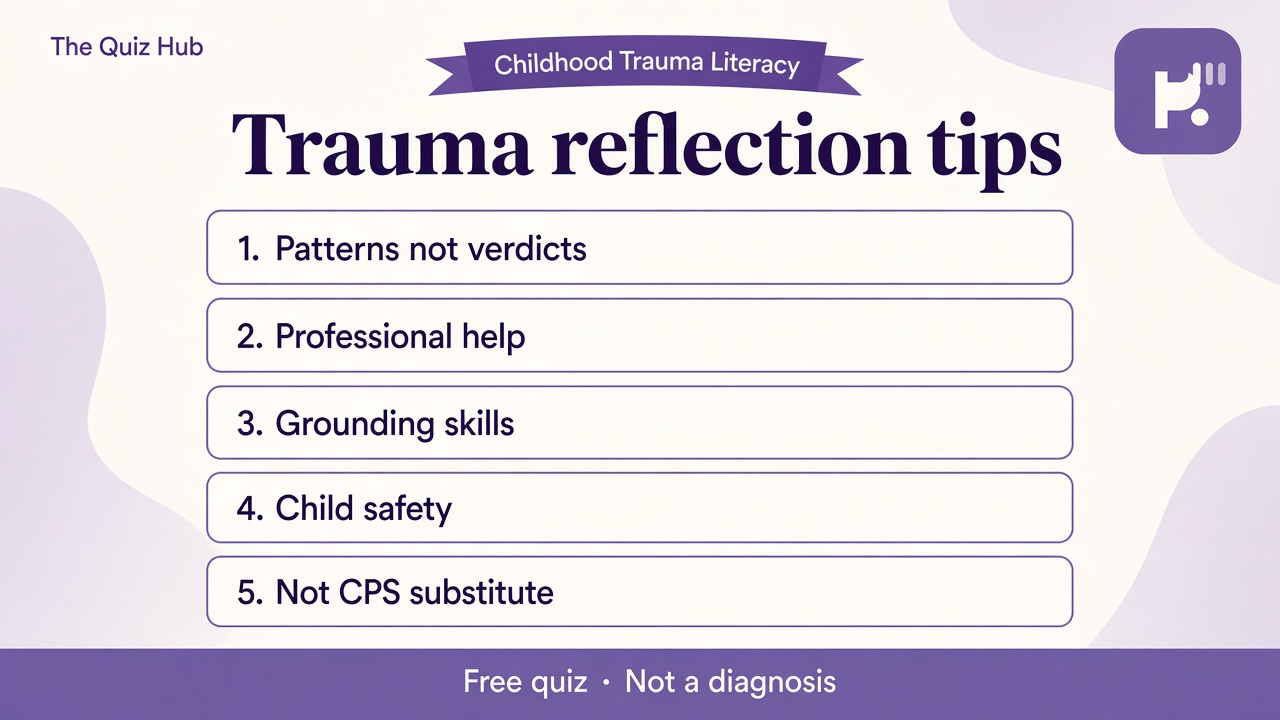
A quick takeaway graphic with topic tips (not your personal quiz scores). Start the quiz for your index, bands, and charts.
What this quiz can and cannot tell you
Can tell you
- Name early stress, body cue, and grounding habits in plain language for intake
- Highlight when therapist outreach, pacing, or 988 awareness is missing
- Support early conversations with trauma-informed professionals
- Offer a baseline if you retake after one grounding or therapy experiment
Cannot tell you
- Diagnose PTSD, complex trauma, or personality disorders from one score
- Substitute for CPS, police, or emergency calls when a child is in danger now
- Tell you whether to confront, forgive, or cut contact with caregivers
- Prove which relative caused harm or rank family toxicity for social media
Childhood impact patterns without online verdicts
People search childhood trauma screeners when old home memories still shape sleep, conflict, and shame about needs. Clinicians discuss trauma impact as patterns of stress, body cues, and coping over time, not as a single online label you paste on relatives. This unofficial page uses that reflection lens; it cannot replace interview-based assessment or tell you whether your story deserves help.
Early stress patterns cover hypervigilance, eggshell walking, people-pleasing, and authority fear that echoes unpredictable childhood moments. Body and memory cues cover nightmares, intrusive images, startle, tension, and brief dissociation when reminders appear. Coping and grounding cover five-senses skills, safe outreach, journaling without forever-broken labels, and pacing hard conversations with 988 awareness when panic spikes.
Trauma screen limits cover refusing quiz-as-diagnosis, refusing to treat this page as a CPS substitute, looking up trauma-informed therapists, and bringing domain examples to intake instead of screenshot wars. Mandated reporting laws belong to real-world professionals and emergency lines when a child is unsafe now; a web screener cannot file those reports for you.
Pair results with siblings on this hub instead of forcing one family story. Our childhood trauma quiz offers a broader reflection lane when you want a different question frame. Our emotional abuse questionnaire (EAQ-inspired) sibling emphasizes relational harm themes with its own unofficial limits. Browse the mental health and clinical test hub for more YMYL screeners with study-not-diagnosis framing.
Higher scores mean more frequent self-reported childhood-linked stress habits, not proof you must exile relatives or that love was fake. Bring domain bars to therapy so sessions start with examples, not shame. If panic or hopelessness spikes, skip online debate and prioritize 988 or a therapist. Retake after a month of one grounding experiment when safe and compare bars, not only the total.
| Test | Focus |
|---|---|
| Childhood trauma quiz | Broader childhood trauma reflection rather than establishing-impact frequency on this slug |
| Emotional abuse questionnaire (EAQ-inspired) | Relational harm literacy rather than whole childhood stress pattern framing here |
Establishing Childhood Psychological Trauma FAQ
What does this screener measure?
It measures how often you noticed early stress patterns, body and memory cues, coping and grounding habits, and trauma-screen limit thinking during the past month. You get an index from 0 to 100 plus four domain bars. Your responses suggest self-reported frequency for reflection, not a clinical diagnosis.
Does a high score mean I have PTSD or childhood trauma disorder?
No. High scores describe frequent habits on this unofficial screener, not a formal disorder label. Only qualified clinicians using interviews and safety screening can assess trauma-related conditions.
Should I use this quiz to report child abuse to CPS?
No. This page is self-reflection only and cannot file child protective reports. If a child is in danger now, contact local emergency services or child-protection hotlines directly and follow laws in your area.
Why are some statements about safe disagreement or therapy outreach?
Reverse-worded items catch overconfidence. Agreeing that you can disagree safely, that grounding eased tension, that you sought therapists or 988 resources, or that you refused quiz-as-verdict thinking should not inflate a strain index meant to track childhood-linked stress frequency.
What should I do if my score is high or I feel overwhelmed?
Call or text 988 (US) if crisis feels immediate, or contact a licensed trauma-informed therapist with domain examples from your results. Prioritize support over retakes when panic or hopelessness spikes.
Who reviewed this quiz?
Dr. Elena Vasquez, PhD reviewed the YMYL framing, crisis resources, not-diagnosis and not-CPS-substitute language, unofficial assessment limits, and result explanations. See our editorial policy for review standards.
Reviewed by