What this unofficial ESS literacy page measures
This page does not administer the licensed Epworth Sleepiness Scale ESS-1998 form, diagnose sleep apnea, or certify you safe to drive. It measures how often you noticed sleepiness-related habits grouped four ways: sitting drowsiness about reading, meetings, evening screens, caffeine reliance, and nap refresh; driving alertness about microsleep scares, rest breaks, and planning around short nights; sleep schedule habits about regular bedtimes, screen limits, alcohol myths, snoring awareness, and weekend debt; and unofficial ESS limits about treating this tool as literacy only, seeking clinicians and sleep studies when needed, and refusing to match web bars to official ESS-1998 cutoffs or diagnosis fantasies. You answer 22 frequency prompts from never to very often, with reverse-worded safety and limit items so agreeing with every myth cannot inflate strain bars. Your answers also feed a second chart on closeness and trust habits, because fatigue sometimes pushes people toward risky driving or shame instead of help. The total becomes an index from 0 to 100 where higher means more reported sleepiness strain frequency on this unofficial screener, not licensed ESS-1998 points or clinical proof.
Sitting drowsiness
Quiet seats, meetings, screens, caffeine, and nap recovery.
Driving alertness
Microsleep scares, rest breaks, and planning around short nights.
Sleep schedule habits
Bedtime routine, screens, snoring awareness, and debt patterns.
Unofficial ESS limits
Not licensed ESS-1998; clinicians and sleep studies stay primary.
How it works
Answer 22 frequency items
Rate each prompt from Never to Very often. Tap Next after each answer.
Answers sort into four domains
Each answer feeds one of four sleepiness habit groups, and every item also feeds a closeness and trust layer.
See your index and charts
You get a 0 to 100 index, a band, and two bar charts you can compare after a sleep schedule experiment.
Take the Epworth Sleepiness Scale (ESS-1998)
Answer 22 short frequency prompts to see your daytime sleepiness habit index, four domain bars, and a closeness and trust chart.
What your result means
Your index is the average of all 22 answers, scaled from 0 to 100, with reverse-worded safety and limit items flipped first. Read unofficial ESS limit bars together with driving alertness before you treat any total as licensed ESS-1998 scoring or driving clearance. If driving feels unsafe, stop and seek help regardless of index.
| Band | Index range | Typical reading |
|---|---|---|
| Lower reported sleepiness strain | 0 to 35 | Fewer frequent sitting drowsiness, driving risk, schedule strain, or unofficial-limit traps in the past month. |
| Mixed reported sleepiness strain | 36 to 65 | Some alert stretches alongside drowsy sitting, driving scares, or schedule slips on others. |
| Higher reported sleepiness strain | 66 to 100 | Frequent drowsy sitting, driving risk, schedule strain, or ESS-as-diagnosis traps in the past month. |
Tips at a glance
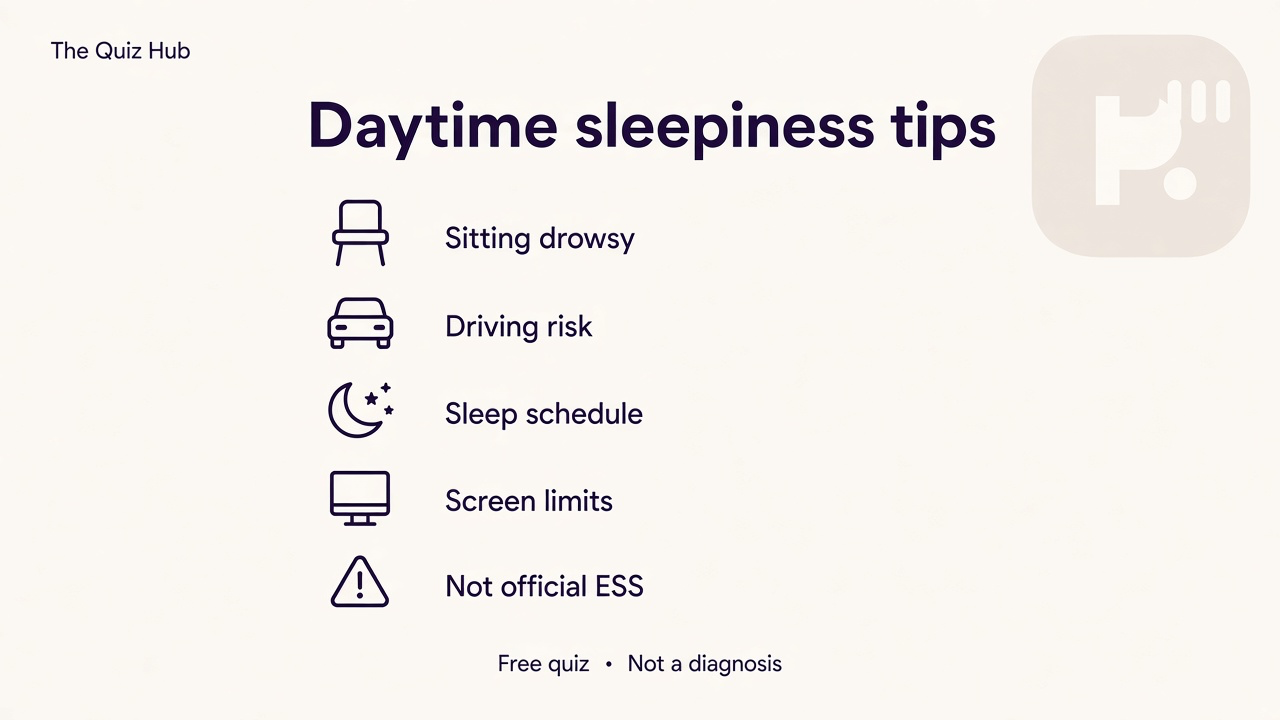
A quick takeaway graphic with topic tips (not your personal quiz scores). Start the quiz for your index, bands, and charts.
What this quiz can and cannot tell you
Can tell you
- Highlight sitting, driving, and schedule habits worth discussing with a clinician
- Separate unofficial literacy from licensed ESS-1998 forms in plain language
- Encourage rest breaks and sleep study conversations without web diagnosis
- Spark better questions for primary care or sleep clinic visits
Cannot tell you
- Replace the published Epworth Sleepiness Scale ESS-1998 or official scoring keys
- Diagnose sleep apnea, narcolepsy, or other disorders from one frequency screener
- Clear you to drive or operate machinery when you feel drowsy
- Substitute for polysomnography, CPAP decisions, or medication plans
Daytime sleepiness literacy without licensed ESS confusion
Search traffic around Epworth and ESS often mixes two needs: notice whether quiet sitting still triggers nodding off, and check whether unofficial online tools are being mistaken for the published ESS-1998 form. Those goals help when readers treat bars as conversation notes for clinicians. They hurt when people match web indices to textbook cutoffs, skip sleep studies while snoring persists, or drive through microsleep scares because a quiz felt low.
Dr. Elena Vasquez reviews mental health clinical screeners with a YMYL light split: name driving and apnea referral paths without turning every page into crisis theater. Sitting drowsiness tracks reading, meetings, and evening screens without shaming naps that actually help. Driving alertness keeps rest breaks and ride swaps visible. Sleep schedule habits keeps regular bedtimes, screen limits, and snoring awareness separate from alcohol-as-sleep-aid myths. Unofficial ESS limits keeps licensed form language honest so readers know this page is literacy only.
Real readers mix bars. You might score high on schedule habits while driving alertness wobbles, which often describes disciplined bedtimes yet shift-work highways. You might score high on sitting drowsiness with strong limit items, which can mean honest reporting without claiming web proof equals ESS-1998. Reverse items catch unsafe confidence: diagnosing apnea from bars alone, treating yawning on highways as fine forever, or matching unofficial totals to published cutoffs should not inflate habits meant to track frequency honestly.
Pair results with siblings on this hub instead of forcing one sleep story. Browse the mental health and clinical test hub for more reflection screeners. Bring domain examples to primary care or sleep clinic visits rather than screenshot score wars. Caption shares as habit notes, not diagnosis badges.
Sleep debt moves slowly. When you share results, say licensed ESS-1998 forms and sleep studies beat unofficial bars. When you borrow tips, credit clinicians who ordered studies you needed. Retake after a month of earlier bedtimes and watch whether sitting drowsiness bars fall even if driving memories still sting, which often means you separated performative toughness from actual road safety.
| Test | Focus |
|---|---|
| Mental health and clinical hub | Broader reflection screeners rather than sleep-only literacy on this slug |
| Emotional state scale | Mood weather reflection rather than daytime sleepiness and driving risk habits |
Epworth Sleepiness Scale (ESS-1998) FAQ
Is this the official Epworth Sleepiness Scale ESS-1998?
No. This page is an unofficial literacy screener inspired by common ESS themes. It does not use the licensed ESS-1998 form, official scoring manual, or publisher permissions. Do not treat your index as published ESS points.
Can this quiz diagnose sleep apnea?
No. Only qualified clinicians using history, exams, and often sleep studies can assess sleep apnea or related disorders. Use your answers as habits to discuss, not as diagnosis proof.
What should I do if driving feels unsafe?
Stop driving, rest, get a safe ride, or seek urgent care if needed. No online score clears you to drive when eyelids feel uncontrollable. Ask a clinician about sleep studies if drowsy driving repeats.
Why are some items about clinicians or licensed forms?
Reverse and limit items catch overconfidence. Agreeing that unofficial bars equal ESS-1998 scoring or apnea diagnosis should not inflate strain bars meant to track honest frequency.
Who reviewed this quiz?
Dr. Elena Vasquez, PhD reviewed the YMYL light framing, unofficial ESS limits, driving safety language, and result explanations. See our editorial policy for review standards.
Reviewed by