What the Enmeshed Family Quiz measures
This quiz does not administer a validated family systems instrument, cannot label your relatives as toxic from one score, and cannot replace licensed therapy or safety planning. It measures how often you noticed habits clinicians and therapists often discuss when enmeshment or boundary strain appears, organized four ways: merged identity when moods, opinions, or milestones blur across relatives; fixing and mediating when you carry messages, calm fights, or delay your life to manage someone else upset; privacy allowed when solo time, friendships, or normal secrets trigger guilt or monitoring; and help and limits when therapy shame, crisis resource awareness, and quiz-as-verdict myths block reflection. You answer 22 how-often statements about the past month, with reverse-worded items so one respectful week cannot hide frequent fusion on other days. Your responses also feed a second chart on closeness and trust habits, because boundary strain often rises when vulnerability feels risky. The total becomes an index from 0 to 100 where higher means more frequent reported enmeshment-pattern habits on this screener. Your responses suggest intensity to discuss with support; they do not mean you failed your family.
Merged identity
How often moods, opinions, or milestones felt shared or owned by the group.
Fixing and mediating
How often you peace-kept, translated, or delayed your life for others upset.
Privacy allowed
How often solo time or normal secrets felt selfish or dangerous.
Help and limits
How often therapy outreach, 988 awareness, and quiz humility showed up versus verdict thinking.
How it works
Answer 22 frequency items
Rate each statement from Never to Very often for the past month. Tap Next after each answer.
Answers sort into four domains
Each answer feeds one of four boundary-strain groups, and every item also feeds a closeness and trust layer.
See your index and charts
You get a 0 to 100 index, a band, and two bar charts you can bring to a therapist.
Take the Enmeshed Family Quiz
Answer 22 short statements to see your family enmeshment pattern index, four domain bars, and a closeness and trust chart.
What your result means
Your index is the average of all 22 answers, scaled from 0 to 100, with reverse-worded items flipped first. Higher means more frequent reported fusion or boundary strain on this screener. Read merged identity and privacy bars together before the total, since fixing can look like love while solo life still feels forbidden.
| Band | Index range | Typical reading |
|---|---|---|
| Lower reported enmeshment strain | 0 to 35 | Fewer frequent merged identity, fixing, privacy, or blocked-help signals in the past month. |
| Mixed reported enmeshment strain | 36 to 65 | Some domains look steadier while fusion, fixing, privacy, or help habits spike under stress. |
| Higher reported enmeshment strain | 66 to 100 | Frequent fusion, fixing, or privacy guilt; professional support and crisis lines may help more than another family debate. |
Tips at a glance
A quick takeaway graphic with topic tips (not your personal quiz scores). Start the quiz for your index, bands, and charts.
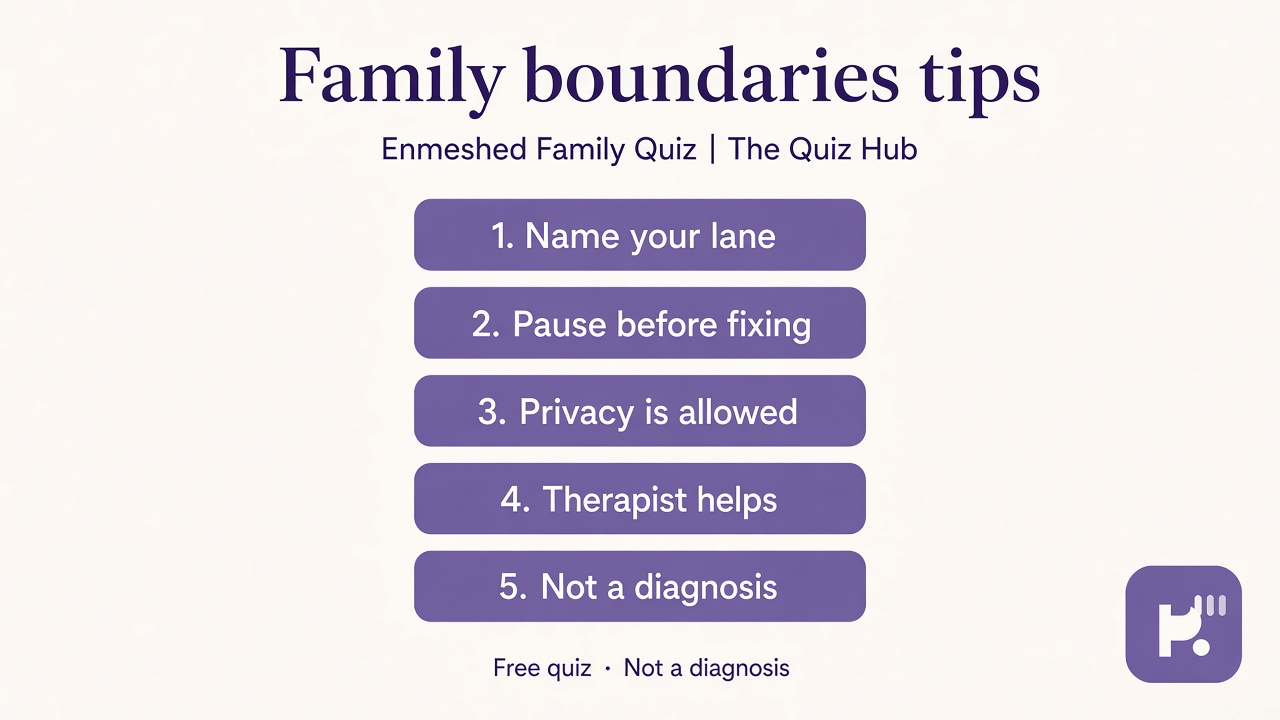
What this quiz can and cannot tell you
Can tell you
- Name fusion, fixing, privacy, and help-limit habits in plain language for intake
- Highlight when direct talk, pauses, or outreach habits are missing
- Support early conversations with therapists or trusted friends
- Offer a baseline if you retake after one boundary experiment
Cannot tell you
- Diagnose enmeshment, personality disorders, or family toxicity from one score
- Tell you whether to go no-contact, stay, or forgive
- Replace family therapy, cultural clergy counsel, or legal advice on custody and safety
- Prove your relatives are villains or that you caused their moods
Closeness is not the same as having no lane
People search enmeshed family quizzes when love and duty blur until every mood feels like homework, every fight needs a translator, and privacy triggers guilt. Clinicians and family therapists discuss enmeshment as a pattern of fused roles and weak boundaries, not as a curse word for relatives you dislike. This online screener uses that reflection lens unofficially; it cannot replace interview-based assessment or tell you whether your culture closeness norms are wrong.
Merged identity covers how often you absorb moods, edit opinions, or measure your wins by how the family looks. Fixing and mediating covers peacekeeper loops, message carrying, and advice reflexes before you ask whether someone wanted listening. Privacy allowed covers guilt about solo time, hidden friendships, or monitoring that feels like care. Help and limits covers therapy shame, knowing 988 exists, and refusing to treat a bar chart as a permanent family verdict.
Real households mix bars. You might score high on fixing while moderate on privacy, which often describes the reliable calm person who rarely protects evenings off. You might score high on merged identity with low help outreach, which can mean you name the pattern yet loyalty shame blocks therapists. Reverse items catch overconfidence: separate preferences without guilt, letting adults fight their own battles, keeping normal private plans, looking up help resources, and refusing diagnosis-by-quiz should not inflate a strain index meant to track fusion frequency.
Pair results with siblings on this hub instead of forcing one family story. Our dysfunctional relationships scale (DRS) emphasizes respect and repair when partnership conflict still feels primary. The codependency test sibling angles toward caretaking and self-worth when fixing habits dominate. Browse the mental health and clinical test hub for more YMYL screeners with study-not-diagnosis framing.
Higher scores mean more frequent self-reported fusion habits, not proof you must exile relatives or that love was fake. Bring domain bars to intake so sessions start with examples, not shame. If panic or hopelessness spikes, skip online debate and prioritize 988 or a therapist. Retake after a month of one measurable boundary when safe and compare bars, not only the total.
| Test | Focus |
|---|---|
| Dysfunctional relationships scale (DRS) | Respect, jealousy control, and repair when strain still feels like partnership conflict |
| Codependency test | Caretaking and self-worth when fixing others dominates your week |
Enmeshed Family Quiz FAQ
What does this quiz measure?
It measures how often you noticed merged identity, fixing and mediating, privacy strain, and help-limit habits with family members during the past month. You get an index from 0 to 100 plus four domain bars. Your responses suggest self-reported frequency for reflection, not a clinical diagnosis or relative label.
Does a high score mean my family is toxic or enmeshed forever?
No. High scores describe frequent habits on this screener, not a permanent verdict on your relatives or culture. Therapists help you sort values, stress, and boundary skills with context this quiz cannot see.
Is this a diagnosis of enmeshment?
No. Only qualified clinicians using interviews and safety screening can assess family patterns or diagnose conditions. Use this tool to describe habits and consider therapy, not to label people online.
Why are some statements about separate preferences or therapy outreach?
Reverse-worded items catch overconfidence. Agreeing that you kept separate preferences, paused before fixing, protected private plans, looked up help or 988, or refused quiz-as-verdict thinking should not inflate a strain index meant to track fusion frequency.
What should I do if my score is high or I feel overwhelmed?
Call or text 988 (US) if crisis feels immediate, or contact a licensed therapist with domain examples from your results. Prioritize support over retakes when panic or shame spikes.
Who reviewed this quiz?
Dr. Elena Vasquez, PhD reviewed the YMYL framing, crisis resources, boundary-not-verdict language, unofficial assessment limits, and result explanations. See our editorial policy for review standards.
Reviewed by