What the End of the World Quiz measures
This quiz does not predict the future, certify you for emergency management, or replace clinicians when fear disrupts daily life. It measures how much you agree with unofficial apocalypse literacy grouped four ways: apocalypse trope literacy about movies, memes, and narrative beats versus verified science; media and misinformation about credible outlets, rumor chains, outrage bait, and official agency channels; coping humor and community about consensual jokes, modest prep basics, friends over solo doomscroll, and refusing to mock anxious people; and dread and support limits about feed spirals, not-prophecy framing, and crisis support when fear feels unbearable. You answer 22 statements from strongly disagree to strongly agree, with reverse-worded myths so one lucky streak cannot inflate every bar. Your answers also feed a second chart on closeness and trust habits, because intense online culture sometimes chases certainty and loyalty performance over messy, kind support ethics. The total becomes an index from 0 to 100 where higher means more reported literacy and endorsed limit habits on this screener, not proof you should harass strangers or claim prophecy credentials.
Apocalypse trope literacy
Movies, memes, zombies, asteroids, and fiction beats versus real timelines.
Media and misinformation
Headline checks, rumor skepticism, agencies, and clickbait awareness.
Coping humor and community
Consensual jokes, light prep, friends, and no anxiety mockery.
Dread and support limits
Doomscroll costs, not prophecy, clinicians and 988 when fear overwhelms.
How it works
Answer 22 agreement items
Rate each statement from Strongly disagree to Strongly agree. Tap Next after each answer.
Answers sort into four domains
Each answer feeds one of four apocalypse literacy groups, and every item also feeds a closeness and trust layer.
See your index and charts
You get a 0 to 100 index, a band, and two bar charts you can compare with a friend after a meme-heavy week.
Take the End of the World Quiz
Answer 22 short statements to see your apocalypse literacy index, four domain bars, and a closeness and trust chart.
What your result means
Your index is the average of all 22 answers, scaled from 0 to 100, with reverse-worded items flipped first. Higher means more reported literacy on this screener. Read dread support limits together with media habits before you treat the total as prophecy expertise or permission to dunk anxious friends.
| Band | Index range | Typical reading |
|---|---|---|
| Building apocalypse literacy | 0 to 35 | Fewer agreed facts on tropes, media habits, humor limits, or dread support on this screener. |
| Mixed apocalypse literacy | 36 to 65 | Solid recall in some domains with myths about headlines, harassment passes, or quiz-as-prophecy. |
| Strong apocalypse literacy | 66 to 100 | Frequent agreement with accurate trivia and healthy humor and support limits. |
Tips at a glance
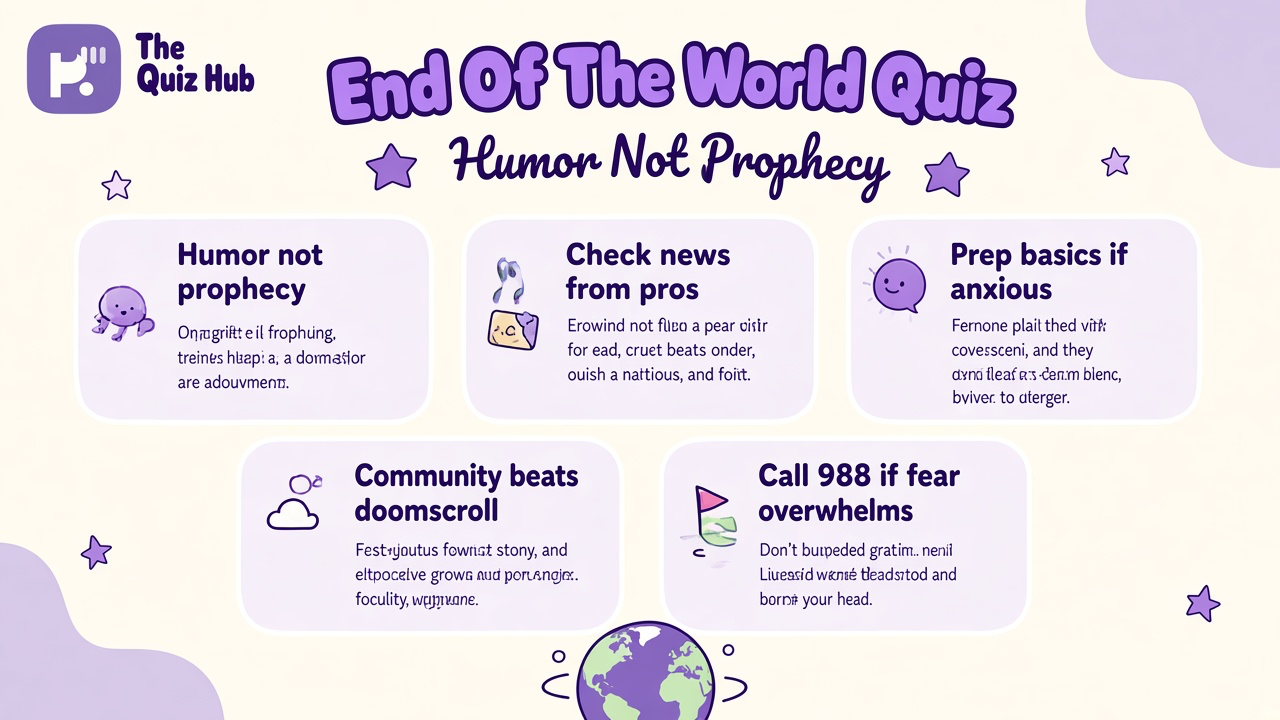
A quick takeaway graphic with topic tips (not your personal quiz scores). Start the quiz for your index, bands, and charts.
What this quiz can and cannot tell you
Can tell you
- Highlight fiction versus headline panic cues worth noticing before you repost
- Encourage consensual humor and basic prep without bunker cosplay pressure
- Spark better questions about feeds and support when dread spikes
- Point toward credible outlets and crisis pathways without claiming forecasting insider access
Cannot tell you
- Predict real-world collapse dates or certify emergency management credentials
- Replace therapists, clergy, disaster planners, or official safety guidance
- Give permission to mock clinical anxiety, trauma histories, or careful news readers
- Score your worth as a friend or prove prophecy from viral meme clout
Why apocalypse memes need humor literacy without prophecy hype
Search traffic around end-of-the-world quizzes usually wants two things at once: prove you know the memes and claim a coping style that feels true in chaotic feeds. Those goals help when they spark fiction-versus-fact questions and consent around dark jokes. They hurt when literacy scores become prophecy flexes, or when threads blur movie tropes into proof that anxious friends are foolish for checking headlines.
Dr. James Whitfield reviews novelty quizzes with a simple split: reward honest recall about apocalypse tropes and honest limits on dread support at the same time. Apocalypse trope literacy tracks zombies, asteroids, bunker jokes, and narrative beats as entertainment lanes. Media and misinformation tracks credible outlets, rumor chains, outrage bait, and official agency channels that differ from screenshot timelines. Coping humor and community keeps jokes consensual, welcomes modest prep without cosplay extremism, and favors friends over solo doomscroll. Dread and support limits keeps not-prophecy disclaimers, feed boundaries, and crisis pathways visible beside meme pride.
Real feed lurkers mix bars. You might score high on trope recall while low on media skepticism, which often describes people who meme daily yet still forward anonymous chains. You might score high on humor limits while keeping trope basics moderate, which can mean kind banter without caring about agency acronyms. Reverse items catch overconfidence: claiming screenplays dictate briefings, anonymous chains beat journalists, harassment passes tied to high scores, or quitting life because humor equals prophecy should not inflate bars meant to track layered literacy.
Pair results with siblings on this hub instead of forcing one doom story. Our doomscrolling scale leans feed-habit reflection when you want scroll mechanics without apocalypse meme depth. Our climate change quiz stays on science literacy lanes when you want policy and evidence talk without bunker joke framing. Browse the fun and novelty hub for more light screeners. Caption shares unofficial, check news with pros when stakes are real, and skip dunk threads on friends who never asked for a prophecy debate.
Headline seasons spike faster than group norms. A media bar might jump after you mute one outrage account while trope literacy sleeps until you rewatch a disaster trope with friends. Retake after a stressful news week and notice whether dread support bars stay high even when meme recall rises, which often marks healthy coping. Trivia is a couch mirror, not a forecast desk or a license to bully the anxious.
| Test | Focus |
|---|---|
| Doomscrolling scale | Scroll and feed habit reflection rather than apocalypse meme and trope literacy |
| Climate change quiz | Science and policy literacy rather than playful end-times humor boundaries |
End of the World Quiz FAQ
What does the End of the World Quiz measure?
It measures how much you agree with statements about apocalypse trope literacy, media habits, coping humor, and dread support limits. You get an index from 0 to 100 plus four bars. It describes self-reported meme and coping literacy on this screener, not real-world forecasting.
Is this quiz prophecy or survival certification?
No. This is unofficial entertainment about memes, movies, and healthy limits. No religious authority, disaster agency, or meme account wrote or endorsed these items. Use official sources and professionals for real emergencies and persistent fear.
Can humor about the apocalypse be harmful?
Dark jokes can be fun between consenting friends and hurtful when they target anxious people, trauma histories, or strangers. The coping humor domain rewards opt-in banter and stepping back when someone needs seriousness.
What if apocalypse dread feels real and overwhelming?
Step back from feeds, talk to someone you trust, and contact a licensed clinician when fear disrupts sleep or safety for weeks. In the U.S., call or text 988 for crisis support when fear feels unbearable. This quiz cannot diagnose anxiety or replace care.
Who reviewed this quiz?
Dr. James Whitfield reviewed the not-prophecy framing, media literacy cues, consensual humor limits, crisis pathways, and fun-only tone. See our editorial policy for review standards.
Reviewed by