What Employment Quiz measures
This quiz does not predict offers, score you for employers, or replace recruiters, attorneys, or licensed career counselors when money and safety are on the line. It measures how much you agree with statements in four groups: values and role fit about mission, pace, ethics, vague ads, and life-fit beyond fame; growth and negotiation about feedback culture, prepared questions, safe compensation talks, and rejecting disloyalty myths; interview red flags about dodged pay questions, unpaid trials, disrespect in rooms, pressure to sign instantly, and leaving coercive processes without shame; and employment fit limits about treating this page as reflection separate from HR files, refusing bar charts as automatic offers, retaking after seasons change, and keeping respect when others job-search differently. You rate 22 statements from strongly disagree to strongly agree, with reverse-worded myths so autopilot responding cannot inflate every bar. Your answers also feed a second chart on closeness and trust habits, because interview performance sometimes overlaps with how much you fear judgment when work meets vulnerability. The total becomes an index from 0 to 100 where higher means more reported endorsement of these employment fit habits on this screener, not proof you deserve every role you want.
Values and role fit
Mission, pace, ethics, vague ads, and life-fit beyond shiny titles.
Growth and negotiation
Feedback paths, curious questions, safe pay talks, and no disloyalty myths.
Interview red flags
Dodged scope, unpaid trials, disrespect, pressure signs, and walk-away data.
Employment fit limits
Not HR files, not offer proof, retakes for habits, and no applicant dunking.
How it works
Answer 22 agreement items
Rate each statement from Strongly disagree to Strongly agree. Tap Next after each answer.
Answers sort into four domains
Each answer feeds one of four employment fit groups, and every item also feeds a closeness and trust layer.
See your index and charts
You get a 0 to 100 index, a band, and two bar charts you can compare with a friend who searches differently.
Take the Employment Quiz
Answer 22 short statements to see your employment fit index, four domain bars, and a closeness and trust chart.
What your result means
Your index is the average of all 22 answers, scaled from 0 to 100, with reverse-worded items flipped first. Read employment fit limits together with values and red-flag bars before you treat the total as an offer, a firing verdict, or a reason to rank people in group chats.
| Band | Index range | Typical reading |
|---|---|---|
| Quieter employment fit endorsement | 0 to 35 | Less agreement with values, growth, red-flag, and limit items on this screener. |
| Mixed employment fit endorsement | 36 to 65 | Some domains show values clarity or growth curiosity; others show reserve or strong limit awareness. |
| Stronger employment fit endorsement | 66 to 100 | Frequent agreement with values, growth, and red-flag items; pair with limit bars. |
Tips at a glance
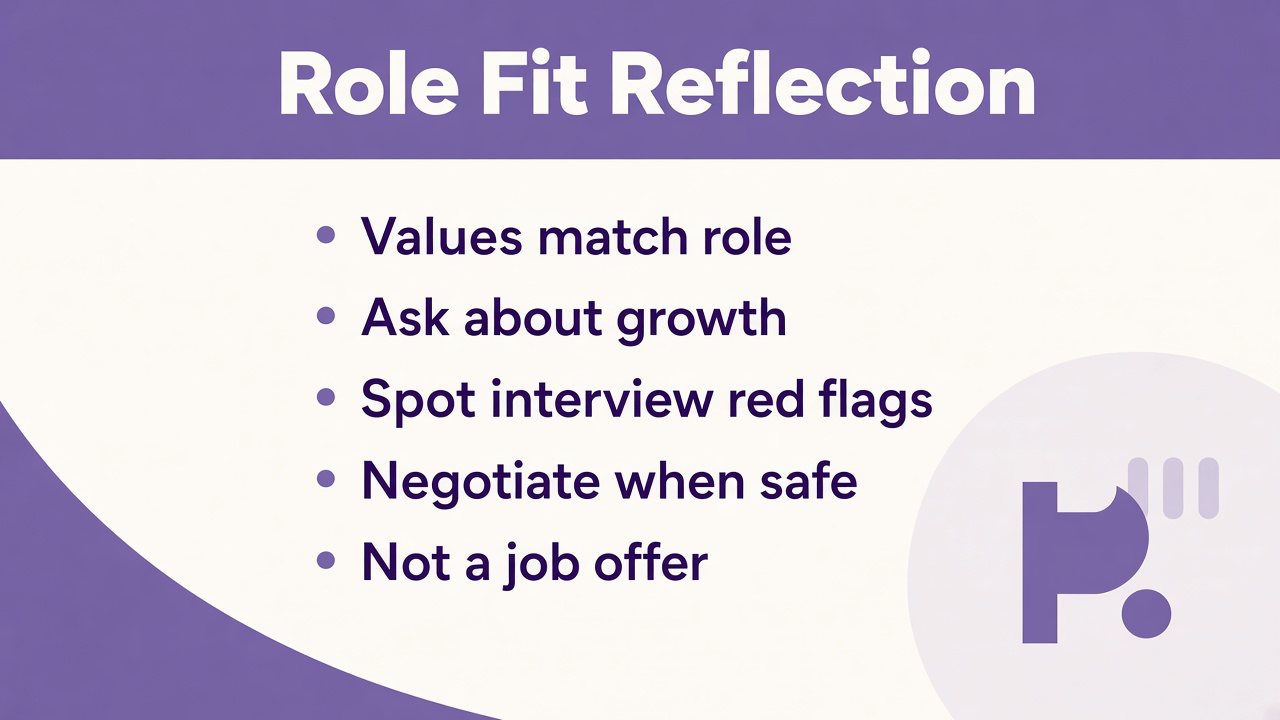
A quick takeaway graphic with topic tips (not your personal quiz scores). Start the quiz for your index, bands, and charts.
What this quiz can and cannot tell you
Can tell you
- Name whether you tend toward values-first habits versus growth curiosity in the current search season
- Separate interview red-flag awareness from myths that quizzes replace due diligence
- Spark honest friend conversations about negotiation timing when options feel thin
- Highlight limit myths you might unlearn before you send scores to recruiters
Cannot tell you
- Replace employer background checks, work samples, references, or formal HR processes
- Prove you deserve an offer or that another applicant is less worthy from bar shape alone
- Replace legal advice, union guidance, or therapist care when work harms safety or health
- Override respect for someone who stays in a role for stability because your values bar looks higher today
Employment fit literacy before offer fantasies
Search traffic around employment quizzes often wants a verdict: am I in the right field, am I interviewing wrong, or finally ready. Those questions help when they spark honesty about values and growth without forcing everyone into the same hustle story. They hurt when high scores become excuses to ignore red flags, or when quiet processors get read as unambitious in every room. Reflection language works best when values checks and employment limits stay in the same sentence.
Dr. James Whitfield reviews personality reflection tools with a respect-first lens. Values and role fit tracks mission, pace, and life-fit questions without shaming people who need any paycheck this month. Growth and negotiation tracks curious interviews and safe asks without insisting every candidate negotiate like a podcast hero. Interview red flags tracks dodged scope, unpaid trials, disrespect, and pressure without treating walk-aways as moral failure. Employment fit limits keep fun framing visible so trait talk does not slide into HR file pretense, offer guarantees, or online applicant ranking.
Real employment habits mix bars. You might score high on values while strong on limits, which often describes people who know non-negotiables yet refuse to weaponize scores. You might score high on growth while low on red-flag items, which is a cue for one boundary practice, not shame. Reverse items catch myths: famous brands always fit, growth questions prove disloyalty, overnight signing always respects you, or web scores replace background checks should not inflate bars meant to track habits.
Pair results with siblings on this hub instead of forcing one job story. Our career values quiz explores value vocabulary when you want labels beside employment fit bars here. The employment freelancing and entrepreneurship sibling covers W2 versus 1099 runway habits when path choice matters more than one employer title. The career quiz offers broader direction language when you are still mapping fields. Browse the personality and psychology hub for more low-stakes screeners. Share scores as conversation starters, not as orders to quit or stay based on one chart.
Habits change with savings, caregiving, and market shocks. A growth bar might spike after one mentor call while values hold steady from old volunteer work. Retake after an honest peer chat and notice whether employment fit limits stay high even when negotiation curiosity rises; that often marks healthier search hygiene. Patterns are data, not destiny boxes.
| Test | Focus |
|---|---|
| Career values quiz | Value vocabulary and priority stacks rather than interview red-flag habits on this page |
| Employment freelancing and entrepreneurship | W2 versus 1099 runway and boundary habits rather than generic employer fit reflection here |
Employment Quiz FAQ
What does Employment Quiz measure?
It measures how much you agree with statements about values and role fit, growth and negotiation habits, interview red flags, and employment fit limits. You get an index from 0 to 100 plus four bars. It describes self-reported job-search habits on this screener, not proof of an offer or a fixed career type.
Will employers see my scores or use this as an HR file?
No. This page is a private reflection screener on our site. It is not connected to employer systems, not a background check, and not something you should treat as official hiring material unless you choose to share results yourself.
Does a high score mean I should quit my job or demand an offer?
No. High scores mean you agreed with many fit and interview habit statements here. Real decisions need finances, safety, visas, benefits, and local market context. Pair bars with limits and trusted humans, not quiz totals alone.
Why include employment fit limits beside interview items?
Employment searches often skip boundaries and quiz hype. Limit bars keep habit reflection separate from offer fantasies, HR file confusion, and treating unofficial screeners like hiring proof.
Who reviewed this quiz?
Dr. James Whitfield reviewed the respectful framing, red-flag reverse items, and employment fit limits. See our editorial policy for review standards.
Reviewed by