What Emotional Characteristics Quiz measures
This quiz does not diagnose mood disorders, personality disorders, or any clinical condition. It measures how much you agree with statements in four groups: emotional expressiveness about how moods show outwardly, how you share with trusted people, and whether you treat visible feeling as weakness; emotional sensitivity about attunement to tone and atmosphere, being moved by art and stories, needing recovery after heavy days, and noticing unfairness; self-kindness and warmth about patient self-talk after mistakes, allowing small joys, offering listening without fixing everyone, and setting boundaries with care; and reflection limits about treating results as habit mirrors, refusing bar charts as identity law, retaking after life seasons change, and keeping respect when others process feelings differently. You rate 22 statements from strongly disagree to strongly agree, with reverse-worded myths so autopilot responding cannot inflate every bar. Your answers also feed a second chart on closeness and trust habits, because emotional style sometimes overlaps with how much you share vulnerability or fear rejection when feelings run high. The total becomes an index from 0 to 100 where higher means more reported endorsement of these emotional characteristic patterns on this screener, not proof you are more evolved than calmer friends.
Emotional expressiveness
Moods that show outwardly, trusted sharing, creative outlets, and rejecting unreadable-as-strength myths.
Emotional sensitivity
Tone attunement, art and story depth, room energy, recovery needs, and justice radar without drama-only framing.
Self-kindness and warmth
Patient self-talk, small celebrations, listening without fixing, and boundaries with care.
Reflection limits
Not clinical boxes, not ranking others, retakes for fun, and people stay off the quiz pedestal.
How it works
Answer 22 agreement items
Rate each statement from Strongly disagree to Strongly agree. Tap Next after each answer.
Answers sort into four domains
Each answer feeds one of four emotional pattern groups, and every item also feeds a closeness and trust layer.
See your index and charts
You get a 0 to 100 index, a band, and two bar charts you can compare with a friend who processes feelings differently.
Take the Emotional Characteristics Quiz
Answer 22 short statements to see your emotional characteristics index, four domain bars, and a closeness and trust chart.
What your result means
Your index is the average of all 22 answers, scaled from 0 to 100, with reverse-worded items flipped first. Read self-kindness and reflection limits together with expressiveness and sensitivity before you treat the total as diagnosis, destiny, or a reason to rank people in group chats.
| Band | Index range | Typical reading |
|---|---|---|
| Quieter emotional pattern endorsement | 0 to 35 | Less agreement with expressiveness, sensitivity, warmth, and limit items on this screener. |
| Mixed emotional pattern endorsement | 36 to 65 | Some domains show vivid feeling habits; others show reserve, steadiness, or strong limit awareness. |
| Stronger emotional pattern endorsement | 66 to 100 | Frequent agreement with expressiveness, sensitivity, and warmth items; pair with limit bars. |
Tips at a glance
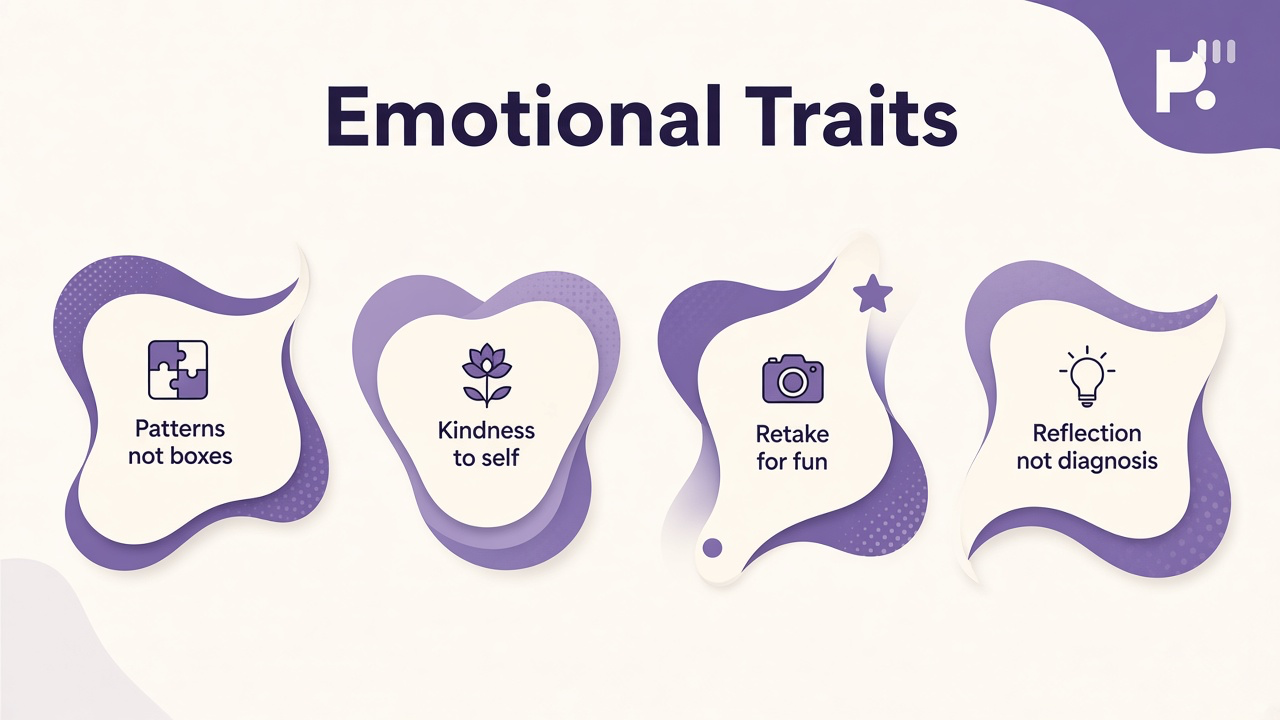
A quick takeaway graphic with topic tips (not your personal quiz scores). Start the quiz for your index, bands, and charts.
What this quiz can and cannot tell you
Can tell you
- Name whether you tend toward outward expression versus private processing in the current season
- Separate vivid feeling from habits around self-talk and respectful boundaries
- Spark honest friend or therapist conversations about recurring emotional loops
- Highlight limit myths you might unlearn before you type yourself or others from one score
Cannot tell you
- Diagnose depression, bipolar disorder, borderline traits, or any clinical condition from self-report alone
- Prove you are emotionally superior or inferior to friends with different bar shapes
- Replace direct conversation, cultural context, or professional care when patterns disrupt safety
- Override respect for someone who shares less because your expressiveness bar looks higher
Emotional patterns, kindness, and labels that are not boxes
Search traffic around emotional characteristics quizzes usually wants a verdict: am I too sensitive, too reserved, or finally understood. Those questions help when they spark honesty about expressiveness and recovery. They hurt when intensity becomes an excuse to steamroll calmer friends, or when reserve gets read as coldness in every culture. Reflection language works best when patterns and kindness stay in the same sentence.
Dr. James Whitfield reviews personality reflection tools with a respect-first lens. Emotional expressiveness tracks how moods show and how you share with trusted people without shaming privacy. Emotional sensitivity tracks attunement, art, room energy, and recovery needs without treating every deep feeler as disordered. Self-kindness and warmth tracks inner talk and listening habits without fixing everyone. Reflection limits keeps fun framing visible so trait talk does not slide into clinical pretense or online ranking.
Real emotional life mixes bars. You might score high on sensitivity while strong on limits, which often describes attuned people who still refuse to diagnose strangers. You might score high on expressiveness while low on self-kindness, which is a cue for gentler inner talk, not shame. Reverse items catch myths: unreadable always means strong, harsh self-talk always means growth, quiz scores type other people, or results decide who deserves respect should not inflate bars meant to track habits.
Pair results with siblings on this hub instead of forcing one feeling story. Our dominant character trait quiz explores leader-caregiver-analyst-rebel daily choices when you want habit language beyond mood style. The emotion regulation quiz on the mental health side angles toward regulation frequency when reactions feel stuck or unsafe, with its own study-not-diagnosis limits. Browse the personality and psychology hub for more low-stakes screeners. Share scores as conversation starters, not as orders to perform one mood forever.
Feelings change with sleep, grief, apps, and workload. A sensitivity bar might spike after one hard month while self-kindness bars hold steady from past therapy lessons. Retake after an honest friend chat and notice whether reflection limits stay high even when expressiveness rises; that often marks healthier emotional hygiene. Patterns are data, not destiny boxes.
| Test | Focus |
|---|---|
| Dominant character trait quiz | Daily leader-caregiver-analyst-rebel choices when mood style needs broader habit context |
| Emotion regulation quiz | Regulation frequency and repair habits with clinical-adjacent limits, not trait expressiveness mirror |
Emotional Characteristics Quiz FAQ
What does the Emotional Characteristics Quiz measure?
It measures how much you agree with statements about emotional expressiveness, sensitivity, self-kindness, and reflection limits. You get an index from 0 to 100 plus four bars. It describes self-reported emotional habit patterns on this screener, not a clinical diagnosis or fixed personality type.
Is this a clinical test for emotional disorders?
No. Licensed clinicians evaluate mood and personality concerns with interviews, history, and validated tools. This page is an everyday trait pattern mirror only.
Does a high sensitivity score mean I am too emotional?
No. High scores mean you agreed with many sensitivity and expressiveness statements here. Depth and attunement are not automatically problems. Pair bars with self-kindness and limits, and seek professional care only if patterns disrupt safety or daily life for weeks.
Why include reflection limit items beside trait items?
Trait searches often skip ethics and humility. Limit bars keep big feelings separate from ranking others, clinical self-labeling, and treating quiz results as identity law.
Who reviewed this quiz?
Dr. James Whitfield reviewed the respectful framing, kindness-aware reverse items, and reflection-only limits. See our editorial policy for review standards.
Reviewed by