What Emotion Recognition Critics Review measures
This quiz does not diagnose autism, social cognition disorders, psychopathy, or any other condition, does not review films or TV shows about emotions, and does not certify you as a clinician or mind reader. It measures how much you agree with critical literacy about pop emotion recognition tests grouped four ways: context before verdict about scenes, history, fatigue, masking, and asking instead of guessing from one image; bias in faces about skewed datasets, display rules, stereotypes, and low confidence on stranger labels; mind-reading myths about oversold accuracy, partner screenshot dunk culture, hidden intent claims, and ethics of listening when someone corrects you; and study and care limits about pediatric and mental health evaluation when children struggle with social cues, rejecting web verdicts, and keeping this page separate from entertainment review sites. You answer 22 statements from strongly disagree to strongly agree, with reverse-worded hype myths so one lucky streak cannot inflate every bar. Your answers also feed a second chart on closeness and trust habits, because some people chase certainty about partners or peers when vulnerability feels unsafe. The total becomes an index from 0 to 100 where higher means more reported agreement with limits and criticism on this screener, not proof you detect lies in every meeting.
Context before verdict
Scenes, words, and history before treating one face as a full verdict.
Bias in faces
Dataset skew, culture, and stereotypes that mislabel still images.
Mind-reading myths
Oversold ER accuracy, screenshot culture, and ask-don't-assume ethics.
Study and care limits
Clinicians for worried kids, not web totals or movie-review confusion.
How it works
Answer 22 agreement items
Rate each statement from Strongly disagree to Strongly agree. Tap Next after each answer.
Answers sort into four domains
Each answer feeds one of four literacy groups, and every item also feeds a closeness and trust layer.
See your index and charts
You get a 0 to 100 index, a band, and two bar charts you can discuss with a clinician or curious friend.
Take the Emotion Recognition Critics Review
Answer 22 short statements to see your pop ER literacy index, four domain bars, and a closeness and trust chart.
What your result means
Your index is the average of all 22 answers, scaled from 0 to 100, with reverse-worded items flipped first. Higher means more reported agreement with criticism and limit statements on this screener. Read bias and mind-reading myth bars together before you treat the total as permission to label strangers or skip care for a child.
| Band | Index range | Typical reading |
|---|---|---|
| Building pop ER literacy | 0 to 35 | Fewer agreed facts on context, bias, mind-reading limits, or care boundaries on this screener. |
| Mixed pop ER literacy | 36 to 65 | Solid recall in some domains with hype myths or care gaps in others. |
| Strong pop ER literacy | 66 to 100 | Frequent agreement with criticism, bias awareness, and care-limit statements. |
Tips at a glance
A quick takeaway graphic with topic tips (not your personal quiz scores). Start the quiz for your index, bands, and charts.
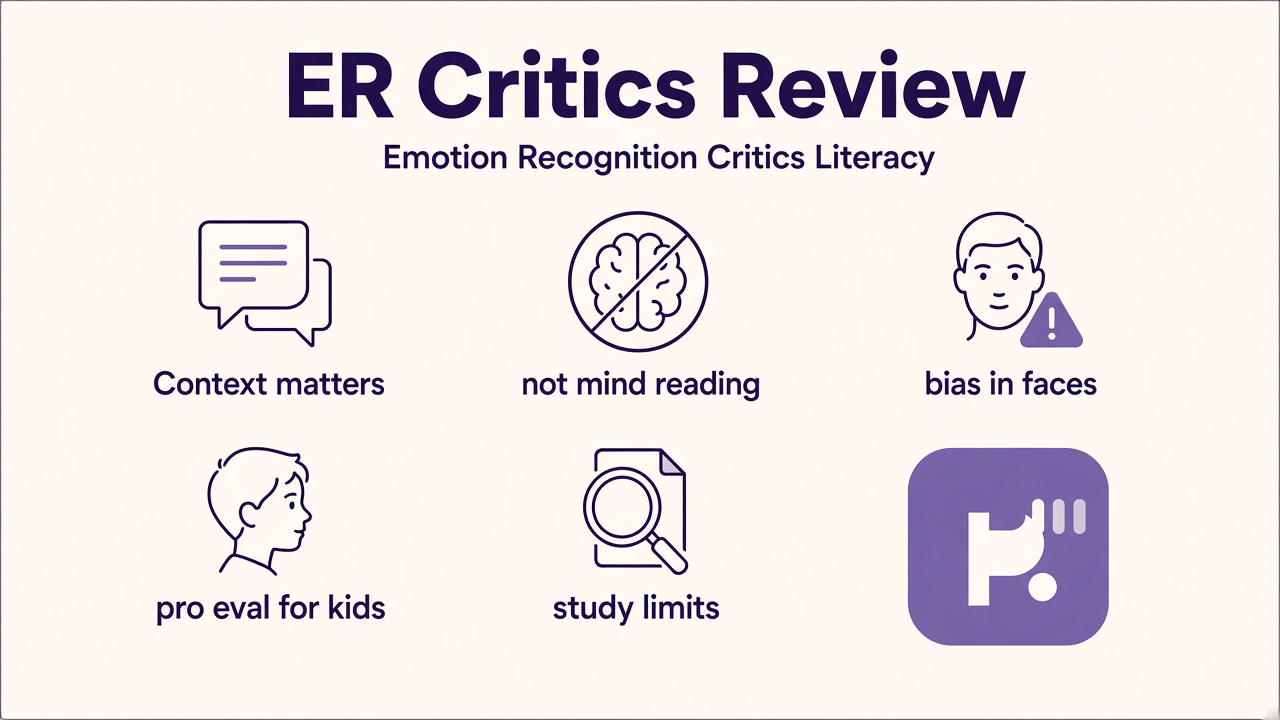
What this quiz can and cannot tell you
Can tell you
- Name oversold claims in viral emotion recognition quizzes in plain language
- Separate screenshot entertainment from ethical listening and ask-first habits
- Highlight when bias or context items deserve humility before stranger labels
- Support conversations about professional evaluation when children's social cues worry adults
Cannot tell you
- Diagnose autism, ADHD, psychopathy, or social disorders from agree statements here
- Prove you read minds, detect lies, or predict violence from one expression
- Replace developmental evaluation, therapy, or crisis care with literacy trivia
- Score films, shows, or games; this critics review targets pop ER tests only
Why pop emotion recognition quizzes need critics, not hype
Search traffic around emotion recognition often wants a simple superpower: name the feeling from a still face and win arguments about partners, politicians, or kids. Pop quizzes feed that wish with confident labels while skipping context, error rates, and the harm of treating guesses as facts. Critics literacy does not kill curiosity about faces; it adds brakes before screenshots become verdicts. This page is about test and app hype, not reviewing a film whose title happens to mention feelings.
Context before verdict is the first domain because one image is a thin slice of a day. Fatigue, masking, jokes, grief, and camera performance change expressions without rewriting someone's loyalty or diagnosis. Research tools combine observation over time with interviews; a viral five-minute quiz rarely matches that depth. Asking how someone feels remains basic ethics even when you score high on literacy bars here.
Bias in faces is the second domain because many datasets and meme templates skew toward narrow demographics and display norms. Stereotypes about who looks angry, sad, or untrustworthy steer automated labels and human snap judgments alike. Cultural display rules mean a restrained tone can signal respect in one setting and get misread as cold in another. Literacy means lower confidence on stranger labels, not less empathy when someone shares pain.
Mind-reading myths are the third domain because marketing hides false positives. Partner screenshot quizzes, influencer face scores, and claims about hidden criminal intent sell certainty the evidence does not support. Fiction mind reading is play; real relationships need listening and updates when someone says you guessed wrong. Treat meme scores as conversation starters about hype, not as proof in conflicts that deserve mediation or safety planning.
Study and care limits are the fourth domain because children who struggle with peers deserve qualified evaluation, not a web total that parents treat as destiny. Online ER quizzes cannot diagnose autism or related conditions without licensed assessment and history. Adults who feel ashamed after low empathy scores also deserve clinicians, not dunk threads. Pair literacy with siblings on this hub: our emotion recognition screener emphasizes frequency humility on face-reading habits when you want behavior reflection beside criticism. Our autism test hub sibling stresses non-diagnostic limits when neurodevelopment questions arise. Browse the mental health and clinical test hub for more YMYL screeners with study-not-diagnosis framing.
Retake after you notice one ER ad or meme and write three limits it skipped. Compare bars instead of chasing a single number. If crisis thoughts appear while debating faces online, call or text 988 in the US or your local crisis line before treating quiz culture as therapy.
| Test | Focus |
|---|---|
| Emotion recognition | Frequency humility on face-reading and mood-assumption habits rather than critics literacy items |
| Autism test | Non-diagnostic neurodevelopment reflection when social cue worries need clinician follow-up, not web ER totals |
Emotion Recognition Critics Review FAQ
Is this a movie review or entertainment score?
No. This critics review measures literacy about limits and hype in popular emotion recognition tests and face-reading quizzes. It does not rate films, TV shows, or games, even if search results mix review words with psychology topics.
What does this quiz measure?
It measures how much you agree with statements about context, bias, mind-reading myths, and study-and-care limits around pop ER content. You get an index from 0 to 100 plus four bars. It describes self-reported literacy on this screener, not clinical skill or diagnosis.
Does a high score mean I read emotions accurately?
No. High scores mean you agreed with many criticism and limit statements here. Real accuracy needs context, relationship trust, and sometimes professional methods. Literacy bars are not lie-detector certification.
Can this quiz diagnose autism or tell me if my child needs help?
No. Only qualified clinicians evaluate developmental and social concerns with interviews and history. Use literacy results to question pop ER hype, then contact pediatric or mental health providers when worry persists.
Why include bias and mind-reading items beside context trivia?
Pop ER marketing oversells universal mind reading while hiding dataset bias and error rates. Those bars keep humility visible beside context facts so users pause before labeling strangers or partners from one screenshot.
Who reviewed this quiz?
Dr. Elena Vasquez, PhD reviewed the YMYL framing, crisis resources, not-a-film-review disambiguation, bias and care-limit notes, and educational tone. See our editorial policy for review standards.
Reviewed by