What Emoji Quiz measures
This quiz does not contact the Unicode Consortium, emoji committees, or device vendors, is not affiliated with them, and does not certify you for paid standards work or hiring screens. It measures how much you agree with unofficial texting literacy grouped four ways: Unicode emoji basics about code points, categories, tone versus literal reads, and limits on pictograph-only messages; skin tone and modifiers about Fitzpatrick attachments, zero-width joiner combinations, unsupported fallbacks, and refusing identity guesses from modifier picks alone; platform rendering about vendor art differences, OS update lag, flag display rules, blank boxes on old keyboards, and misreads when art styles clash; and texting culture limits about playful trivia framing, warmth without grammar policing, asking when glyphs read ambiguous, and refusing to mock plain-text or screen-reader-first friends. You answer 22 statements from strongly disagree to strongly agree, with reverse-worded myths so one lucky streak cannot inflate every bar. Your answers also feed a second chart on closeness and trust habits, because intense chat culture sometimes chases reaction certainty and loyalty performance over messy, kind texting ethics. The total becomes an index from 0 to 100 where higher means more reported emoji literacy and endorsed limit habits on this screener, not proof you should harass strangers or claim consortium credentials.
Unicode emoji basics
Code points, categories, tone reads, and when pictographs help or hurt clarity.
Skin tone and modifiers
Fitzpatrick modifiers, ZWJ combos, fallbacks, and no identity guessing.
Platform rendering
Vendor art styles, update lag, flags, and blank-box fallbacks.
Texting culture limits
Not a job exam, ask-first habits, and respect for plain-text friends.
How it works
Answer 22 agreement items
Rate each statement from Strongly disagree to Strongly agree. Tap Next after each answer.
Answers sort into four domains
Each answer feeds one of four emoji literacy groups, and every item also feeds a closeness and trust layer.
See your index and charts
You get a 0 to 100 index, a band, and two bar charts you can compare with a friend on a different phone.
Take the Emoji Quiz
Answer 22 short statements to see your emoji literacy index, four domain bars, and a closeness and trust chart.
What your result means
Your index is the average of all 22 answers, scaled from 0 to 100, with reverse-worded items flipped first. Higher means more reported literacy on this screener. Read texting culture limits together with platform rendering before you treat the total as expertise, clout, or permission to pile on ambiguous threads.
| Band | Index range | Typical reading |
|---|---|---|
| Building emoji literacy | 0 to 35 | Fewer agreed facts on Unicode basics, skin tone modifiers, platform rendering, or texting limits on this screener. |
| Mixed emoji literacy | 36 to 65 | Solid recall in some domains with gaps or myths in others. |
| Strong emoji literacy | 66 to 100 | Frequent agreement with accurate trivia and healthy texting limits. |
Tips at a glance
A quick takeaway graphic with topic tips (not your personal quiz scores). Start the quiz for your index, bands, and charts.
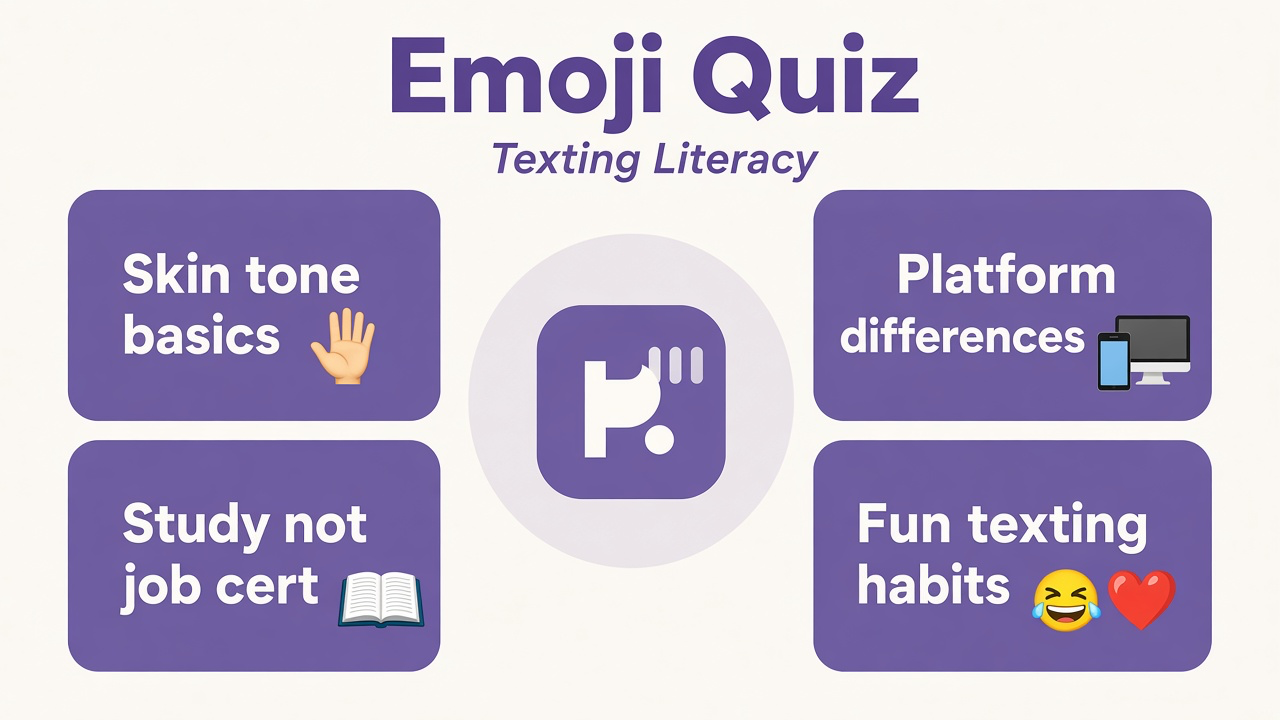
What this quiz can and cannot tell you
Can tell you
- Highlight Unicode and platform cues worth noticing before you misread a friend's glyph
- Separate official emoji from random stickers in honest group-chat conversation
- Encourage ask-first habits and unofficial captions when you share scores
- Spark better questions about texting kindness without claiming standards insider access
Cannot tell you
- Prove the Unicode Consortium or any vendor hired or endorsed you
- Replace technical documentation, accessibility guides, or instructor feedback on digital communication
- Give permission to mock plain-text friends, screen reader users, or strangers over emoji taste
- Score your worth as a texter or predict real-world standards jobs from viral chat clout
Why everyday emoji chats need literacy without job-exam hype
Search traffic around emoji quizzes usually wants two things at once: prove you know heart-color lore and claim a texter identity that feels true in group chats. Those goals help when they spark Unicode basics and kindness questions. They hurt when literacy scores become hiring fantasies, or when threads blur platform art differences into proof that someone is smarter or meaner than plain-text friends. Literacy language works best when it names public texting habits and respectful limits together.
Dr. Rachel Kim reviews novelty quizzes with a simple split: reward honest recall about Unicode emoji basics and honest limits on texting culture at the same time. Unicode emoji basics tracks code points, categories, tone versus literal reads, and when pictograph-heavy messages hurt clarity or accessibility. Skin tone and modifiers tracks Fitzpatrick attachments, joiner sequences, fallbacks, and stepping back from identity guesses based on modifier picks alone. Platform rendering tracks vendor art differences, update lag, flag display rules, and blank boxes on older OS builds. Texting culture limits keeps unofficial disclaimers, ask-first norms, anti-mockery stances, and refusal to treat scores as consortium job passes visible beside texter pride.
Real texters mix bars. You might score high on heart-tone recall while low on platform rendering, which often describes people who meme daily yet still forget friends on older phones see different art. You might score high on modifiers while keeping Unicode basics moderate, which can mean thoughtful skin tone picks without caring about regional indicator flag mechanics. Reverse items catch overconfidence: claiming every image is official Unicode, identical worldwide pixel art, guaranteed hiring from perfect bars, or harassment passes tied to high scores should not inflate bars meant to track layered texting knowledge.
Pair results with siblings on this hub instead of forcing one chat story. Our christmas emoji quiz leans seasonal pictograph guessing when you want holiday lanes without Unicode primer depth. Our emoji bible quiz stays on scripture-shaped meme literacy when you want faith-adjacent humor boundaries without general platform art talk. Browse the fun and novelty hub for more light screeners. Caption shares unofficial, ask when glyphs read ambiguous, and skip dunk threads on friends who prefer plain sentences.
OS emoji updates ship faster than group norms. A platform bar might spike after you compare two phones while modifier literacy sleeps until a friend explains fallbacks. Retake after a major vendor redraw and notice whether texting limit bars stay high even when Unicode recall rises, which often marks healthy chat culture. Trivia is a couch mirror, not a consortium offer letter or a license to police keyboards.
| Test | Focus |
|---|---|
| Christmas emoji quiz | Seasonal pictograph guessing rather than Unicode and platform literacy for everyday texters |
| Emoji bible quiz | Scripture-shaped meme lanes rather than general skin tone and vendor rendering basics |
Emoji Quiz FAQ
What does Emoji Quiz measure?
It measures how much you agree with statements about Unicode emoji basics, skin tone and modifiers, platform rendering, and texting culture limits. You get an index from 0 to 100 plus four bars. It describes self-reported texting literacy on this screener, not official Unicode Consortium certification.
Is this quiz a Unicode Consortium job exam or vendor certification?
No. This is an unofficial entertainment quiz about everyday texting habits and public emoji facts. The Unicode Consortium and keyboard vendors did not write or endorse these items. We use widely discussed standards context for reflection only.
Does a high score mean tech companies should hire me as an emoji expert?
No. High scores mean you agreed with many literacy and limit statements here. They do not contact employers, grant standards credentials, or replace technical interviews or documentation.
Why include skin tone and platform items beside basic emoji trivia?
Emoji search intent often skips modifier fallbacks and vendor art differences. Those bars keep play useful for texters while reducing misreads, identity guesses, and pile-ons when phones show different art.
Who reviewed this quiz?
Dr. Rachel Kim reviewed the unofficial framing, accessibility-adjacent limits, not-job-exam disclaimers, and fun-only tone. See our editorial policy for review standards.
Reviewed by