What Emoji Bible Quiz measures
This quiz does not contact churches, seminaries, Bible publishers, translation committees, or clergy, is not affiliated with any of them, and does not certify you as a theologian or official spokesperson. It measures how much you agree with unofficial meme literacy grouped four ways: emoji-verse meme lanes about pictograph parody format, remix tags, and separation from licensed study text; humor boundary hygiene about room checks, punch-up norms, worship and grief spaces, and deleting misfires instead of pile-ons; faith community respect about believers who dislike parody, denominational nuance, avoiding prayer-chain bait, and kindness toward youth in faith spaces; and unofficial kind shares about disclaimers, refusing pastor or publisher endorsement fantasies, gentle captions, and refusing to treat quiz scores as divine instruction or harassment passes. You answer 22 statements from strongly disagree to strongly agree, with reverse-worded myths so one lucky streak cannot inflate every bar. Your answers also feed a second chart on closeness and trust habits, because loud meme culture sometimes chases viral certainty and loyalty performance over messy, kind share ethics. The total becomes an index from 0 to 100 where higher means more reported emoji-verse literacy and endorsed boundary habits on this screener, not proof you should bait believers or claim church authority.
Emoji-verse meme lanes
Pictograph parody format, remix tags, and separation from licensed study Bibles.
Humor boundary hygiene
Room checks, punch-up norms, and skipping parody in worship or grief threads.
Faith community respect
Believer dignity, denominational nuance, and no prayer-chain baiting.
Unofficial kind shares
Unofficial disclaimers, no pulpit endorsement fantasies, and gentle share captions.
How it works
Answer 22 agreement items
Rate each statement from Strongly disagree to Strongly agree. Tap Next after each answer.
Answers sort into four domains
Each answer feeds one of four emoji-verse groups, and every item also feeds a closeness and trust layer.
See your index and charts
You get a 0 to 100 index, a band, and two bar charts you can compare with a friend who posts meme verses.
Take the Emoji Bible Quiz
Answer 22 short statements to see your emoji-verse literacy index, four domain bars, and a closeness and trust chart.
What your result means
Your index is the average of all 22 answers, scaled from 0 to 100, with reverse-worded items flipped first. Higher means more reported meme literacy on this screener. Read unofficial kind shares and humor boundary hygiene together with faith respect bars before you treat the total as expertise, clout, or permission to bait sacred spaces.
| Band | Index range | Typical reading |
|---|---|---|
| Building emoji-verse literacy | 0 to 35 | Fewer agreed facts on meme lanes, humor boundaries, faith respect, or unofficial share limits on this screener. |
| Mixed emoji-verse literacy | 36 to 65 | Solid recall in some domains with gaps or myths in others. |
| Strong emoji-verse literacy | 66 to 100 | Frequent agreement with accurate meme trivia and healthy share limits. |
Tips at a glance
A quick takeaway graphic with topic tips (not your personal quiz scores). Start the quiz for your index, bands, and charts.
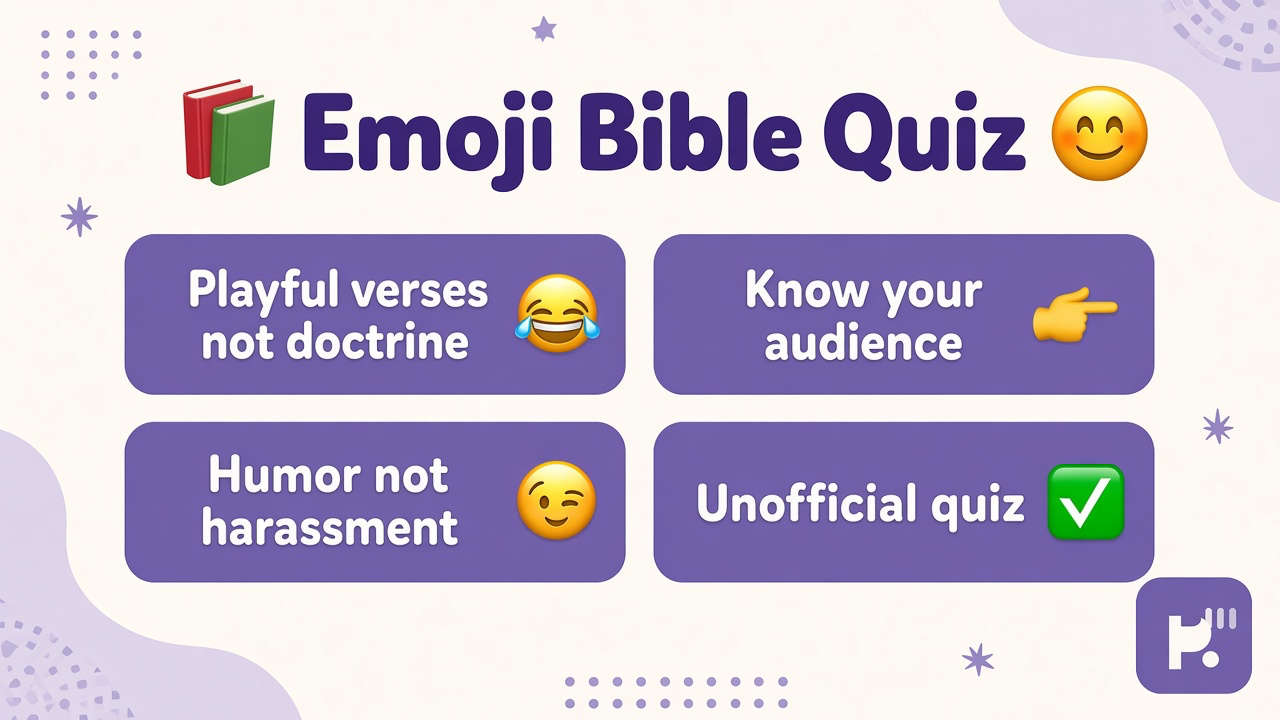
What this quiz can and cannot tell you
Can tell you
- Highlight meme format cues worth noticing before you repost to mixed followers
- Separate pictograph parody from licensed study text in honest conversation
- Encourage unofficial framing and room checks when you share scores
- Spark better questions about kind humor without claiming pastoral insider access
Cannot tell you
- Prove any church, publisher, or translation committee endorsed you
- Replace scripture study, pastoral care, or instructor feedback on sacred text
- Give permission to harass believers, clergy, or strangers over meme taste or trivia totals
- Score your worth as a friend or predict real-world pulpit invites from viral feed clout
Why emoji-verse memes need unofficial framing
Search traffic around emoji scripture jokes usually wants two things at once: prove you get the pictograph format and claim a share lane that feels true in group chats. Those goals help when they spark format literacy and kindness questions. They hurt when meme scores become licenses to bait prayer groups, or when threads blur parody into proof that someone is holier or funnier than believers who opt out. Literacy language works best when it names public meme habits and respectful boundaries together.
Dr. Rachel Kim reviews novelty quizzes with a simple split: reward honest recall about emoji-verse meme lanes and honest limits on humor and faith respect at the same time. Emoji-verse meme lanes tracks pictograph parody, remix tags, and feed-readable line breaks without pretending every repost is a licensed lectionary. Humor boundary hygiene tracks room checks, punch-up norms, and skipping cruelty in worship or grief threads that viral clips rarely mention. Faith community respect tracks believer dignity, denominational nuance, and stepping back from prayer-chain bait. Unofficial kind shares keeps disclaimers, anti-harassment norms, and refusal to treat scores as pastoral approval visible beside stan pride.
Real scrollers mix bars. You might score high on format recall while low on humor hygiene, which often describes people who memorize pictographs yet still drop unlabeled parody in mixed chats. You might score high on faith respect while keeping meme lanes moderate, which can mean you honor chapel tone yet still learn remix tag vocabulary. Reverse items catch overconfidence: claiming official emoji lectionaries, mandatory laugh policies, pulpit citation fantasies, or harassment passes tied to high bars should not inflate scores meant to track layered meme knowledge.
Pair results with siblings on this hub instead of forcing one faith or meme story. Our bible verse quiz leans straight scripture recall when you want text trivia without pictograph parody framing. Our christmas emoji quiz stays on seasonal pictograph guessing when you want holiday lanes without scripture-shaped humor debates. Browse the fun and novelty hub for more light screeners. Caption shares unofficial, read the room, and skip bait threads on friends who never opted in.
Holiday feeds and viral templates refresh faster than group chat norms. A meme lane bar might spike during one viral week while humor hygiene sleeps until you notice a grief thread. Retake after a season of shares and notice whether faith respect stays high even when literacy rises, which often marks healthy meme culture. Trivia is a couch mirror, not a pulpit invite or a holiness badge.
| Test | Focus |
|---|---|
| Bible verse quiz | Straight scripture recall and citation trivia rather than emoji-verse parody format bars |
| Christmas emoji quiz | Seasonal pictograph guessing rather than Gen Z scripture-shaped meme literacy |
Emoji Bible Quiz FAQ
What does Emoji Bible Quiz measure?
It measures how much you agree with statements about emoji-verse meme lanes, humor boundary hygiene, faith community respect, and unofficial kind shares. You get an index from 0 to 100 plus four bars. It describes self-reported meme literacy on this screener, not official church or publisher certification.
Is this quiz official or affiliated with a church or Bible publisher?
No. This is an unofficial entertainment quiz about internet meme format and share habits. No church body, denomination, or publisher wrote or endorsed these items. We use widely discussed public meme context for reflection only.
Does a high score mean clergy would approve my emoji posts?
No. High scores mean you agreed with many literacy and boundary statements here. They do not contact pastors, grant teaching authority, or replace pastoral care or personal conscience.
Why include faith respect and humor items beside meme format trivia?
Emoji-verse searches often skip room checks and believer dignity norms. Those bars keep play joy separate from bait threads, sacred-space misfires, and pressure on friends who never opted into parody.
Who reviewed this quiz?
Dr. Rachel Kim reviewed the unofficial framing, humor and faith-respect notes, not-church-authority disclaimers, and fun-only tone. See our editorial policy for review standards.
Reviewed by