What this body-type diet myth screener measures
This quiz does not prescribe meals, diagnose hormone or organ disease, or endorse any influencer body-type program. It measures how much you agree with statements specialists use when debunking one-size body-type diet talk, grouped four ways: somatotype diet myths when ectomorph, mesomorph, or endomorph labels get tied to fixed macros, supplements, or stranger guessing; shape and zone diet myths when apple, pear, adrenal, or liver language assigns forbidden foods, detox cycles, or replaces clinical workups; shame and restriction when type rules fuel guilt, stressful social meals, delayed care, or judgment toward friends; and clinician care and kindness when registered dietitians and doctors tailor plans to history, when quizzes cannot diagnose organs, and when regular meals beat punishment cycles. You answer 22 statements from strongly disagree to strongly agree, with reverse-worded myths so autopilot agreement cannot hide leftover one-size beliefs. Your answers also feed a second chart on closeness and trust habits, because some people restrict or eat alone when body talk feels safer than vulnerability. The total becomes an index from 0 to 100 where higher means more reported anti-myth literacy and kindness habits on this screener, not proof you never need professional nutrition or eating-disorder support.
Somatotype diet myths
Fixed macros per ecto, meso, or endo label, supplement guessing, and stranger diet assumptions.
Shape and zone diet myths
Apple-pear food bans, organ-type menus, detox before doctors, and bought type plan packs.
Shame and restriction
Guilt at normal foods, stressful shared meals, delayed visits, and judging friends by type labels.
Clinician care and kindness
Individualized professional plans, no quiz diagnosis, regular meals, and caution about extreme type restriction.
How it works
Answer 22 agreement items
Rate each statement from Strongly disagree to Strongly agree. Tap Next after each answer.
Answers sort into four domains
Each answer feeds one of four myth literacy groups, and every item also feeds a closeness and trust layer.
See your index and charts
You get a 0 to 100 index, a band, and two bar charts you can bring to a clinician or dietitian.
Take the Eating For Your Body Type Quiz
Answer 22 short statements to see your body-type diet myth literacy index, four domain bars, and a closeness and trust chart.
What your result means
Your index is the average of all 22 answers, scaled from 0 to 100, with reverse-worded myth items flipped first. Higher means more reported anti-myth literacy and clinician-kindness endorsement on this screener. Read shame and shape-zone bars together before you treat the total as permission to restrict or as proof you never need care.
| Band | Index range | Typical reading |
|---|---|---|
| Building body-type diet myth literacy | 0 to 35 | More agreement with one-size somatotype, shape-zone, or shame items on this screener. |
| Mixed body-type diet myth literacy | 36 to 65 | Some myth-aware habits alongside leftover one-size beliefs or shame loops. |
| Strong body-type diet myth literacy | 66 to 100 | Frequent agreement with individualized care, anti-myth, and kindness statements; still not medical clearance. |
Tips at a glance
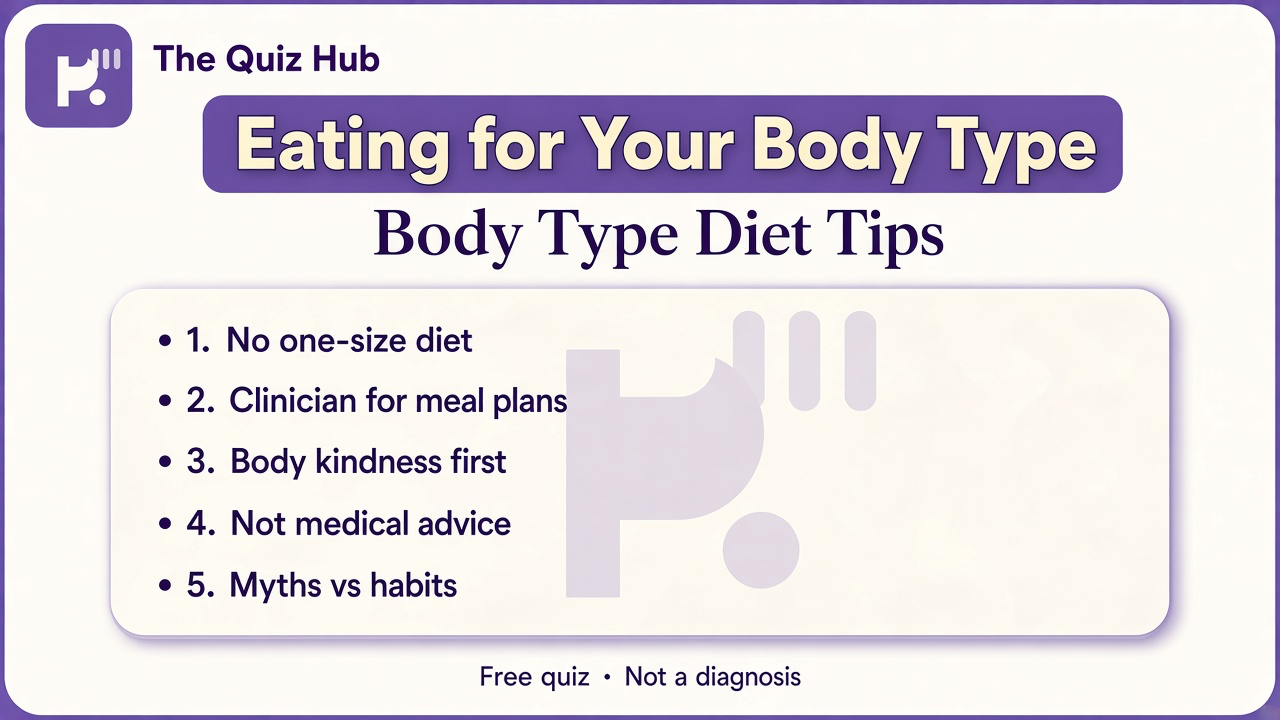
A quick takeaway graphic with topic tips (not your personal quiz scores). Start the quiz for your index, bands, and charts.
What this quiz can and cannot tell you
Can tell you
- Separate somatotype myths, shape-zone rules, shame loops, and clinician-kindness habits in plain language
- Highlight beliefs worth revisiting before you buy another type-labeled program
- Give vocabulary for dietitian, therapist, or primary care intake about body-type diet pressure
- Offer a baseline if you retake after one kindness or professional-support experiment
Cannot tell you
- Prescribe macros, calories, or elimination lists based on silhouette or somatotype labels
- Diagnose eating disorders, hormone disease, or liver problems from agreement scores
- Replace registered dietitian or medical nutrition therapy for complex conditions
- Prove you must follow or ignore any body-type influencer because of one index
Body-type diets: why one-size menus fail kindness and science
Search results around eating for your body type promise that ectomorphs, mesomorphs, endomorphs, apples, pears, or organ-labeled silhouettes each deserve a different grocery list. The pitch feels personalized because mirror talk is emotional. Myth literacy starts when you name what those labels actually are: shorthand for where weight tends to sit or how frames look in photos, not a license to ban whole food groups for everyone who shares a shape icon.
Somatotype myths show up when gym posters assign one macro ratio per body line or when strangers get diet advice from a glance. Shape and zone myths show up when apple versus pear talk becomes avoid-all-fat or avoid-all-carb rules, or when adrenal and liver menu packs pretend to replace labs. Shame and restriction show up when culturally normal foods feel forbidden, when friends eating differently trigger judgment, or when a type quiz delays a doctor visit. Clinician care and kindness show up when you insist on full history before elimination, when you treat food as fuel with regular meals, and when you remember that extreme type-based restriction can worsen binge cycles for some people.
Dr. Elena Vasquez reviews YMYL eating screeners with a simple split: reward myth skepticism and professional individualized care in the same breath. Reverse items catch overconfidence in myths: agreeing that one macro fits every ectomorph, that detox beats clinicians, or that willpower alone replaces dietitians should not inflate literacy bars. Real readers mix domains. You might reject somatotype posters yet still feel shape-zone guilt after scrolling; that is why four bars beat one catchy label.
Pair results with siblings on this hub instead of forcing one body story. Our body type quiz focuses on silhouette self-image habits rather than anti-diet myth literacy. The Dr Berg body type quiz tracks unofficial metabolic trend fit, not meal prescription. The Eating Attitudes Test (EAT-26) page emphasizes dieting drive and help seeking when food preoccupation runs high. Browse the mental health and clinical hub for more YMYL screeners. Caption shares as reflection only and skip turning bars into new restriction rules in group chat.
Retake after four weeks of one measurable kindness practice, such as eating breakfast before caffeine or booking one dietitian consult instead of a type plan pack, and compare domain bars, not only the total. Bodies deserve individualized care; the goal is fewer myth-driven punishments, not a perfect literacy score. Licensed clinicians turn your history into nutrition plans this page cannot deliver.
| Test | Focus |
|---|---|
| Eating Attitudes Test (EAT-26) | Past-month dieting drive and eating-disorder attitude frequency rather than body-type myth beliefs alone |
| Dr Berg body type quiz | Unofficial metabolic trend fit language rather than anti one-size diet myth literacy here |
Eating For Your Body Type Quiz FAQ
Does this quiz tell me what to eat for my body type?
No. It measures how much you agree with anti-myth and individualized-care statements about body-type diet talk. It does not assign macros, calories, or forbidden foods based on your shape or somatotype label.
What does the myth literacy index measure?
It measures agreement with statements about somatotype menu myths, shape-zone food rules, shame-driven restriction, and clinician-led kindness. You get an index from 0 to 100 plus four bars. Higher means more reported skepticism toward one-size body-type diets on this screener, not a clinical nutrition assessment.
Can a body-type label diagnose hormone or organ problems?
No. Silhouette and somatotype language cannot diagnose thyroid, adrenal, liver, ovarian, or other conditions. Only a licensed clinician can evaluate symptoms with history, exam, and appropriate tests.
Why include shame and social meal items?
Body-type diet myths often show up as guilt at normal foods or stress at shared meals. Those bars separate intellectual skepticism from everyday punishment cycles that still hurt mental health.
What should I do if food control feels dangerous?
Avoid new extreme diets tied to type labels, try one kindness-based support step, and contact a therapist, doctor, or dietitian with eating-disorder training if patterns persist. Call NEDA at 800-931-2237 (US) for support options.
Who reviewed this quiz?
Dr. Elena Vasquez, PhD reviewed the YMYL framing, anti-myth limits, and eating-disorder resource guidance. See our editorial policy for review standards.
Reviewed by