What Earth Day Quiz Animals measures
This quiz does not certify you as a wildlife biologist, score your moral worth as a climate activist, or rank your school against others. It measures how much you agree with beginner-friendly Earth Day animal literacy grouped four ways: habitat loss about shrinking homes, pollinators, invasive plants, and endangered lists; local species about native neighbors, feeders, field guides, and signs in your region; reduce and reuse about plastic, litter, reusables, and compost basics tied to safer habitat edges; and zoos not pets about accredited education centers, wild distance, baby-animal myths, and fun-not-shame framing. You answer 22 statements from strongly disagree to strongly agree, with reverse-worded myths so one lucky guess cannot inflate every bar. Your answers also feed a second chart on closeness and trust habits, because nature worry sometimes chases feel-good certainty over messy ecology. The total becomes an index from 0 to 100 where higher means more reported literacy on this screener, not proof you should handle injured wildlife alone or skip expert help when habitats need real protection.
Habitat loss
Forests, wetlands, pollinators, invasive plants, and why local patches matter beyond posters.
Local species
Native neighbors, migrants, guides, feeders, tracks, nests, and calls without catching animals.
Reduce and reuse
Plastic cuts, litter pickup, reusables, compost basics, and recycle limits in plain language.
Zoos not pets
Accredited education, wild distance, baby rescue myths, and quizzes as fun learning not shame.
How it works
Answer 22 agreement items
Rate each statement from Strongly disagree to Strongly agree. Tap Next after each answer.
Answers sort into four domains
Each answer feeds one of four literacy groups, and every item also feeds a closeness and trust layer.
See your index and charts
You get a 0 to 100 index, a band, and two bar charts you can use to pick what to study on the next nature unit.
Take the Earth Day Quiz Animals
Answer 22 short statements to see your Earth Day animal literacy index, four domain bars, and a closeness and trust chart.
What your result means
Your index is the average of all 22 answers, scaled from 0 to 100, with reverse-worded items flipped first. Higher means more reported literacy on this screener. Read zoos not pets and habitat loss bars together before you treat the total as field expertise.
| Band | Index range | Typical reading |
|---|---|---|
| Building Earth Day animal literacy | 0 to 35 | Fewer agreed facts on habitat loss, local species, waste habits, or wild respect on this screener. |
| Mixed Earth Day animal literacy | 36 to 65 | Solid facts in some domains with habitat-only-rainforest or pet-rescue myths in others. |
| Strong Earth Day animal literacy | 66 to 100 | Frequent agreement with habitat links, local wildlife habits, waste awareness, and respectful limits. |
Tips at a glance
A quick takeaway graphic with topic tips (not your personal quiz scores). Start the quiz for your index, bands, and charts.
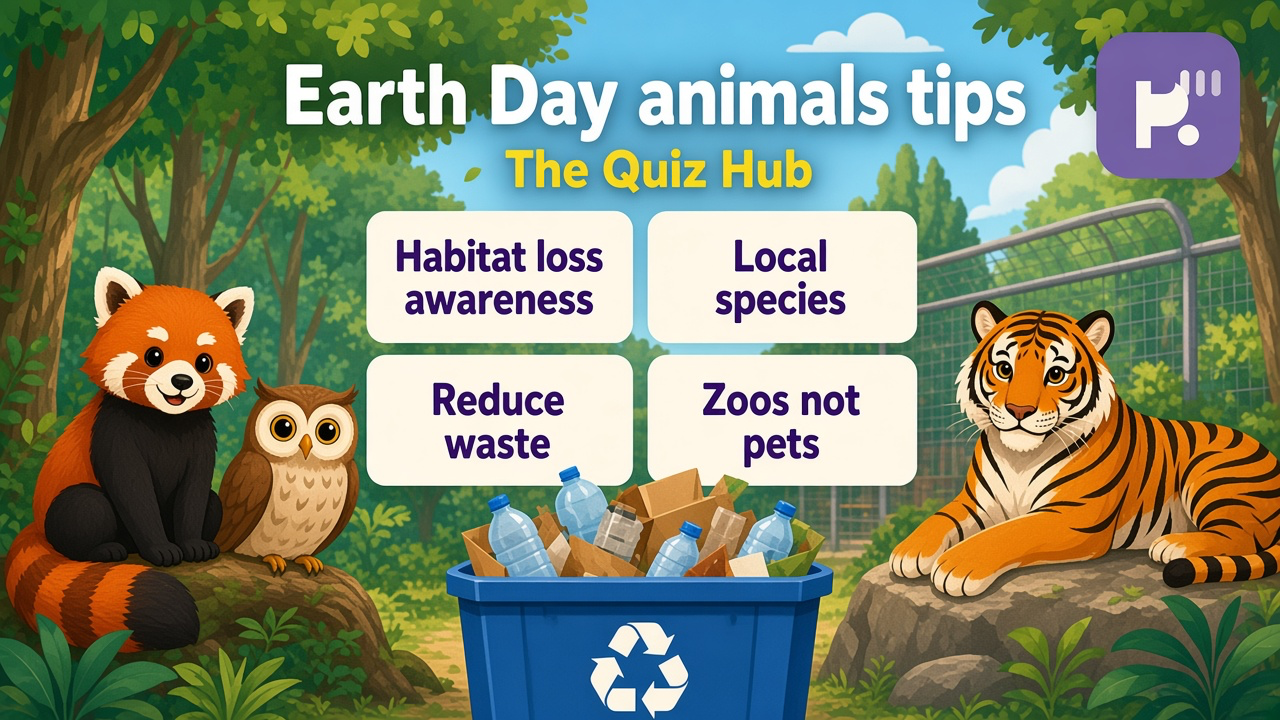
What this quiz can and cannot tell you
Can tell you
- Highlight habitat loss links worth revisiting in class or at home
- Encourage local species curiosity with guides and nature centers
- Connect everyday waste habits to safer streets for wildlife
- Spark better questions about zoos, wild distance, and fun Earth Day learning
Cannot tell you
- Certify you for wildlife handling, rehab, or veterinary credentials
- Replace regional wildlife agencies when animals strand or look injured
- Rank your family or school as good or bad environmental citizens from one score
- Turn a high index into permission to keep wild animals as pets or touch nestlings
Why Earth Day animal trivia pairs habitat facts with respectful wild boundaries
Students open an Earth Day animal quiz when posters show pandas and recycling bins but skip why local robins and pollinators need the same care in smaller letters. Habitat loss is not only a rainforest headline. When wetlands drain, forests fragment, or yards lose native flowers, animals lose food, shelter, and safe travel paths. Endangered lists and habitat corridors sound like policy words until you connect them to bees, butterflies, and backyard birds in your own region. Literacy here means noticing that global stories and local patches share one theme: homes matter.
Local species literacy keeps curiosity honest. Cities and suburbs still host native and introduced neighbors. Feeders help most when seed choices match local birds. Field guides and reputable apps beat guessing from one cropped photo. Tracks, nests, and calls let you celebrate animals without catching them. Earth Day units shine when students can name one native species and one place it lives near school, not only color a generic globe.
Reduce and reuse habits belong in an animal quiz because litter reaches wildlife fast. Plastic along roads and shorelines tangles paws and beaks. Recycling has limits; buying less and reusing containers often cuts waste deeper. Compost programs keep scraps out of landfills when families follow local rules. Reverse items about tossing scraps anywhere catch the myth that all outdoor feeding helps animals when it can train risky behavior near roads and predators.
Zoos not pets is the respect lane. Accredited zoos and aquariums fund breeding, research, and habitat work most households cannot replicate. That is not a license to treat wild trail animals like pet-store inventory. Baby mammals and birds often look abandoned when parents are nearby; moving them indoors can harm everyone. Selfies and catch-and-keep fantasies hurt animals and sometimes break laws. This screener stays fun learning: curiosity, retakes, and kind shares, not shame scoreboards or fake activism badges.
Save your lowest bar as one study topic this week. Plant one pollinator-friendly native, pick up litter on a safe walk, or read a nature center species list for your county. Retake after Earth Day week and watch whether habitat and local species bars rise together. Pair results with our Earth Day quiz for broader holiday habits and the biodiversity quiz when you want wider species richness context. Browse the fun and novelty test hub for more low-stakes trivia that still respects wild lives.
| Test | Focus |
|---|---|
| Earth Day quiz | Broader Earth Day reduce-reuse-recycle and community habits, not wildlife habitat domain bars |
| Biodiversity quiz | Species richness, hotspots, and extinction recall, not backyard pet-rescue myths |
Earth Day Quiz Animals FAQ
What does this quiz measure?
It measures how much you agree with beginner Earth Day animal literacy across habitat loss, local species, reduce-and-reuse habits, and respectful wild boundaries. You get an index from 0 to 100 and four bars. It reflects self-reported knowledge on this screener, not a biology degree or activism rank.
Is this quiz an Earth Day activism or carbon footprint test?
No. It is fun conservation trivia and curiosity. Strong scores do not certify protest participation or judge your family trash habits. Use bars as study hints, not shame weapons.
Does a high score mean I should take wild animals home?
No. Wild animals belong in habitat with distance and expert help when injured. Accredited zoos educate; your bedroom is not a rehab center. Reverse items flag pet-store rescue myths on purpose.
Why are some statements worded as myths?
Reverse-worded myths catch overconfidence. Agreeing that habitat loss only hits distant rainforests, that every city animal is native, that scrap tossing always helps, or that cute babies belong indoors should not inflate your literacy index.
Who reviewed this quiz?
Dr. Rachel Kim, PhD reviewed the fun-only framing, habitat literacy limits, and respectful wildlife notes. See our editorial policy for review standards.
Reviewed by