What Duck Identification Quiz measures
This quiz does not certify you for banding permits, hunting compliance, academic ornithology credentials, or employment with any wildlife agency. It measures how much you agree with beginner-friendly duck trivia grouped four ways: puddle dabblers about mallards, pintails, teal, wigeon, and shoveler field marks common in North American field guides; diving ducks about mergansers, canvasbacks, buffleheads, scaup, and deep-water feeding habits; silhouette and habitat about tail-up dabbling, sea ducks, wood ducks, bill shape, and honest limits on photo-only guesses; and birding ethics about unofficial framing, distance and optics habits, range-map humility, and refusing to treat scores as agency endorsement. You answer 22 statements from strongly disagree to strongly agree, with reverse-worded myths so one lucky mallard streak cannot inflate every bar. Your answers also feed a second chart on closeness and trust habits, because list-chasing fandom sometimes chases certainty over patient field ethics. The total becomes an index from 0 to 100 where higher means more reported trivia literacy on this screener, not proof you should harass wildlife or ignore local regulations.
Puddle dabblers
Mallard plumage seasons, pintail tails, teal size, wigeon crowns, and shoveler bills on shallow water.
Diving ducks
Sawbill mergansers, canvasback profiles, bufflehead cavities, scaup diving, and separating them from dabblers.
Silhouette and habitat
Feeding posture, coastal sea ducks, cavity-nesting wood ducks, bill shape, and distance ID humility.
Birding ethics
Fun-only disclaimers, optics distance, range-map limits, and kind sharing without trespass chasing.
How it works
Answer 22 agreement items
Rate each statement from Strongly disagree to Strongly agree. Tap Next after each answer.
Answers sort into four domains
Each answer feeds one of four duck ID groups, and every item also feeds a closeness and trust layer.
See your index and charts
You get a 0 to 100 index, a band, and two bar charts you can use to pick what to study next.
Take the Duck Identification Quiz
Answer 22 short statements to see your duck identification trivia index, four domain bars, and a closeness and trust chart.
What your result means
Your index is the average of all 22 answers, scaled from 0 to 100, with reverse-worded items flipped first. Higher means more reported trivia literacy on this screener. Read birding ethics together with silhouette bars before you treat the total as field expertise.
| Band | Index range | Typical reading |
|---|---|---|
| Building duck ID literacy | 0 to 35 | Fewer agreed facts on dabblers, divers, habitat cues, or ethics items on this screener. |
| Mixed duck ID literacy | 36 to 65 | Solid recall in some domains with plumage traps or habitat myths in others. |
| Strong duck ID literacy | 66 to 100 | Frequent agreement with accurate field marks, habitat habits, and ethical birding limits. |
Tips at a glance
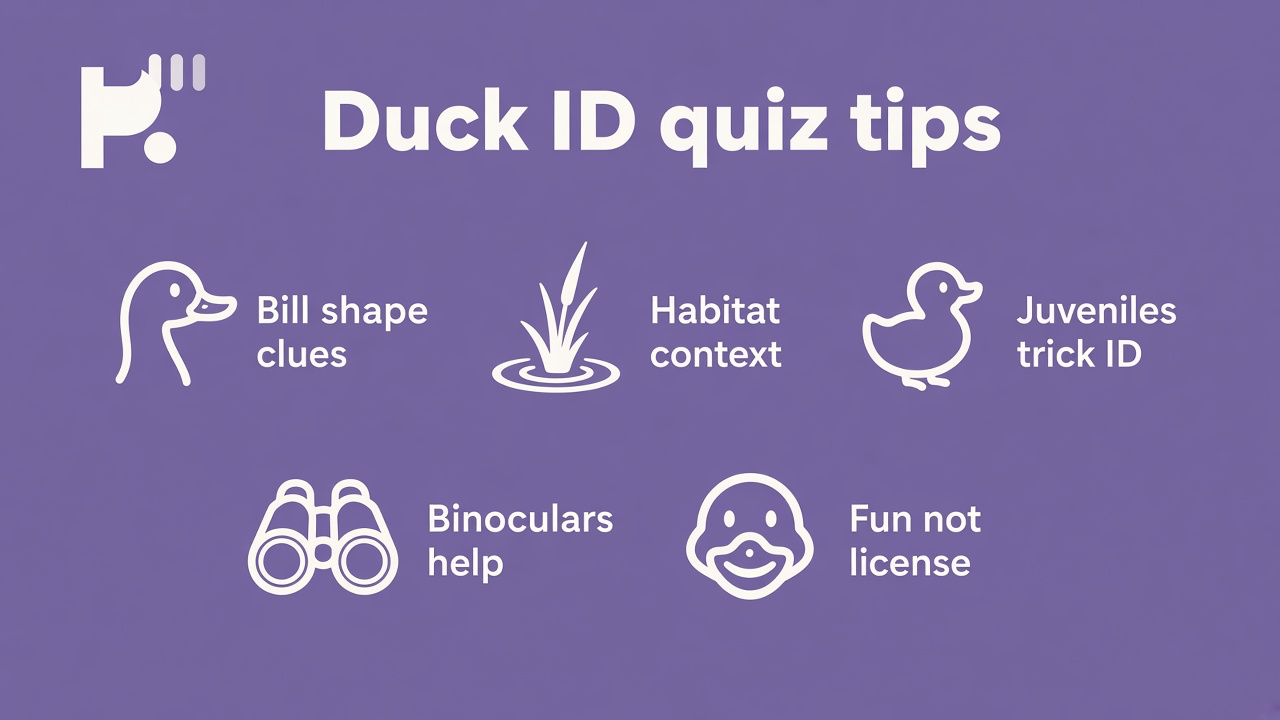
A quick takeaway graphic with topic tips (not your personal quiz scores). Start the quiz for your index, bands, and charts.
What this quiz can and cannot tell you
Can tell you
- Highlight dabbling versus diving cues worth revisiting before your next wetland walk
- Separate fun trivia from myths about photo-only ID or agency credentials
- Encourage distance, optics, and unofficial sharing habits among birding friends
- Spark better questions for field guide study or beginner birding club nights
Cannot tell you
- Certify you for banding, hunting compliance, or professional wildlife inspection
- Replace local regulations, instructor feedback, or mentored field time
- Prove any university, NGO, or agency endorsed your score
- Turn rare-bird chasing into permission to flush flocks or enter private land
Why duck ID trivia splits dabblers, divers, and field ethics
People open a duck identification quiz for the same reason they squint at a winter pond: they want names for birds that look similar until bill shape, posture, or habitat clicks. Mallards teach green heads and yellow bills, but eclipse males, hybrid ponds, and distant flocks remind you plumage alone is fragile. Literacy here means knowing which cues you actually use before you argue species in a group chat or on a checklist app.
Puddle dabblers keep the first lane honest. Teal, wigeon, pintails, and shovelers share shallow wetland habits with different silhouettes and bill tricks. Field guides group them because behavior repeats: tipping, straining, or grazing near shore. Memorizing one hero duck without season changes is the fastest way to miss eclipse plumage traps reverse items include on purpose.
Diving ducks add the second lane. Mergansers, scaup, canvasbacks, and buffleheads chase food below the surface with bills and heads built for diving, not only dabbling. Sea ducks widen the map to coasts and cold water. Confusing a diver with a dabbler at fifty meters is normal; bill profile and feeding posture often beat color when light is flat.
Silhouette and habitat cues keep expectations realistic. Wood ducks in cavities, eiders on surf, and ring-necked rings you barely see teach humility. Photo-only confidence fails when vagrants, hybrids, and lighting prank even experienced eyes. Pair trivia with optics, patience, and notes about place and season instead of treating one score as a lifetime list rank.
Birding ethics stays light but firm. Unofficial quizzes should say so before scores become badges. Disturbing roosting flocks for social media, chasing rare birds onto private land, or treating trivia totals as agency hiring tests harms birds and neighbors. Share results as fun, caption them self-check only, and keep distance so the next visitor sees the same duck still feeding calmly.
| Test | Focus |
|---|---|
| Bird song quiz | Dawn chorus and call recall rather than duck plumage and bill shape |
| Bird quiz | General bird trivia rather than waterfowl field-mark depth |
Duck Identification Quiz FAQ
What does this duck identification quiz measure?
It measures how much you agree with beginner duck and waterfowl trivia across puddle dabblers, diving ducks, silhouette and habitat cues, and birding ethics. You get an index from 0 to 100 and four bars. It reflects self-reported ID literacy on this screener, not a banding exam or job credential.
Is this quiz an official wildlife or hunting certification test?
No. This is fun novelty trivia and a study self-check. Wildlife agencies, universities, and hunting regulation boards did not write or endorse these items. Follow local laws and qualified mentors for real compliance questions.
Does a high score mean I can identify every duck in any photo?
No. Real ID needs distance, behavior, habitat, season, and often sound or expert help. Reverse items flag overconfidence about photo-only guesses and year-round plumage myths.
Why are some statements worded as myths?
Reverse-worded myths catch sloppy agreeing. Statements that every duck dives like a penguin, that mallards never change plumage, or that agencies hired you from a quiz score should not inflate your literacy index.
Who reviewed this quiz?
Dr. Rachel Kim, PhD reviewed the fun-only framing, unofficial disclaimers, and birding ethics notes. See our editorial policy for review standards.
Reviewed by