What the Dysfunction Scale (DSF) Quiz measures
This quiz does not diagnose depression, anxiety, insomnia, eating disorders, or any other mental health condition. Only a qualified clinician using interview methods, history, and validated tools when needed can do that. It measures how often you have noticed daily function patterns clinicians discuss when sleep, appetite, concentration, social contact, and care-seeking shape whether basics feel manageable, grouped four ways: sleep and appetite rhythm, focus and motivation for tasks, social withdrawal, and seeking professional or practical help when routines keep slipping. You answer 22 how-often statements about the past month, with reverse-worded items so one good week cannot hide frequent strain across other days. Your responses also feed a second chart on closeness and trust habits, because withdrawal and shame about needing help often travel together. The total becomes an index from 0 to 100 where higher means more frequent reported daily dysfunction strain on this screener, not proof you are failing at life.
Sleep and appetite
How often rest felt thin, sleep slipped, meals were skipped, or appetite swung when stress was already high.
Focus and motivation
How often concentration faded, chores piled up, or interest in usual activities dropped when you had time for them.
Social withdrawal
How often you pulled back from plans, messages, or groups because contact felt heavier than when you felt connected.
Help-seeking
How often you delayed clinicians, counselors, or honest asks while the same functional slips returned.
How it works
Answer 22 frequency items
Rate each statement from Never to Very often for the past month. Tap Next after each answer.
Answers sort into four domains
Each answer feeds one of four daily function groups, and every item also feeds a closeness and trust layer.
See your index and charts
You get a 0 to 100 index, a band, and two bar charts you can bring to a clinician.
Take the Dysfunction Scale (DSF) Quiz
Answer 22 short statements to see your daily dysfunction strain index, four domain bars, and a closeness and trust chart.
What your result means
Your index is the average of all 22 answers, scaled from 0 to 100, with reverse-worded items flipped first. Higher means more frequent reported daily dysfunction strain on this screener. Read sleep and appetite with focus and motivation bars together before the total, since rest can look moderate while withdrawal or avoided help keeps function stuck.
| Band | Index range | Typical reading |
|---|---|---|
| Lower reported daily dysfunction strain | 0 to 35 | Fewer frequent sleep, appetite, focus, withdrawal, or help-avoidance patterns in the past month. |
| Mixed reported daily dysfunction strain | 36 to 65 | Some domains spike while sleep, contact, or help-seeking look steadier on better weeks. |
| Higher reported daily dysfunction strain | 66 to 100 | Frequent sleep, appetite, focus, withdrawal, or help-avoidance strain; consider professional support. |
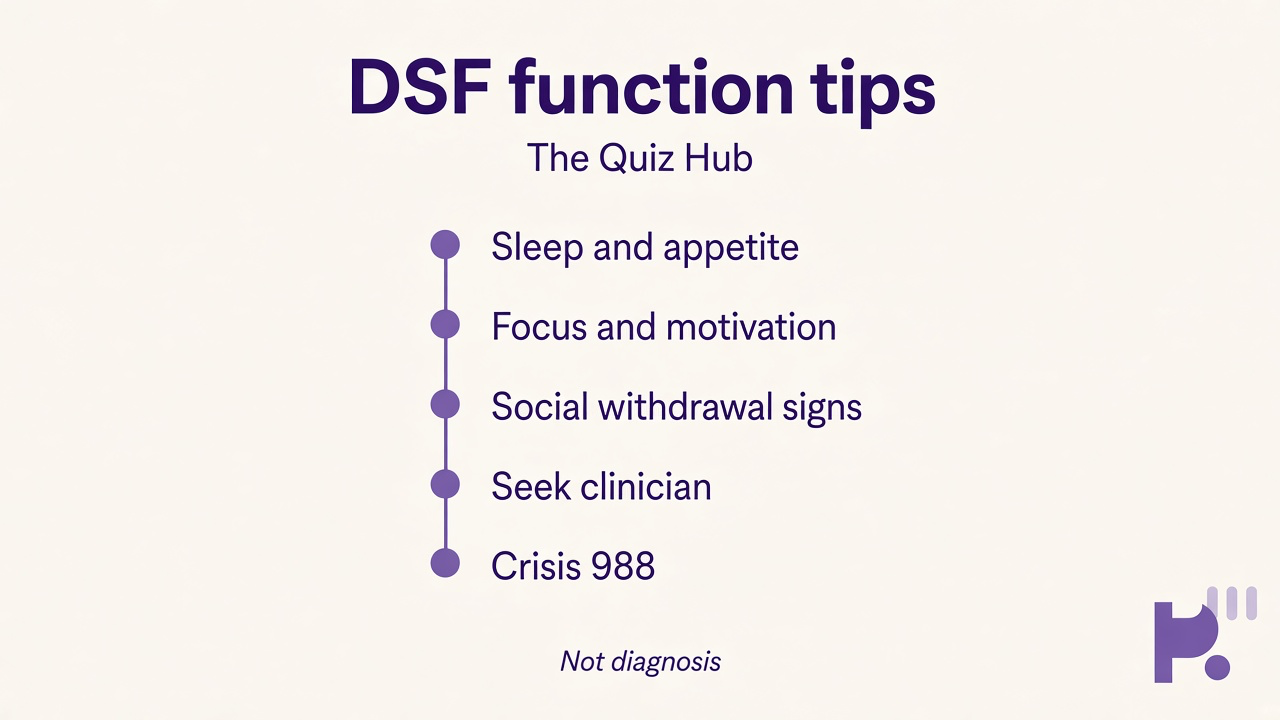
Tips at a glance
A quick takeaway graphic with topic tips (not your personal quiz scores). Start the quiz for your index, bands, and charts.
What this quiz can and cannot tell you
Can tell you
- Organize habits into sleep, appetite, focus, withdrawal, and help-seeking buckets
- Give you language for therapist or primary care intake about daily function
- Highlight when routine slips may be fueling mood or sleep problems
- Offer a baseline if you retake after trying one boundary or support step
Cannot tell you
- Diagnose depression, anxiety, trauma, or sleep disorders without evaluation
- Replace validated clinical DSF or other professional screeners administered by clinicians
- Account for medical conditions, medications, or neurodiversity on its own
- Prove you should self-treat serious symptoms based on one score
Daily dysfunction: sleep, appetite, focus, withdrawal, and asking for help
Clinicians and researchers often talk about dysfunction as impaired daily function: sleep and appetite change, trouble starting tasks, pulling away from people, and difficulty keeping up with responsibilities. Online lists of symptoms can feel abstract until you ask how often those patterns showed up in the last month. Frequency matters because two people can both feel low while one still eats regular meals and the other skips food for days.
Sleep and appetite sit in one lane on this screener because rest and fuel often move together when mood dips. Insomnia, oversleeping, forgotten meals, and stress-driven appetite swings are common signals that basics need attention. Neither bar punishes a single rough night or a comfort-food day. They track how often disruption showed up across the past month so you can describe patterns to a clinician without guessing diagnostic labels.
Focus and motivation items capture concentration fade, procrastination that becomes crisis, and lost interest in activities you used to enjoy. Withdrawal items ask about canceled plans, one-word replies, and feeling drained in groups. Pulling back to protect energy is understandable, but sustained isolation can shrink support exactly when function is already thin. Help-seeking items focus on delayed therapy, minimized symptoms, or waiting for collapse before using professional or community resources.
The National Institute of Mental Health depression overview notes that changes in sleep, appetite, energy, and social engagement can accompany mood disorders and deserve professional evaluation when they persist. This quiz mirrors lived signals in four bars so you can bring examples to intake. If withdrawal and focus bars run high while help-seeking stays low, start with one concrete ask: book a consult, tell one trusted person the truth, or call employee assistance if your workplace offers it.
Higher scores mean more frequent self-reported strain on this tool, not a wellness grade. Pair changes with professional guidance when mood, panic, or function collapse persist. Our Drivers of Mental Health Quiz emphasizes sleep, stress load, connection, and help-seeking habits; the how susceptible are you to stress quiz adds a stress reactivity lens. Use them for reflection alongside this daily function screener, not instead of care when safety is at risk. Retake after four weeks of one measurable routine change and compare domain bars, not only the total.
| Test | Focus |
|---|---|
| Drivers of Mental Health Quiz | Sleep, movement, stress load, and connection drivers rather than appetite, focus, and withdrawal split |
| How susceptible are you to stress | Stress reactivity and tension habits rather than daily function and help-seeking split |
Dysfunction Scale (DSF) Quiz FAQ
What does this quiz measure?
It measures how often you noticed sleep and appetite strain, lost focus or motivation, social withdrawal, and delayed help-seeking in the past month. You get an index from 0 to 100 plus four domain bars. It reports self-reported frequency, not a clinical diagnosis.
Is this the official Dysfunction Scale (DSF)?
No. This is an unofficial daily function screener inspired by dysfunction screening themes. It is not the validated clinical DSF instrument and cannot replace tools administered by licensed professionals.
Can this quiz diagnose depression or anxiety?
No. Only a licensed clinician can diagnose mental health conditions after full evaluation. Use this tool to describe daily function patterns and decide whether therapy or medical care might help.
What should I do if my score is high?
Protect sleep and meals where you can, reach out to one trusted person, and book a clinician if strain persists. Call or text 988 (US) if you feel unsafe or are thinking about self-harm.
Who reviewed this quiz?
Dr. Elena Vasquez, PhD reviewed the YMYL framing, medical limits, and crisis resource guidance. See our editorial policy for review standards.
Reviewed by