What this DUWAS-style screener measures
This quiz does not administer the official Dutch Work Addiction Scale, certify DUWAS results, or diagnose work addiction, burnout, or mood disorders. Only a qualified clinician or occupational health professional using interview methods, history, and validated tools can do that. It measures how often you have noticed work habits researchers discuss when Schaufeli and colleagues described working excessively and working compulsively, plus burnout strain and recovery boundaries hustle culture often skips, grouped four ways: excessive hours and overcommitment, compulsive checking and guilt on rest days, exhaustion and mood spillover, and treating rest as productive while seeking help when stuck. You answer 22 how-often statements about the past month, with reverse-worded items so one good boundary week cannot hide frequent always-on checking on other days. Your responses also feed a second chart on closeness and trust habits, because overwork sometimes guards against vulnerability at home. The total becomes an index from 0 to 100 where higher means more frequent reported strain on this unofficial screener, not proof you are addicted to work.
Working excessively
How often long hours, skipped breaks, or overcommitment outran a sustainable pace.
Working compulsively
How often work thoughts, email, or guilt pulled you back when you meant to be off.
Burnout strain
How often exhaustion, cynicism, irritability, or body stress tracked with heavy weeks.
Boundary recovery
How often rest, unplugged time, and help-seeking showed up as real boundaries.
How it works
Answer 22 frequency items
Rate each statement from Never to Very often for the past month. Tap Next after each answer.
Answers sort into four domains
Each answer feeds one of four work-habit groups, and every item also feeds a closeness and trust layer.
See your index and charts
You get a 0 to 100 index, a band, and two bar charts you can bring to a clinician or EAP.
Take the Dutch Work Addiction Scale (DUWAS)
Answer 22 short statements to see your work boundary and drive index, four domain bars, and a closeness and trust chart.
What your result means
Your index is the average of all 22 answers, scaled from 0 to 100, with reverse-worded items flipped first. Higher means more frequent reported strain on this unofficial screener. Read compulsive checking and boundary recovery bars together before the total, since moderate hours can hide always-on mental load.
| Band | Index range | Typical reading |
|---|---|---|
| Lower reported work-drive strain | 0 to 35 | Fewer frequent excessive hours, compulsive checking, or burnout signals in the past month. |
| Mixed reported work-drive strain | 36 to 65 | Some domains spike while boundary recovery habits appear on better weeks. |
| Higher reported work-drive strain | 66 to 100 | Frequent overwork or detachment habits; professional support may help. |
Tips at a glance
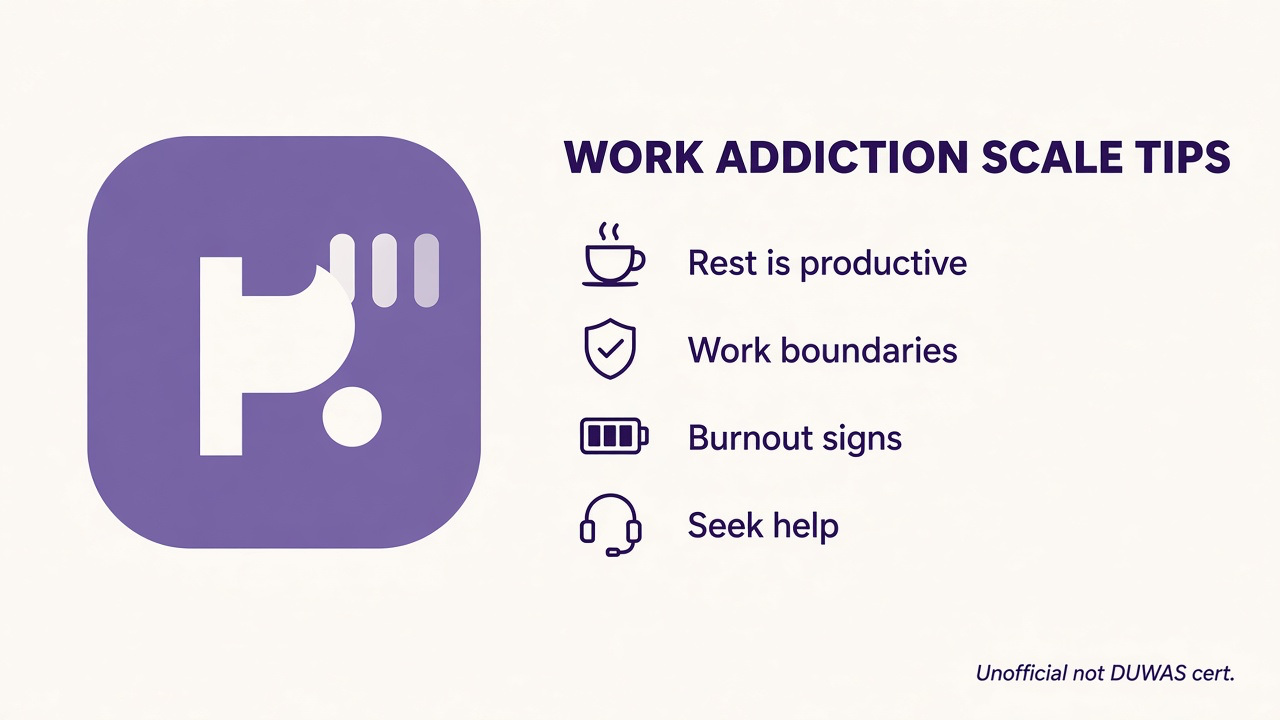
A quick takeaway graphic with topic tips (not your personal quiz scores). Start the quiz for your index, bands, and charts.
What this quiz can and cannot tell you
Can tell you
- Organize habits into excessive drive, compulsive checking, burnout strain, and recovery buckets
- Give you vocabulary for therapist, doctor, or EAP intake
- Highlight when hustle may be costing sleep, mood, or relationships
- Offer a baseline if you retake after trying one boundary
Cannot tell you
- Replace the official DUWAS or certify validated DUWAS scores
- Diagnose work addiction, burnout, or depression without evaluation
- Tell your employer whether you should quit from one score
- Prove productivity problems are only personal when workload is unsafe
Work addiction habits: hustle culture, DUWAS ideas, and real boundaries
The Dutch Work Addiction Scale, developed by Schaufeli and colleagues, helped researchers separate working excessively from working compulsively. Excessive work is about volume and neglecting recovery; compulsive work is about inner pressure to stay engaged, check in, and feel guilty when you stop. Neither pattern means you are weak or that your career goals are wrong. They describe frequency and cost when work starts owning evenings, bodies, and relationships.
Hustle culture often rewards the first pattern with praise and punishes rest with shame. That does not make rest unproductive. Sleep, movement, and offline joy are inputs to sustainable performance, not trophies for people who already finished their to-do list. Burnout signs such as cynicism, irritability, and exhaustion that no longer lift after a weekend deserve attention from a clinician or occupational health team, especially when workload is structurally unrealistic.
Compulsive checking items capture email at dinner and mind loops at midnight. Excessive drive items capture saying yes when the calendar is full. Boundary recovery items capture the habits this screener wants you to practice: protected off time, help-seeking, and comparing yourself to a humane pace instead of viral grind content. This online tool is inspired by DUWAS themes but is not the licensed scale; do not use your score as a DUWAS certificate or workplace accommodation document on its own.
If your bars run high, start with one measurable boundary, such as a hard stop time or charging work devices outside the bedroom. Pair limits with a conversation about load if your role is chronically underwater. Cognitive behavioral therapy, stress management programs, and sometimes medication for anxiety or depression are evidence-based paths when self-help stalls. Our am I a workaholic quiz emphasizes identity and habit language broadly; pair it with this DUWAS-style domain split for reflection, not instead of care when mood or safety is at risk.
Retake after four weeks of one consistent boundary and compare bars, not only the total. Work you care about can coexist with recovery; the goal is to notice when drive becomes compulsion. Licensed clinicians and EAP counselors help you translate scores into sustainable plans without martyrdom or shame.
| Test | Focus |
|---|---|
| Am I a workaholic quiz | General workaholic identity habits without DUWAS excessive versus compulsive split |
| Burnout assessment test BAT-16 | Burnout exhaustion and disengagement emphasis rather than always-on checking domain |
Dutch Work Addiction Scale (DUWAS) FAQ
What does this quiz measure?
It measures how often you noticed excessive work, compulsive checking, burnout-style strain, and recovery boundaries during the past month. You get an index from 0 to 100 plus four domain bars. It reports self-reported frequency on an unofficial screener, not certified DUWAS results.
Is this the official Dutch Work Addiction Scale?
No. This is a DUWAS-inspired reflection tool with original item wording for our site. Only validated DUWAS administrations by qualified professionals produce certified DUWAS scores.
Can this quiz diagnose work addiction or burnout?
No. Only a licensed clinician or occupational health professional can diagnose work addiction, burnout, or mood disorders after full evaluation. Use this tool to describe patterns and decide whether support might help.
What should I do if my score is high?
Try one measurable boundary, protect sleep, and contact a therapist, doctor, or employee assistance program if distress persists. Call or text 988 (US) if you feel unsafe or are thinking about self-harm.
Who reviewed this quiz?
Dr. Elena Vasquez, PhD reviewed the YMYL framing, unofficial DUWAS limits, and crisis resource guidance. See our editorial policy for review standards.
Reviewed by