What this unofficial screener measures
This page is not affiliated with Mehmet Oz, M.D., the Dr Oz Show, or any trademarked memory product. It does not diagnose Alzheimer disease, mild cognitive impairment, or other dementias, and it does not replace MoCA-style testing, brain imaging, or medication decisions. It measures how often you report four habit clusters in a typical week: sleep recovery through length, regularity, screen wind-down, and noticing sleep,memory links without treating tired forgetfulness as automatic dementia; move and circulation through walks, sitting breaks, daylight movement, and avoiding freeze when worry drains energy; nourish and connect through colorful whole-food meals, hydration, trusted conversation, and novel learning,the social and plate habits popular segments repeat; and memory literacy through how often you panic-search after normal slips, treat quiz scores as diagnosis, or instead pause, log patterns, and know this quiz is unofficial. You answer 22 statements from never to very often, with reverse-worded items so autopilot responding cannot inflate every bar. Your answers also feed a second chart on closeness and trust habits, because memory fear sometimes hides isolation or caregiver shame. The total becomes a reflection index from 0 to 100 where higher means more frequent endorsement of protective habits and literacy items on this screener,not proof of brain health or disease.
Sleep recovery
Sleep length, regular bedtimes, screen wind-down, and noticing next-day forgetfulness when rest is thin.
Move and circulation
Walks, sitting breaks, heart-rate chores, daylight movement, and avoiding movement skips from worry fatigue.
Nourish and connect
Colorful meals, hydration, trusted talk, and learning something new beyond feed scrolling.
Memory literacy
Resisting quiz-as-diagnosis myths, pausing before panic-search, logging slips, and knowing unofficial limits.
How it works
Answer 22 frequency items
Rate each statement from Never to Very often. Tap Next after each answer.
Answers sort into four domains
Each answer feeds one of four habit groups, and every item also feeds a closeness and trust layer.
See your index and charts
You get a 0 to 100 index, a band, four domain bars, and a second chart,unofficial habit reflection, not a diagnosis.
Take the Dr Oz Alzheimer Memory Quiz
Answer 22 short statements to see your unofficial brain-health habit index, four domain bars, and a closeness and trust chart.
What your result means
Your index is the average of all 22 answers, scaled from 0 to 100, with reverse-worded items flipped first. Higher means more frequent reported protective habits and literacy behaviors on this screener,not a Dr Oz Show result, neurologist verdict, or Alzheimer label. Read memory literacy and sleep bars together before you trust a headline or skip clinical follow-up when safety is involved.
| Band | Index range | Typical reading |
|---|---|---|
| Lighter brain-health habit endorsement | 0 to 35 | Less frequent protective sleep, movement, nourishment, and literacy habits on this screener. |
| Mixed brain-health habit endorsement | 36 to 65 | Strong habits in some domains with softer frequency in others. |
| Broader brain-health habit endorsement | 66 to 100 | Frequent protective habits and literacy items; still not diagnosis. |
Tips at a glance
A quick takeaway graphic with topic tips (not your personal quiz scores). Start the quiz for your index, bands, and charts.
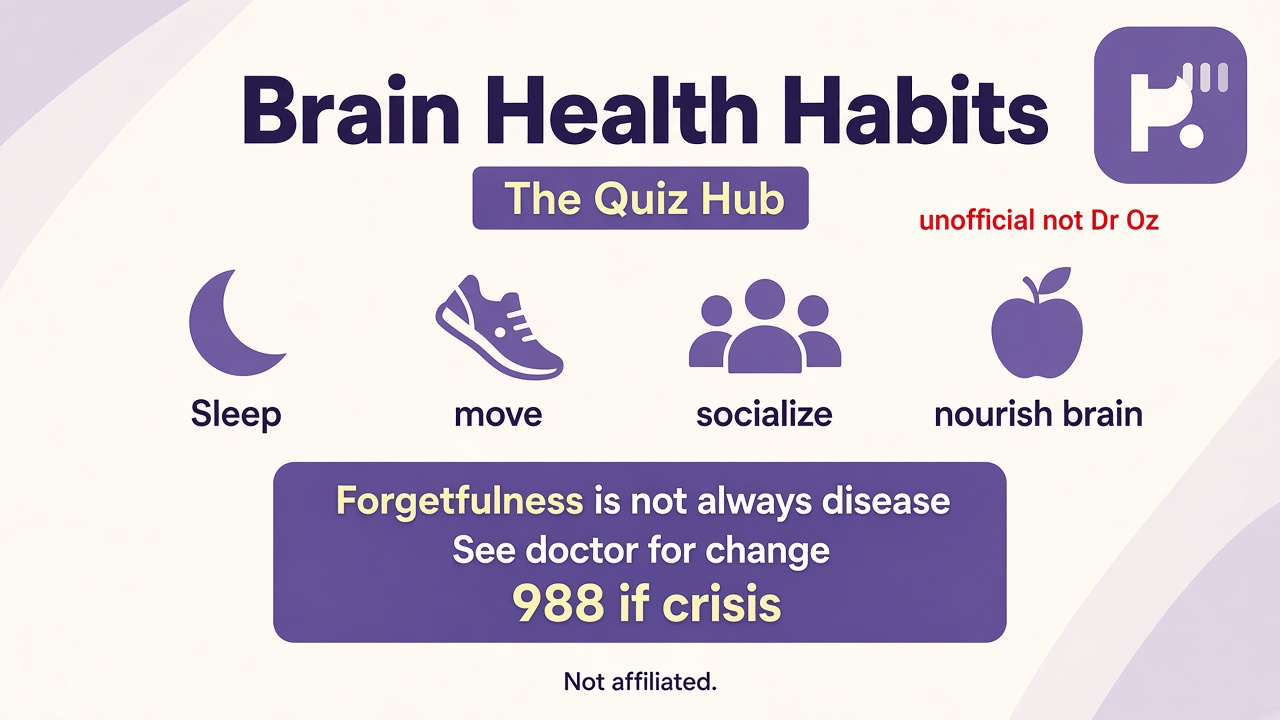
What this quiz can and cannot tell you
Can tell you
- Translate Dr Oz,search memory anxiety into four habit bars you can discuss with a clinician
- Separate unofficial habit literacy from TV segments, supplement ads, and quiz-as-diagnosis myths
- Highlight when panic-search or quiz retakes might be stealing sleep that memory needs
- Encourage professional review when function changes affect driving, meds, cooking, or mood safety
Cannot tell you
- Affiliate with or replicate Mehmet Oz, the Dr Oz Show, or proprietary memory programs
- Diagnose Alzheimer disease, mild cognitive impairment, or other dementias
- Replace cognitive testing, brain imaging, or licensed neurology or psychiatry care
- Prove you need specific supplements because a habit bar scored high or low
Why Dr Oz memory searches need habit literacy, not quiz labels
People who type Dr Oz Alzheimer memory quiz are usually carrying two fears at once: that everyday slips mean catastrophe, and that they should already be doing every brain tip from daytime TV. Segments can help when they repeat sleep, movement, and social connection. They hurt when clips feel like hidden tests or when unofficial fan pages pretend to be medical charts. This screener stays in the habit-literacy lane on purpose. It tracks weekly behaviors and myth-resistance you control, not a trademarked score from Mehmet Oz or any studio.
Sleep recovery items mirror what clinicians also ask first. Short sleep makes names and keys harder for everyone. Irregular bedtimes stack stress hormones. Late screens delay melatonin. Reverse items about five-hour nights and late caffeine keep denial from faking a perfect sleep bar. Memory worry that steals sleep is its own loop; fixing rest is not a guarantee against dementia, but it is a kinder first experiment than panic Googling at 2 a.m.
Move-and-circulation items borrow the walk-your-brain talk without turning steps into a cure claim. Cardio supports vessels that feed the brain. Sitting breaks help mood and focus today. Reverse items catch weeks when fear paralyzes movement entirely. If walking is new, start with safety and your doctor constraints, not a quiz prescription.
Nourish-and-connect items echo Mediterranean-style plates and the loneliness research segments cite. Colorful produce, beans, fish, and olive-oil patterns support overall health; they are not magic shields. Hydration and real conversation fight the isolation that makes forgetfulness feel louder. Learning something small keeps brains engaged in normal aging. Reverse items about processed solo meals keep the bar honest when delivery apps run the week.
Memory-literacy items are the YMYL core. Treating any online score as Alzheimer proof is dangerous. Panic-search after every misplaced key trains catastrophe. Pausing to note sleep, stress, or meds is a skill. Simple logs help clinicians more than retakes. Knowing this page is unofficial and not Mehmet Oz should be automatic before sharing results. When family sees getting lost, hourly repeats, or unsafe kitchen behavior, book evaluation,not another celebrity-branded quiz. Habit literacy is a mirror and a nudge toward real care, not a diagnosis chart.
| Test | Focus |
|---|---|
| Dementia quiz | Memory slip frequency concern screener rather than Dr Oz,style protective habit clusters |
| Doomscrolling scale | Feed-check habits that often amplify memory anxiety after health headlines |
Dr Oz Alzheimer Memory Quiz FAQ
Is this quiz affiliated with Dr Mehmet Oz or the Dr Oz Show?
No. It is unofficial fan and education content inspired by public brain-health talking points and search interest around Dr Oz memory segments. It is not endorsed by Mehmet Oz, M.D., the Dr Oz Show, or any official memory program, and it does not use show branding as medical authority.
What does the brain-health habit index measure?
It measures how often you report sleep, movement, nourishment, connection, and memory-literacy habits in a typical week. You get an index from 0 to 100 and four bars. It reflects self-report on this screener, not cognitive testing or a clinical diagnosis.
Can a low bar or a high index diagnose Alzheimer disease?
No. Habit scores describe weekly patterns and literacy on this page. Alzheimer disease and related dementias require licensed evaluation, history, and often formal cognitive testing. Use safety-affecting change as a reason to seek care, not quiz labels.
Why mix protective habits with memory-literacy items?
Dr Oz memory searches blend lifestyle tips with fear of dementia. Split bars keep sleep-walk-plate habits separate from panic-search and quiz-as-diagnosis myths so results stay honest about both lanes.
Who reviewed this quiz?
Dr. Elena Vasquez, PhD reviewed the unofficial not-affiliated framing, YMYL limits on diagnosis and supplements, and crisis guidance. See our editorial policy for review standards.
Reviewed by