What this unofficial reflection measures
This screener is not affiliated with Daniel Amen, M.D., Amen Clinics, or any trademarked brain-type product. It does not read scans, sell supplements, or diagnose ADHD, anxiety disorders, depression, or impulse-control conditions. It measures how much you agree with everyday wellness-meme habit statements grouped four ways: worry loop about catastrophizing, reassurance hunts, and body tension; restless focus about sidetracks, hyperfocus swings, and novelty chases without turning scores into clinical labels; heavy withdrawal about social exhaustion, retreat, and multi-day motivation dips described in sad-brain memes; and impulsive reward about splurges, bedtime scroll, and speak-now urgency. You answer 22 statements from strongly disagree to strongly agree, with reverse-worded items so autopilot responding cannot inflate every bar. Your answers also feed a second chart on closeness and trust habits, because meme labels sometimes hide loneliness or shame. The total becomes a reflection index from 0 to 100 where higher means more reported endorsement of these clusters on this screener,not proof of a proprietary brain type or a treatment plan.
Worry loop
Worst-case rehearsals, late-night lookups, mistake replays, reassurance asks, and tension cues.
Restless focus
Start-stop tasks, hyperfocus hobbies, distractibility, novelty chases, and unfinished projects.
Heavy withdrawal
Social exhaustion, screen-or-bed retreat, multi-day motivation dips, and empty-tank weeks.
Impulsive reward
Splurge urges, bedtime scroll or games, fast yes regrets, and hard-to-wait speaking impulses.
How it works
Answer 22 agreement items
Rate each statement from Strongly disagree to Strongly agree. Tap Next after each answer.
Answers sort into four domains
Each answer feeds one of four meme-style habit groups, and every item also feeds a closeness and trust layer.
See your index and charts
You get a 0 to 100 index, a band, four domain bars, and a second chart,unofficial reflection, not a diagnosis.
Take the Dr Amen Brain Type Quiz
Answer 22 short statements to see your unofficial brain-type habit index, four domain bars, and a closeness and trust chart.
What your result means
Your index is the average of all 22 answers, scaled from 0 to 100, with reverse-worded items flipped first. Higher means more reported endorsement of these meme-style clusters on this screener,not an Amen Clinics result or medical proof. Read the tallest domain bar before you buy a label, a stack of supplements, or skip professional care.
| Band | Index range | Typical reading |
|---|---|---|
| Quieter brain-type habit endorsement | 0 to 35 | Less agreement with worry, focus, withdrawal, and impulse meme items on this screener. |
| Mixed brain-type habit endorsement | 36 to 65 | Strong habits in some meme clusters with softer agreement in others. |
| Broad brain-type habit endorsement | 66 to 100 | Frequent agreement across worry, focus, withdrawal, and impulse meme items. |
Tips at a glance
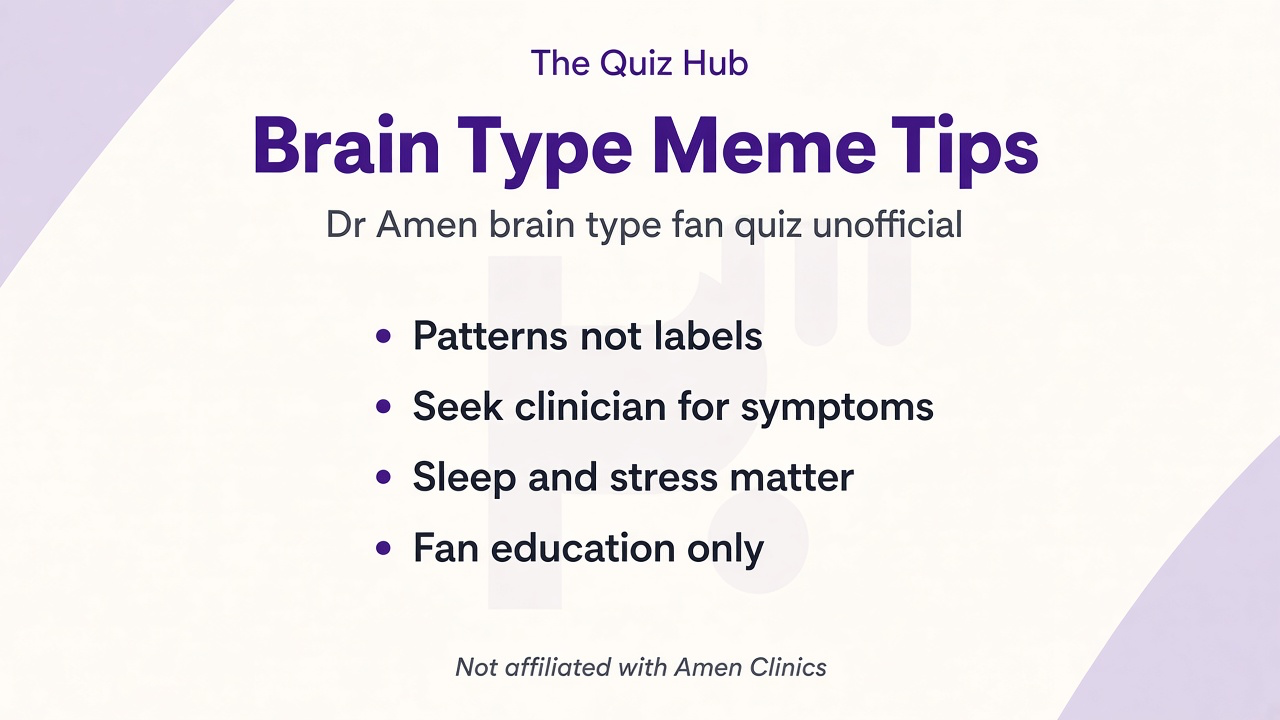
A quick takeaway graphic with topic tips (not your personal quiz scores). Start the quiz for your index, bands, and charts.
What this quiz can and cannot tell you
Can tell you
- Translate meme language into four habit bars you can discuss with friends or clinicians
- Separate unofficial fan education from branded brain-type marketing claims
- Highlight reverse-item myths like one score equals a scan or diagnosis
- Encourage professional review when multiple bars stay high and life feels unmanageable
Cannot tell you
- Affiliate with or replicate Dr Amen, Amen Clinics, or proprietary brain-type programs
- Diagnose ADHD, anxiety, depression, bipolar disorder, or impulse-control conditions
- Replace brain imaging, medication decisions, or licensed therapy
- Prove you need specific supplements because a meme bar scored high
Why brain-type memes need loud unofficial disclaimers
Social feeds turned brain talk into stickers: anxious brain, ADHD brain, sad brain, impulsive brain. The jokes help people feel less alone when a nervous system misfires. They also blur into brands that promise scans, types, and supplement stacks. This page stays in the meme-education lane on purpose. It is fan reflection about habit clusters you already recognize online, not an Amen Clinics product, not SPECT marketing, and not a shortcut around licensed care when symptoms hurt your sleep, school, work, or relationships.
Worry-loop items mirror the catastrophizing reel: rehearsing disasters before data arrives, refreshing reassurance tabs at midnight, replaying tiny errors, asking partners to confirm what you already know, and wearing tension in jaw or gut when calendars crowd. Reverse items catch denial,if you rarely notice loops until someone else names them, that should not inflate a bar meant to track active worry habits. Memes are not moral scores; they are invitations to notice patterns and choose one kinder boundary.
Restless-focus items borrow ADHD-culture language without diagnosing ADHD here. Starting is easy; finishing without sidetracks is hard. Hyperfocus on hobbies eats clocks. Open tabs and buzz break flow. Novelty chases leave a graveyard of half projects. Reverse items about steady all-day focus keep fantasy responders honest. If attention problems impair real life, clinicians use history and validated tools,not a 22-item agree quiz,to decide next steps.
Heavy-withdrawal items echo sad-brain memes: social plans feel heavy, retreat beats asking for help, motivation flatlines for days, empty-tank weeks persist after sleep. Reverse items where low energy never changes outreach should not fake resilience. Withdrawal language can overlap depression signs; only a licensed professional can tell the difference and plan treatment. This screener nudges you toward that conversation when bars stay high and functioning drops,it does not name a disorder.
Impulsive-reward items track dopamine-trap habits: splurge food or carts, one-more-scroll bedtimes, fast yes regrets, speak-now impulses in groups. Reverse items about rare urges under stress keep the bar meaningful. Pair your tallest bar with offline experiments,phone outside the bedroom, a five-minute walk before purchases, a single trusted person who hears the worry loop aloud. Retake to notice shifts, but let clinicians own diagnosis, meds, and safety planning. Meme literacy is a mirror, not a medical chart.
| Test | Focus |
|---|---|
| Dosha quiz | Ayurveda-inspired constitution habits rather than modern brain-type meme clusters |
| Big Five personality test | Research-backed OCEAN trait percentiles rather than worry-focus-withdrawal-impulse meme bars |
Dr Amen Brain Type Quiz FAQ
Is this quiz affiliated with Dr Daniel Amen or Amen Clinics?
No. It is unofficial fan and education content about popular brain-type wellness memes. It is not endorsed by Daniel Amen, M.D., Amen Clinics, or any proprietary brain-type program, and it does not use official type names as medical assignments.
What does the reflection index measure?
It measures how much you agree with habit statements about worry loops, restless focus, heavy withdrawal, and impulsive reward,language common in social memes. You get an index from 0 to 100 and four bars. It reflects self-report on this screener, not brain imaging or a clinical diagnosis.
Can a high bar diagnose ADHD, anxiety, or depression?
No. Meme clusters overlap with real conditions, but diagnosis requires licensed evaluation, history, and often validated instruments. Use persistent or dangerous symptoms as a reason to seek care, not as proof a quiz label is enough.
Why are some statements worded opposite to the habit?
Reverse-worded items catch autopilot responding. Agreeing that worry loops are invisible to you, that focus never wavers, that low energy never changes outreach, or that urges rarely appear under stress should not inflate bars meant to track active habit clusters.
Who reviewed this quiz?
Dr. Elena Vasquez, PhD reviewed the unofficial not-affiliated framing, YMYL limits on diagnosis and supplements, and crisis guidance. See our editorial policy for review standards.
Reviewed by