What Dosha Quiz measures
This screener does not diagnose Ayurvedic imbalance, assign clinical constitution types, or recommend herbs, cleanses, or diets. It measures how much you agree with wellness reflection statements grouped four ways: vata tendency about creative restlessness, irregular meals, cold hands, and plan changes; pitta tendency about task drive, heat irritability, direct speech, and polish; kapha tendency about slow mornings, calm under stress, comforting routines, and steady roles; and rhythm awareness about sleep mood links, seasonal energy, gentle movement clarity, and naming overstretch signals without turning them into treatment plans. You answer 22 statements from strongly disagree to strongly agree, with reverse-worded items so one lucky streak cannot inflate every bar. Your answers also feed a second chart on closeness and trust habits, because wellness identity and vulnerability often trade places under stress. The total becomes a reflection index from 0 to 100 where higher means more reported endorsement of these tendency clusters on this screener, not proof you must live by Ayurveda rules or skip medical care.
Vata tendency
Busy mind at night, new projects, shifting meals, cold extremities, and flexible plans.
Pitta tendency
Task drive, deadline impatience, heat irritability, direct fairness talk, and polished details.
Kapha tendency
Slow mornings, calm in chaos, cozy routines, steady roles, and holding comfort.
Rhythm awareness
Sleep-mood links, seasonal energy, gentle movement clarity, and naming overstretch signals.
How it works
Answer 22 agreement items
Rate each statement from Strongly disagree to Strongly agree. Tap Next after each answer.
Answers sort into four domains
Each answer feeds one of four tendency groups, and every item also feeds a closeness and trust layer.
See your index and charts
You get a 0 to 100 index, a band, four domain bars, and a second chart for intimacy habits.
Take the Dosha Quiz
Answer 22 short statements to see your dosha reflection index, four tendency bars, and a closeness and trust chart.
What your result means
Your index is the average of all 22 answers, scaled from 0 to 100, with reverse-worded items flipped first. Higher means more reported endorsement of these tendency clusters on this screener. Read the tallest vata, pitta, or kapha bar before you treat the total as a single dosha label.
| Band | Index range | Typical reading |
|---|---|---|
| Quieter dosha tendency endorsement | 0 to 35 | Less agreement with vata, pitta, kapha, and rhythm-awareness items on this screener. |
| Mixed dosha tendency endorsement | 36 to 65 | Strong habits in some domains with softer agreement in others. |
| Broad dosha tendency endorsement | 66 to 100 | Frequent agreement across movement, drive, steadiness, and rhythm-awareness items. |
Tips at a glance
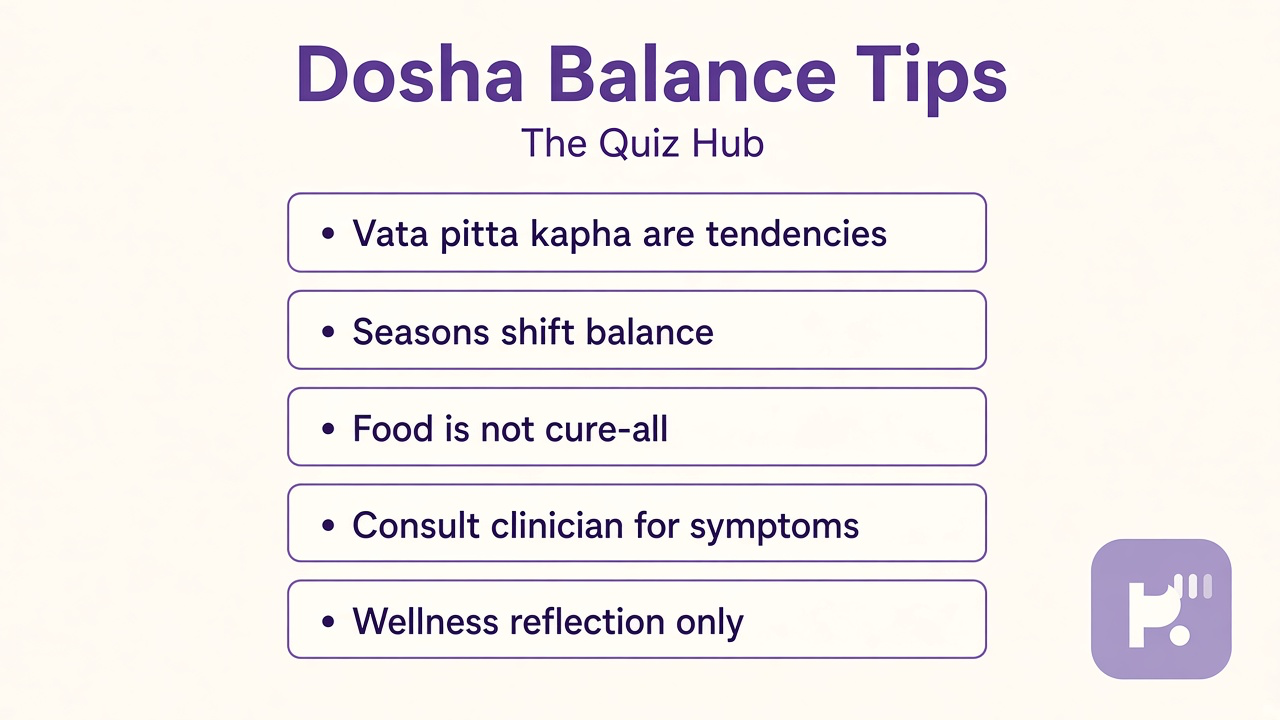
A quick takeaway graphic with topic tips (not your personal quiz scores). Start the quiz for your index, bands, and charts.
What this quiz can and cannot tell you
Can tell you
- Highlight which Ayurveda-inspired habit cluster your recent weeks resemble
- Separate playful constitution language from mood-of-the-week noise
- Encourage noticing sleep, season, and body signals without shame
- Spark better questions for educators, coaches, or licensed clinicians
Cannot tell you
- Diagnose disease, hormonal imbalance, or clinical dosha excess
- Prescribe herbs, cleanses, fasting, or supplement stacks
- Replace personalized Ayurvedic or medical care
- Prove you must eat, exercise, or medicate based on one bar height
Why dosha language works better as habit reflection than diagnosis
Ayurveda describes patterns in how energy, digestion, sleep, and temperament show up across seasons and stress. Vata language points to movement and change: busy minds, irregular meals, sensitivity to cold, and love of new ideas. Pitta language points to transformation and focus: drive to finish, heat irritation, direct speech, and eye for detail. Kapha language points to structure and calm: slow mornings, loyalty, comforting routines, and steadiness when others panic. Those are poetic maps, not blood tests. A free screener captures self-report in one window, not your whole biography or ancestry.
Real people blend. You might look pitta at work, kapha on Sunday, and vata during travel month. Culture, caffeine, grief, and shift work reshape habits faster than a single label updates. Reverse items catch performative answers: rock-steady weekend rhythms, zero competitiveness, instant forgiveness of grudges, or claiming energy never links to rest should not inflate bars meant to track lived tendencies. Read two high bars as a dual tendency story common in Ayurveda-inspired teaching, not as a conflict you must fix overnight.
Rhythm awareness is the fourth domain because wellness reflection fails when it ignores signals. Noticing that poor sleep tanks your mood, that gray winters drag energy, or that a walk clears mental static is healthy metacognition. It is not permission to self-treat with aggressive detoxes, unregulated herbs, or starvation plans marketed as dosha balance. Licensed clinicians and trained Ayurvedic practitioners individualize diet and lifestyle after history and exam; quizzes skip that nuance on purpose.
Pair bar charts with humility. High vata with rising fear-of-intimacy on the stack might mean you chase novelty to avoid sitting still with someone. High pitta with low rhythm awareness might mean you override fatigue until irritability explodes. High kapha with strong rhythm awareness might mean you honor slow mornings without calling laziness a virtue. Save one gentle experiment aligned with your tallest bar, like a consistent wind-down or a cooler walk break, and notice what changes without declaring victory or disease.
If Ayurveda language helps you speak about body and season with kindness, keep it in that lane. If symptoms persist, bring data from real life, not quiz bragging rights, to qualified care. Retake after a different season and see which bars move. Reflection grows when choices stay conscious, not when a quiz picks a dosha mascot forever.
| Test | Focus |
|---|---|
| Ayurveda body type quiz | Sibling Ayurveda constitution reflection with body-type framing rather than this four-bar habit screener |
| Chinese medicine body type quiz | TCM constitution habits rather than vata-pitta-kapha tendency language |
Dosha Quiz FAQ
What does this quiz measure?
It measures how much you agree with Ayurveda-inspired habit statements about vata, pitta, and kapha tendencies plus rhythm awareness. You get an index from 0 to 100 and four bars. It reflects self-report on this screener, not a clinical constitution or treatment plan.
Which dosha am I?
Compare the vata, pitta, and kapha domain bars. The tallest bar is the best hint about which tendency cluster you endorsed most here. Many people show two highs; read the chart with your recent month, not as a lifetime label.
Is this quiz medical or Ayurvedic treatment advice?
No. It is education and self-reflection. It does not diagnose imbalance, prescribe herbs, or recommend cleanses. See a licensed clinician or qualified Ayurvedic practitioner for personalized care.
Why are some statements worded opposite to the tendency?
Reverse-worded items catch autopilot responding. Agreeing that weekend rhythms never budge, that you never feel competitive, that grudges vanish instantly, or that energy ignores rest should not inflate tendency bars.
Who reviewed this quiz?
Dr. Elena Vasquez, PhD reviewed the reflection-only framing, no-treatment-claims wording, and limits on diagnostic use. See our editorial policy for review standards.
Reviewed by