What the Dog Breed Identification Quiz measures
This quiz does not scan a photo of a dog on your phone. It measures how you rate your own breed-guessing habits across four groups: reading silhouette and movement, using coat texture and markings without color traps, staying humble about mutts and shelter labels, and studying in small sessions from better sources. You answer 22 statements from strongly disagree to strongly agree, with reverse-worded items so meme confidence cannot inflate every line. Your answers also feed a second chart on closeness and trust habits, because hobby learners sometimes chase bragging rights instead of curiosity. The total becomes an index from 0 to 100 where higher means more reported structure-first, humble ID habits on this screener, not proof you could pass a kennel club ring.
Silhouette clues
How much you read outline, ears, tail, muzzle, and movement before naming a breed.
Coat and color
How much you use texture and patterns while avoiding color-only shortcuts.
Mixed-breed humility
How much you respect mutts, shelter guesses, and strangers without gatekeeping.
Study habits
How much you practice steadily from reputable guides instead of one meme binge.
How it works
Answer 22 agreement items
Rate each statement from Strongly disagree to Strongly agree. Tap Next after each answer.
Answers sort into four domains
Each answer feeds one of four ID habit groups, and every item also feeds a closeness and trust layer.
See your index and charts
You get a 0 to 100 index, a band, and two bar charts you can use to pick what to study next.
Take the Dog Breed Identification Quiz
Answer 22 short statements to see your breed identification habit index, four domain bars, and a closeness and trust chart.
What your result means
Your index is the average of all 22 answers, scaled from 0 to 100, with reverse-worded items flipped first. Higher means more reported structure-first, humble habits. Read mixed-breed humility and silhouette bars together before you interpret the total.
| Band | Index range | Typical reading |
|---|---|---|
| Color-first or vibe guesses | 0 to 35 | Few silhouette, coat-pattern, or study habits; humility may be low. |
| Mixed ID habits | 36 to 65 | Some silhouette and coat skills mixed with shortcuts or overconfidence. |
| Structure-first ID habits | 66 to 100 | Frequent silhouette, coat-pattern, humility, and study habits. |
Tips at a glance
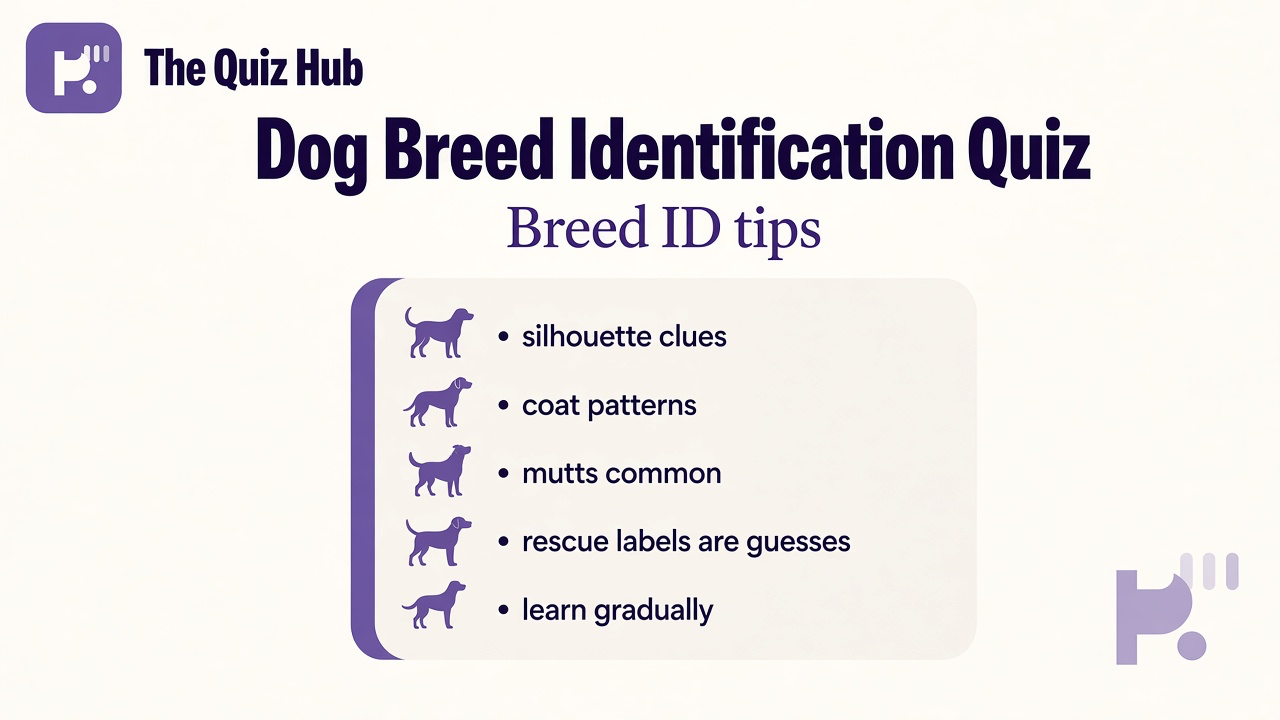
A quick takeaway graphic with topic tips (not your personal quiz scores). Start the quiz for your index, bands, and charts.
What this quiz can and cannot tell you
Can tell you
- Spot whether you guess from color more than structure
- Highlight gatekeeping or overconfidence before park small talk
- Suggest study focus from your lowest domain bar
- Give a playful baseline to retake after practice
Cannot tell you
- Prove parentage or purebred status for any dog
- Replace DNA tests or pedigree paperwork
- Certify you as a breed judge or trainer
- Tell you which breed to adopt for your lifestyle
How to guess dog breeds without being that person at the park
People land on breed ID quizzes because guessing feels like a party trick. A stranger walks a blocky dog and everyone becomes an expert. Most online lists reward coat color: golden fur equals retriever, black and tan equals Doberman. Real identification starts with silhouette. Ear set, tail carriage, depth of chest, and muzzle length survive bad lighting better than a trendy haircut.
Coat and color are supporting actors. Double coats, wire texture, and merle patterns narrow possibilities, but the same colors appear in unrelated breeds. Markings like masks and saddles are clues, not verdicts. When ads hype rare colors as proof of purity, that is marketing, not ethology. Humility matters because most pet dogs in cities are mixes. Shelter breed labels help adopters imagine size and energy; they are not court documents.
Gatekeeping ruins the hobby. Correcting a proud new owner about whether their rescue is really a husky teaches nobody anatomy. Curious questions beat smug corrections. Study habits turn guesses into skill: short sessions, side-view photos, and reviewing mistakes after breed games beat one caffeine-fueled scroll through meme charts. Movement on video separates bounce-heavy terriers from leggy hounds faster than a frozen selfie.
If your index is low, pick one feature per walk: ears this week, tails next. Say mixed breed when you mean mixed breed. If your index is high, keep humility anyway; structure-first readers still mislabel shaved or obese dogs. Our dog anatomy quiz pairs names with body parts that matter for care conversations. The dog breed quiz sibling leans lifestyle matching more than park-side ID craft.
Retake after a week of deliberate practice. Bars that rise in silhouette and study together mean you are learning shape, not memorizing buzzwords. Fun ID is for connection with dogs and owners, not winning arguments. Learn gradually, laugh at wrong guesses, and leave DNA questions to the lab.
| Test | Focus |
|---|---|
| Dog anatomy quiz | Skeleton and organ basics for care literacy, not naming breeds from a photo |
| Dog breed quiz | Lifestyle and breed tendency matching, not silhouette drill habits |
Dog Breed Identification Quiz FAQ
What does this quiz measure?
It measures how you rate your breed identification habits across silhouette clues, coat and pattern literacy, mixed-breed humility, and study habits. You get an index from 0 to 100 and four bars. It reflects your self-reported approach, not a graded photo test.
Can this prove my dog's breed?
No. Only pedigree records or DNA testing can speak to lineage with authority. This quiz scores learning habits and attitudes, not your dog's paperwork.
Why include mixed-breed and shelter label items?
SERP breed ID pages rarely admit how common mutts are or that shelter labels are guesses. Reverse and humility items keep scores honest and the tone kind.
Why are some items worded negatively?
Reverse-worded statements balance optimism. Agreeing that you ID from color alone or gatekeep strangers should not inflate a skill index.
Who reviewed this quiz?
Dr. Rachel Kim, PhD reviewed the framing, humility limits, and result explanations. See our editorial policy for review standards.
Reviewed by