What the Does My Child Have Asthma Quiz measures
This quiz does not diagnose asthma. Only a clinician who examines your child, listens to lungs, and sometimes orders tests can do that. It measures how often you have noticed patterns that parents and pediatricians often discuss when asthma is on the worry list, grouped four ways: cough and wheeze timing, repeatable triggers, rescue medicine or urgent visits, and limits on sleep or activity. You answer 22 how-often statements about the past two weeks, with reverse-worded items so one mild cold week cannot hide frequent night cough. Your responses also feed a second chart on closeness and trust habits, because breathing fear sometimes makes it hard to co-parent on action plans or ask for school help. The total becomes an index from 0 to 100 where higher means more frequent concern on this screener, not confirmed asthma.
Cough and wheeze
How often night cough, whistling breath, or chest tightness appeared with activity or rest.
Trigger patterns
How often allergens, smoke, cold air, or illness preceded flares.
Rescue and relief
How often inhalers, urgent visits, or missed days followed breathing trouble.
Daily function
How often sleep, sports, or energy suffered because of breathing.
How it works
Answer 22 frequency items
Rate each statement from Never to Very often for the past two weeks. Tap Next after each answer.
Answers sort into four domains
Each answer feeds one of four symptom groups, and every item also feeds a closeness and trust layer.
See your index and charts
You get a 0 to 100 index, a band, and two bar charts you can bring to your pediatrician.
Take the Does My Child Have Asthma Quiz
Answer 22 short statements to see your asthma concern index, four domain bars, and a closeness and trust chart.
What your result means
Your index is the average of all 22 answers, scaled from 0 to 100. Higher means more frequent reported concerns on this screener. Read the domain bars before the total, since trigger patterns can spike while daily function still looks okay on paper.
| Band | Index range | Typical reading |
|---|---|---|
| Lower reported concern | 0 to 35 | Fewer frequent cough, wheeze, trigger, or function worries in the past two weeks. |
| Mixed reported concern | 36 to 65 | Some breathing signs show up; other days look clear. |
| Higher reported concern | 66 to 100 | Frequent breathing symptoms; book evaluation and action plan, not a web label. |
Tips at a glance
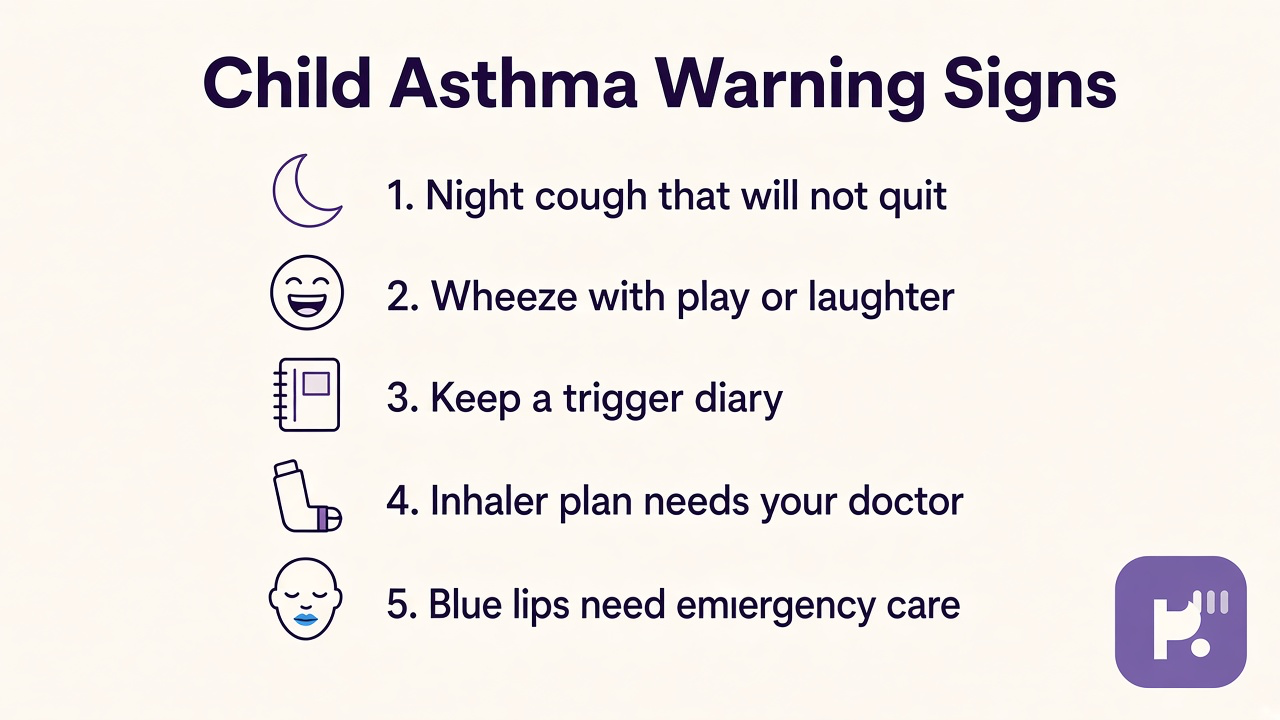
A quick takeaway graphic with topic tips (not your personal quiz scores). Start the quiz for your index, bands, and charts.
What this quiz can and cannot tell you
Can tell you
- Organize symptoms into cough, trigger, rescue, and function buckets
- Give you language for a pediatric or pulmonology visit
- Highlight when action plan or technique review may be overdue
- Offer a baseline if you retake after controller medicine starts
Cannot tell you
- Diagnose asthma, bronchiolitis, or any lung disease
- Replace spirometry, chest X-ray, or allergy testing when indicated
- Tell you to stop prescribed inhalers based on a low score
- Predict emergency risk without examining your child today
Asthma worries in children: what to do next
Parents search asthma questions when a cough stops sounding like a cold or when a child sits out soccer while friends sprint. Asthma is a pattern of airway inflammation and narrowing that often shows up as recurring cough, wheeze, chest tightness, or night symptoms. One winter virus can wheeze a toddler once; repeated episodes with triggers suggest evaluation. Fear is normal, and so is the need to separate observation from diagnosis.
The Centers for Disease Control and Prevention asthma resources for families emphasize action plans, trigger control, and correct inhaler technique. The National Heart, Lung, and Blood Institute asthma guidance likewise urges medical diagnosis before long-term controller therapy. Neither agency invites parents to label asthma from a checklist alone. They invite visits where clinicians listen, measure when appropriate, and teach devices.
This quiz groups parent reports the way many appointments start: night cough, exercise symptoms, allergen links, and rescue frequency. Reflux, habit cough, and cardiac issues are rare but real mimics, which is why a high index here means call the doctor, not buy medicine online without prescription. Once asthma is confirmed, controllers reduce inflammation while rescue bronchodilators treat flare symptoms; schools need clear forms for both. Teach your child to tell an adult when chest tightness starts rather than hiding it to keep playing.
Keep a two-week diary: bedtime cough minutes, PE participation, pollen counts, pet exposure, and each inhaler puff with time. Note whether symptoms wake the house or only appear with laughter. If your pediatrician is reassuring but symptoms persist, allergy or pulmonology referral is reasonable. Our child development quiz is unrelated to lungs but may help if you are tracking broader wellness questions, still not a substitute for exam.
Caregiver anxiety about wheeze is exhausting. Second-guessing every cough can delay sleep for the whole family. If fear of breathing emergencies dominates your days, tell your clinician; parent coaching on when to use rescue medicine reduces panic. Schools and grandparents should learn your action plan so everyone uses the same steps. Retake this screener after a visit if you want to track whether reported frequency drops once a plan is in place.
| Test | Focus |
|---|---|
| Child development quiz | General development habits rather than breathing-specific cough and wheeze tracking |
| Does my child have anxiety quiz | Worry and avoidance patterns rather than cough, wheeze, and inhaler use |
Does My Child Have Asthma Quiz FAQ
What does this quiz measure?
It measures how often you have noticed cough, wheeze, triggers, rescue use, or activity limits in the past two weeks. You get an index from 0 to 100 plus four domain bars. It reports parent observation frequency, not a clinical diagnosis.
Can this quiz tell me if my child has asthma?
No. Asthma is diagnosed by a qualified clinician after history, exam, and sometimes lung function testing. This tool helps you organize symptoms to discuss at a visit.
My child only coughs at night. Could that still be asthma?
Night cough is a common asthma clue, but viruses, reflux, and allergies also cause it. Frequency, triggers, and exam findings matter. Share night timing with your pediatrician.
When should I go to the emergency room?
Go now for blue or gray lips, struggling to speak, visible rib retractions, or no improvement after prescribed rescue bronchodilator doses. Call your doctor for repeated night cough or weekly rescue use.
Who reviewed this quiz?
Dr. Elena Vasquez, PhD reviewed the YMYL framing, medical limits, and pediatric breathing guidance. See our editorial policy for review standards.
Reviewed by