What the Do You Know Yourself And Your Workspace Habits Quiz measures
This quiz is about what you do in your workspace, not how it looks. It sorts 22 "how often" questions into four groups: how you plan your day around your own energy, how you handle pings and visitors, how you get along with the people who share your space, and whether you take real breaks and stop on time. You rate each behavior from never to very often for a typical work week, and a few questions are worded the other way around so that a run of "often" cannot inflate your total. A second chart on closeness and trust habits sits beside your main score, since how easily you ask others for quiet or space often shapes how protected your focus is. Your answers become a habit awareness index from 0 to 100. Higher means you notice and steer more of your daily habits, not that you work harder.
Work rhythm
How often you plan hard tasks for your best hours and notice your own daily energy curve.
Interruptions
How often you manage notifications, visitors, and noise before they break your focus.
Shared space
How often you agree on rules, signals, and noise with the people who share your space.
Breaks and recovery
How often you take real breaks, move around, and stop work at a set point.
How it works
Answer 22 frequency items
Rate each behavior from Never to Very often for a typical work week. Tap Next after each answer.
Answers sort into four domains
Each answer feeds one of four habit groups, and every item also feeds a closeness and trust layer.
See your index and charts
You get a 0 to 100 index, a band, and two bar charts to check again after you change one habit.
Take the Do You Know Yourself And Your Workspace Habits Quiz
Answer 22 short questions to see your workspace habit awareness index, four habit bars, and a closeness and trust chart.
What your result means
Your index is the average of all 22 answers, scaled from 0 to 100, with reverse-worded items flipped first. The four habit bars matter more than the total, because one weak habit, such as no stop time, can undo a strong one.
| Band | Index range | Typical reading |
|---|---|---|
| Lower habit awareness | 0 to 35 | Your workday habits mostly happen to you, and few are chosen. |
| Mixed habit awareness | 36 to 65 | Some habits are deliberate, while others slip when the week gets busy. |
| Higher habit awareness | 66 to 100 | You plan, protect, and close out your workday on purpose. |
Tips at a glance
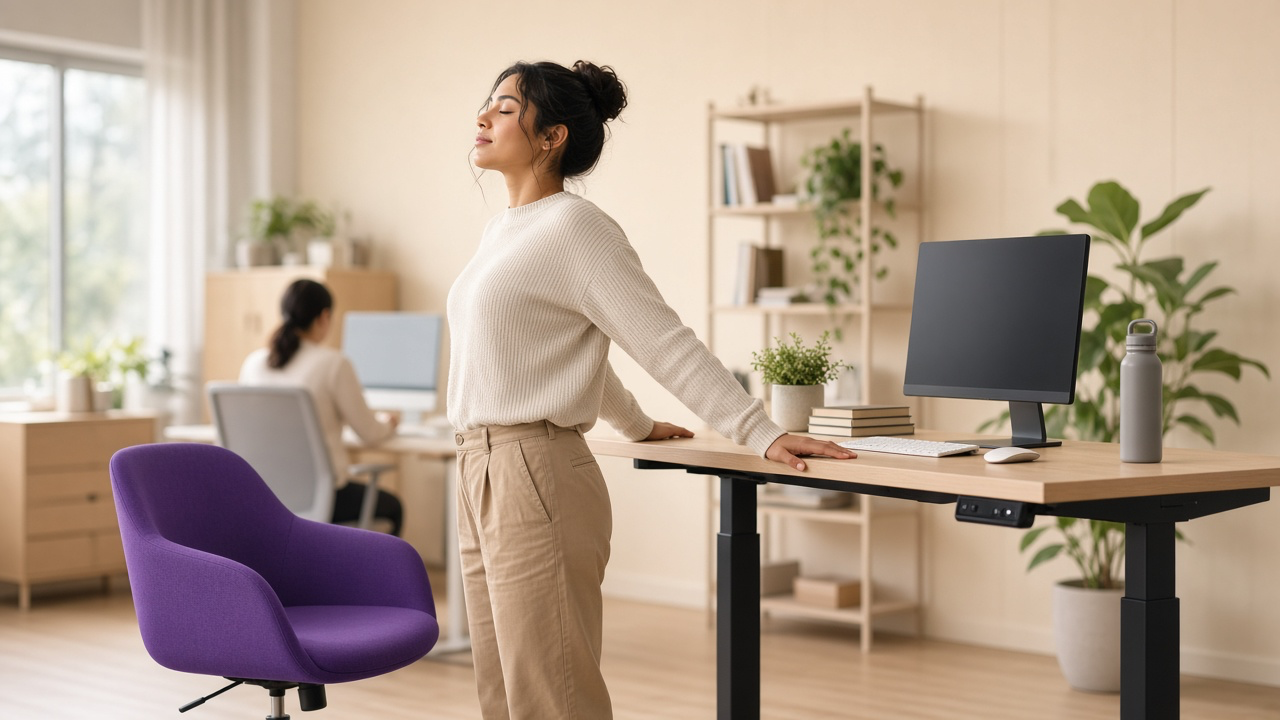
A quick takeaway graphic with topic tips (not your personal quiz scores). Start the quiz for your index, bands, and charts.
What this quiz can and cannot tell you
Can tell you
- Show which daily habits you steer and which ones just happen
- Point to one habit that is worth changing this week
- Give you language for asking housemates or coworkers for quiet
- Give you a baseline to compare after a new schedule or a move
Cannot tell you
- Measure how productive you are or judge the quality of your work
- Tell you whether your employer or team is treating you fairly
- Diagnose burnout, attention problems, or sleep conditions
- Fix a workplace that is overloaded by design
Why habits beat willpower at a desk
People who search for this quiz often describe a pattern rather than a problem. The day starts well, then an hour disappears, the afternoon turns foggy, and the evening is spent finishing what the morning should have covered. They suspect the workspace is to blame, but what they usually mean is the habits that happen inside it. The good news is that habits are easier to change than furniture, and small changes add up.
Two research threads are useful here. Gloria Mark and colleagues at the University of California, Irvine, found in observational studies that office workers were interrupted or switched tasks roughly every few minutes, and that returning to the original task after an interruption could take more than twenty minutes. The point is not the exact figure. It is that interruptions have a hidden recovery cost, so managing them is worth more than it feels. The second thread is sleep and recovery research, such as the work of Sabine Sonnentag, who found that workers who mentally detach from work in the evening report better energy the next day.
The four bars in your result follow those ideas. Work rhythm asks whether you use your best hours for your hardest work. Interruptions asks whether you control what reaches you. Shared space asks whether you can say what you need to the people around you, which is often the missing step. Breaks and recovery asks whether work has an end point, since a day with no edge tends to spill into the evening. If your lowest bar is shared space, the fix is usually a conversation and not a gadget.
Treat your score as a place to start, not a verdict. Pick one habit, change it for a week, and watch what happens to your day. If you work in a setting where interruptions are built into the job, such as a front desk or a support line, a low interruption score may say more about the role than about you. Persistent exhaustion, dread about work, or trouble switching off are worth raising with a health professional. You can read how the World Health Organization describes burn-out as an occupational phenomenon to see where habits end and workload begins.
| Test | Focus |
|---|---|
| Do you know yourself and your workspace quiz | Looks at the physical desk, light, clutter, and comfort instead of daily habits |
| Burnout assessment test | Screens for exhaustion and mental distance from work, which habits alone cannot fix |
Do You Know Yourself And Your Workspace Habits Quiz FAQ
What does this quiz measure?
It measures how often you use habits that protect your focus and recovery, across rhythm, interruptions, shared space, and breaks. Your 22 answers become an index from 0 to 100 with four habit bars. It describes habits, not how good your work is.
How is this different from the other workspace quiz?
The other quiz asks how well you understand your physical desk, light, and comfort. This one asks what you do during the week, such as muting pings, agreeing rules with others, and taking breaks. Many people score differently on the two.
Does it work if I work from home?
Yes. The shared-space questions fit housemates, partners, and family as well as coworkers. If you work alone, answer them for the times when others are around.
What if my job is full of interruptions by design?
Then a low interruption score may describe the role and not you. Use the other bars, and ask your team whether a small change, such as a quiet hour, is possible.
Who reviewed this quiz?
Dr. James Whitfield, PhD reviewed the framing, the limits note, and the result explanations. See our editorial policy for review standards.
Reviewed by