What the Do You Know Yourself And Your Workspace Quiz measures
This quiz looks at how well you understand the physical place where you work, whether that is a desk, a kitchen table, or a corner of a shared room. It groups 22 statements into four areas: which surroundings help you focus, how you handle clutter and resets, how well you read your own body at a desk, and the small rituals that start and end your day. You rate each statement from strongly disagree to strongly agree, and some are worded the other way around so that agreeing with everything does not inflate your total. A second chart on closeness and trust habits sits beside your main score, because how openly you talk about what you need often shapes whether your setup ever gets fixed. Your answers become a workspace self-knowledge index from 0 to 100. Higher means you know more about what you need, not that your desk looks tidy.
Focus fit
How well you know which places, noise levels, and visual surroundings help you concentrate.
Order and clutter
How well you know what mess costs you, what must stay in reach, and how you reset.
Body comfort
How well you read your own body at a desk, from sore spots to light, heat, and hunger.
Setup and rituals
How well you know the small rituals and personal items that start and end your work.
How it works
Answer 22 agree or disagree items
Rate each statement from Strongly disagree to Strongly agree. Tap Next after each answer.
Answers sort into four domains
Each answer feeds one of four workspace areas, and every item also feeds a closeness and trust layer.
See your index and charts
You get a 0 to 100 index, a band, and two bar charts you can compare the next time your setup changes.
Take the Do You Know Yourself And Your Workspace Quiz
Answer 22 short statements to see your workspace self-knowledge index, four setup bars, and a closeness and trust chart.
What your result means
Your index is the average of all 22 answers, scaled from 0 to 100, with reverse-worded items flipped first. Start with the four setup bars, because a single weak area is usually easier to fix than the whole desk.
| Band | Index range | Typical reading |
|---|---|---|
| Lower workspace self-knowledge | 0 to 35 | Your setup runs mostly on defaults, and a few needs are still unnamed. |
| Mixed workspace self-knowledge | 36 to 65 | You know some of what helps and leave other areas to chance. |
| Higher workspace self-knowledge | 66 to 100 | You can name what helps, tune it, and notice when it stops working. |
Tips at a glance
A quick takeaway graphic with topic tips (not your personal quiz scores). Start the quiz for your index, bands, and charts.
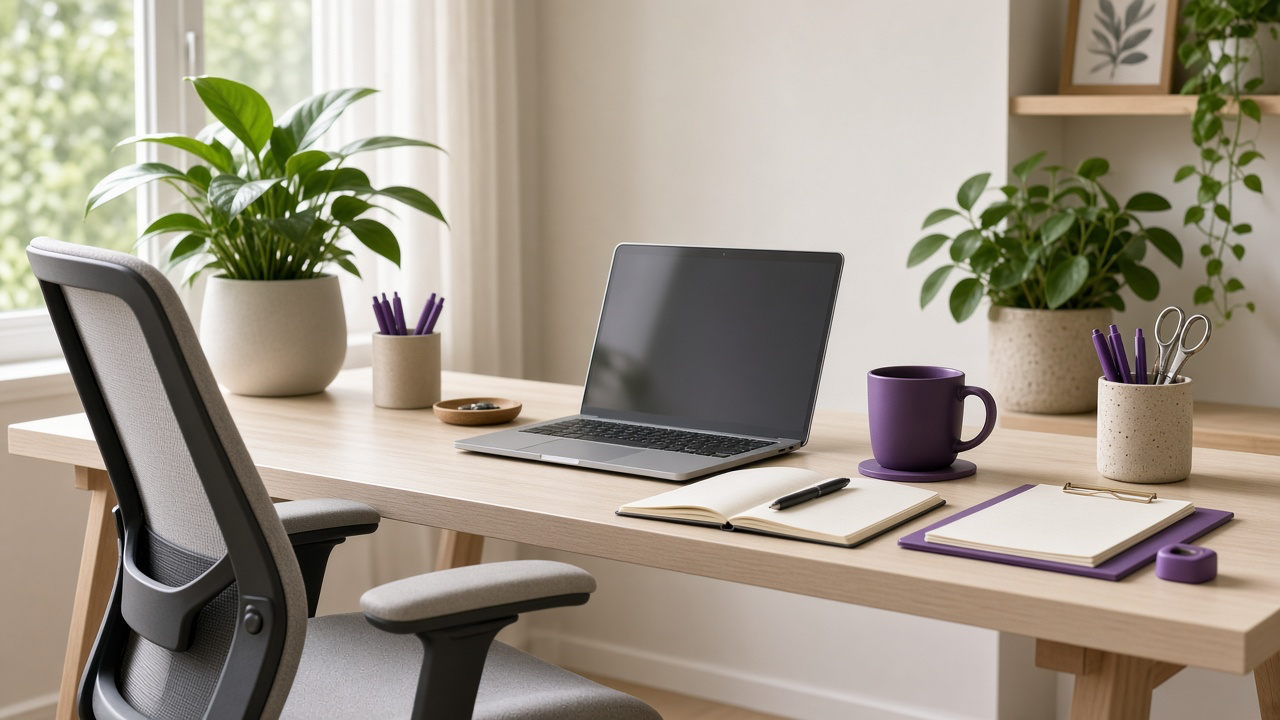
What this quiz can and cannot tell you
Can tell you
- Show which parts of your setup you understand and which you leave to chance
- Point to one small experiment worth trying this week
- Give you words for what you need when you ask for a different desk or room
- Offer a baseline to compare after you rearrange or move
Cannot tell you
- Judge how productive you are or how good your work is
- Replace an ergonomic assessment if you have ongoing pain
- Say what setup is right for you, since that depends on your work and your body
- Diagnose focus or sensory conditions
Why a desk that looks fine can still work against you
People search this kind of question after a small but nagging signal. They sit down every morning and feel slightly off, or a new job in the same chair gives them headaches, or a move from office to kitchen table makes the same work feel twice as hard. Most of us never chose our workspace on purpose. It was handed to us, and we adapted without noticing the cost. A quick look at what actually helps you is usually more useful than another desk accessory.
Two bodies of work help explain why the setup matters. In a 2010 study, psychologists Craig Knight and Alexander Haslam compared bare offices, decorated offices, and offices that workers arranged themselves. The people who had a say in their space reported more well-being and worked more productively, and control over the space mattered more than the look of it. The second source is practical: the US Occupational Safety and Health Administration publishes plain guidance on posture, screen height, and breaks, which most of us leave on default settings.
The four bars in your result map onto those ideas. Focus fit and order and clutter are about control over what you see and reach. Body comfort is about the physical side, and it is the easiest to ignore because the cost shows up hours later. Setup and rituals is about whether you started and ended work on purpose. A high score in all four does not mean a minimalist desk. Some people think best in a pile of open books, and knowing that is the point. The quiz rewards self-knowledge, not a particular look.
Use your score as a prompt for a cheap experiment. Pick your lowest bar, change one thing for a week, and notice what shifts. If pain, numbness, or eye strain keeps coming back, an occupational health service or your doctor is a better source than any quiz. If you share a space with others, tell them what you learned, because people rarely ask for what they cannot name. You can read the OSHA computer workstation guidance for a plain checklist of posture and screen basics.
| Test | Focus |
|---|---|
| Do you know yourself and your workplace quiz | Looks at colleagues, unwritten rules, and career fit, not the physical desk |
| Introvert extrovert test | Looks at where you get your energy, which can explain why you prefer some spaces |
Do You Know Yourself And Your Workspace Quiz FAQ
What does this quiz measure?
It measures how well you understand your own physical workspace across focus, clutter, body comfort, and setup habits. Your 22 answers become an index from 0 to 100 with four bars. It describes self-knowledge, not how tidy or productive you are.
Does a neat desk earn a higher score?
No. A messy desk can score high if you know it suits your thinking and you can reset it when needed. The quiz rewards knowing what works for you, not matching a tidy ideal.
Is this quiz only for office workers?
No. It works for anyone with a place where they work or study, including a kitchen table, a shared room, a library seat, or a workshop bench. Answer for the place you use most.
What if my desk causes me pain?
Ongoing pain, numbness, or eye strain is a health question and not a quiz question. An occupational health service or your doctor can assess your setup properly.
Who reviewed this quiz?
Dr. James Whitfield, PhD reviewed the framing, the limits note, and the result explanations. See our editorial policy for review standards.
Reviewed by