What this differential diagnostic questionnaire ddq 472 measures
This differential diagnostic questionnaire ddq 472 estimates self-reported DDQ 472 work preference routine pref risk pref solo team detail big habit signals patterns across four domains. Twenty-two original agree-disagree items group into routine pref, risk pref, solo team, detail big. Each item also maps to a fear-of-intimacy stack layer. A second results chart inspired by FOIS-style intimacy avoidance themes from Descutner and Thelen (1991), adapted to this topic. Your ddq work preference habit index averages these patterns into a 0 to 100 score where higher numbers mean more endorsed DDQ 472 work preference routine pref risk pref solo team detail big habit signals on this screener.
Routine pref
How often DDQ 472 routine pref patterns fit you.
Risk pref
How often DDQ 472 risk pref patterns fit you.
Solo team
How often DDQ 472 solo team patterns fit you.
Detail big
How often DDQ 472 detail big patterns fit you.
How it works
Answer 22 agree-disagree items
Rate each agree-disagree statement from Strongly disagree to Strongly agree. You click Next after each answer; there is no auto-advance.
Items map to domains and intimacy stack
Answers accumulate percentages for four primary domains plus four fear-of-intimacy stack layers.
View index, band, and charts
Results show Lower, Mixed, or Higher signal bands with domain bars and stack chart.
Take the differential diagnostic questionnaire ddq 472
Complete 22 items to receive your ddq work preference habit index, four domain bars, fear-of-intimacy stack chart, and band label.
What your result means
Your ddq work preference habit index is the normalized total across all 22 items on a 0 to 100 scale. Domain bars show which pattern drives your result most. The fear-of-intimacy stack chart shows parallel closeness-guarding layers.
| Band | Index range | Typical reading |
|---|---|---|
| Lower DDQ Work Preference Habit | 0 to 35 | Fewer endorsed DDQ 472 work preference routine pref risk pref solo team detail big habit signals patterns on this self-reflection screener |
| Mixed DDQ Work Preference Habit | 36 to 65 | Blend of moderate and strong DDQ 472 work preference routine pref risk pref solo team detail big habit signals signals across domains |
| Higher DDQ Work Preference Habit | 66 to 100 | Frequent DDQ 472 work preference routine pref risk pref solo team detail big habit signals signals on this entertainment or self-reflection screener |
What your report looks like
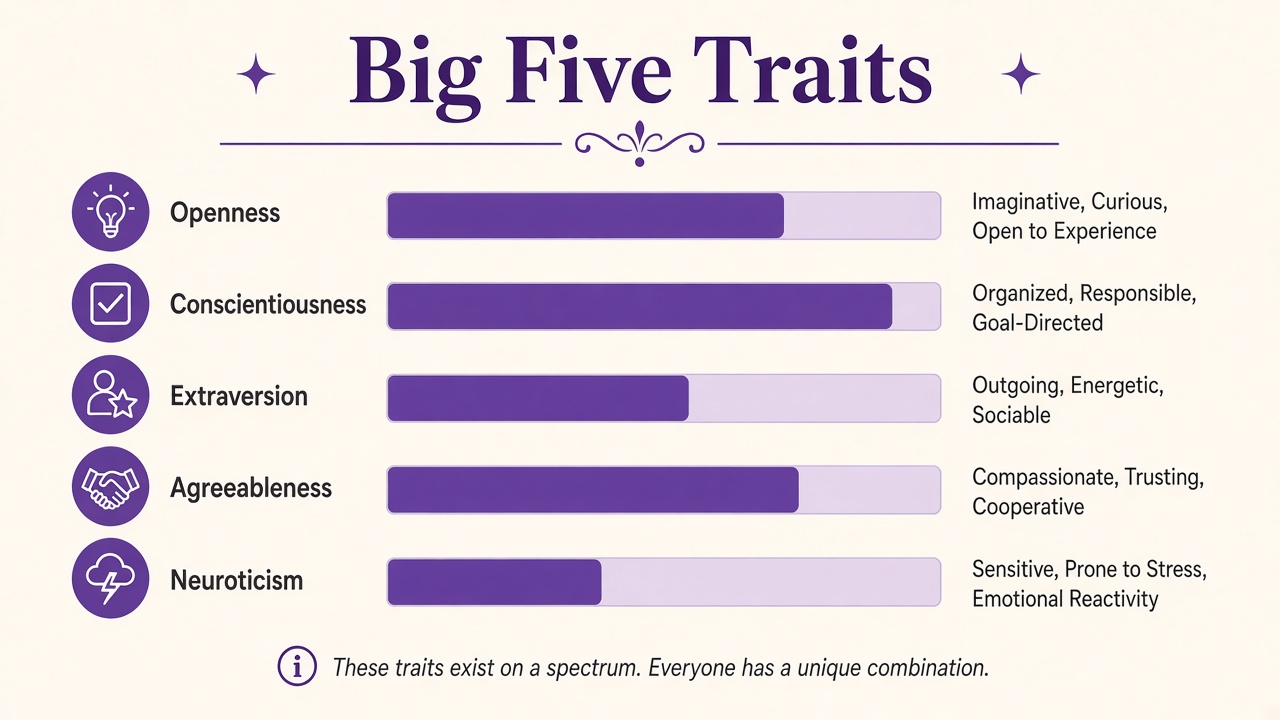
What this quiz can and cannot tell you
Can tell you
- How you report differential diagnostic questionnaire ddq 472 patterns on this screener
- A ddq work preference habit index and four domain bars plus fear-of-intimacy stack
- Vocabulary for follow-up conversations or study review
- A baseline before retaking after life or coursework changes
Cannot tell you
- Certify fixed identity or compatibility verdicts
- Replace professional evaluation, therapy, or proctored exams
- Predict outcomes from a single online screener session
- Label you permanently from one score band
DDQ work preference habit index and sibling screeners
This differential diagnostic questionnaire ddq 472 screener uses original agree-disagree items across four domains: routine pref, risk pref, solo team, detail big. Results include a 0 to 100 index and fear-of-intimacy stack chart.
Browse the personality & psychology hub for sibling quizzes with distinct question banks. Pair with our fear of intimacy quiz when results touch closeness themes.
| Test | Focus |
|---|---|
| Differential diagnostic questionnaire ddq 471 | DD47 vocational interest rather than DD48 routine risk solo detail items |
| Work style quiz | Work style broad rather than DDQ 472 routine risk solo detail cues |
Differential Diagnostic Questionnaire Ddq 472 FAQ
What does this differential diagnostic questionnaire ddq 472 measure?
22 agree-disagree items map to four domains plus a fear-of-intimacy stack. You receive a ddq work preference habit index from 0 to 100. Self-reflection only.
What is the fear-of-intimacy stack?
A second results chart with vulnerability pull-back, trust hesitation, self-disclosure limits, and closeness anxiety adapted to this topic.
How long does the quiz take?
About 5 minutes for 22 items with session autosave.
Who reviewed this content?
Dr. James Whitfield, PhD reviewed the test framing and result explanations. See our editorial policy for review standards.
Can this quiz label me permanently?
No. Scores describe current self-report habits on this screener, not fixed identity or compatibility verdicts.
Can I retake the quiz?
Yes. Session data saves in your browser until you clear it or retake from results.
Reviewed by