What this aphantasia test measures
This aphantasia test estimates self-reported mental imagery patterns across four domains. Twenty-two original agree-disagree items cover visual vividness, memory using pictures, dream and hypnagogic imagery, and recognition of aphantasia-like traits. Each item also maps to a fear-of-intimacy stack layer. A second results chart inspired by FOIS-style intimacy avoidance themes from Descutner and Thelen (1991), adapted to this topic. Your mental imagery index averages these patterns into a 0 to 100 score where higher numbers mean more endorsed low-imagery patterns after reverse scoring, not a clinical label.
Visual imagery
How vividly you picture objects, faces, and scenes when you choose to imagine them.
Memory imagery
Whether recall uses mental photographs, verbal facts, or bodily memory instead.
Dream imagery
Visual content during sleep and drifting off, which can differ from waking imagery.
Aphantasia traits
Recognition of low imagery habits and comparison with how others describe imagination.
How it works
Answer 22 agree-disagree items
Rate each agree-disagree statement from Strongly disagree to Strongly agree. You click Next after each answer; there is no auto-advance.
Items map to domains and intimacy stack
Answers accumulate percentages for four primary domains plus four fear-of-intimacy stack layers.
View index, band, and charts
Results show Lower, Mixed, or Higher signal bands with domain bars and stack chart.
Take the aphantasia test
Complete 22 items to receive your mental imagery index, four domain bars, fear-of-intimacy stack chart, and band label for self-reflection.
What your result means
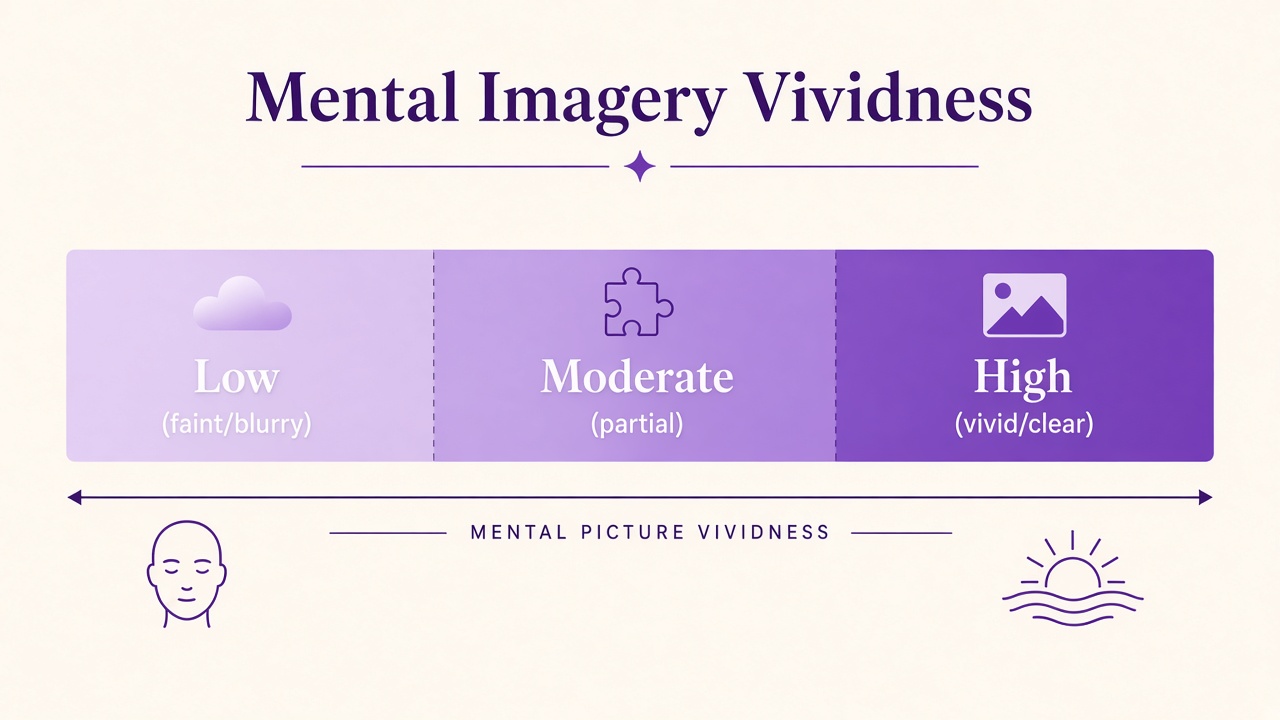
Your mental imagery index is the normalized total across all 22 items on a 0 to 100 scale. Domain bars show which imagery domain drives your result most. The fear-of-intimacy stack chart shows parallel closeness-guarding layers.
| Band | Index range | Typical reading |
|---|---|---|
| Lower Mental Imagery Signal | 0 to 35 | Fewer endorsed mental imagery and aphantasia traits patterns on this self-reflection screener |
| Mixed Mental Imagery Signal | 36 to 65 | Blend of moderate and strong mental imagery and aphantasia traits signals across domains |
| Higher Mental Imagery Signal | 66 to 100 | Frequent mental imagery and aphantasia traits signals on this entertainment or self-reflection screener |
What your report looks like
What this quiz can and cannot tell you
Can tell you
- How you describe mental imagery patterns on this screener today
- A mental imagery index and four domain bars plus fear-of-intimacy stack
- Which domain (visual, memory, dream, trait recognition) feels strongest in your answers
- A conversation starter before reading about Zeman aphantasia research
Cannot tell you
- Diagnose aphantasia, hyperphantasia, or any neurological condition
- Replace structured clinical interviews or neuropsychology batteries
- Predict creativity, memory ability, or career fit from imagery scores
- Certify medical or therapeutic treatment needs
Aphantasia test vs VVIQ imagery quiz
The VVIQ on The Quiz Hub asks vividness ratings on specific scenes. This aphantasia test adds trait recognition and dream imagery items so you see whether low pictures in waking life still leaves visual dreams.
Research by Adam Zeman and colleagues (2015) introduced the term aphantasia for absent voluntary visual imagery. Online screeners cannot replace structured interviews. Pair with our VVIQ quiz for a second lens.
| Test | Focus |
|---|---|
| VVIQ quiz | Scene-by-scene vividness ratings on people, objects, and places |
| Four types of introverts quiz | Social energy patterns rather than imagery vividness |
| Mental age test | Playful lifestyle age estimate, not imagery assessment |
Aphantasia Test FAQ
What does this aphantasia test measure?
22 agree-disagree items map to visual imagery, memory imagery, dream imagery, and aphantasia trait recognition. You receive a mental imagery index from 0 to 100. Not a diagnosis.
Can this test diagnose aphantasia?
No. Aphantasia is a descriptive term for low voluntary visual imagery. Only qualified clinicians and structured assessment can evaluate imagery differences with medical context.
How is this different from the VVIQ quiz?
The VVIQ uses scene vividness ratings. This test adds dream imagery and trait recognition items aligned with aphantasia self-discovery conversations online.
Do people with aphantasia dream in pictures?
Some report visual dreams despite low waking imagery. This test includes dream domain items so you can compare patterns on your results chart.
How long does the test take?
About 5 minutes for 22 items with session autosave.
Who reviewed this content?
Dr. James Whitfield, PhD, reviewed the test framing and result explanations. See our editorial policy for review standards.
Reviewed by