What this unlovability belief quiz measures
This am I unlovable quiz estimates agreement with statements about defect beliefs, rejection expectancy, unworthiness, and intimacy fear. Twenty-two original items group into four domains inspired by schema therapy unlovability themes from Jeffrey Young and attachment research on internal working models. Each item maps to a fear-of-intimacy stack layer.
Defect beliefs
Feeling fundamentally flawed, broken, or too much for anyone to stay
Rejection expectancy
Assuming partners will leave once they see the real you
Unworthiness
Believing you do not deserve steady love or care
Intimacy fear
Pulling back when closeness feels possible because love feels unsafe
How it works
Three steps from first question to your report with domain bars and fear-of-intimacy stack.
Answer 22 agreement items
Rate how much you agree with each statement, from Strongly disagree to Strongly agree. You click Next after each answer; nothing auto-advances.
Items map to domains and intimacy stack
Your answers accumulate percentages for four topic domains plus four fear-of-intimacy stack layers.
View band and dual charts
Results show your index from 0 to 100, a band label, domain bars, and a fear-of-intimacy stack chart.
Take the am I unlovable quiz
Rate 22 statements about defect beliefs, rejection fears, unworthiness, and intimacy pull-back.
Opens in a focused modal. No account required. Results stay on screen.
What your unlovability belief index means
Your unlovability belief index is the normalized total across all 22 items on a 0 to 100 scale.
| Band | Index range | Typical reading |
|---|---|---|
| Lower Unlovability Beliefs | 0 to 35 | Fewer defect and unworthiness belief signals |
| Mixed Unlovability Beliefs | 36 to 65 | Blend of insecurity and unlovable belief patterns |
| Higher Unlovability Beliefs | 66 to 100 | Frequent unlovability belief signals on this screener |
What your am i unlovable quiz report looks like
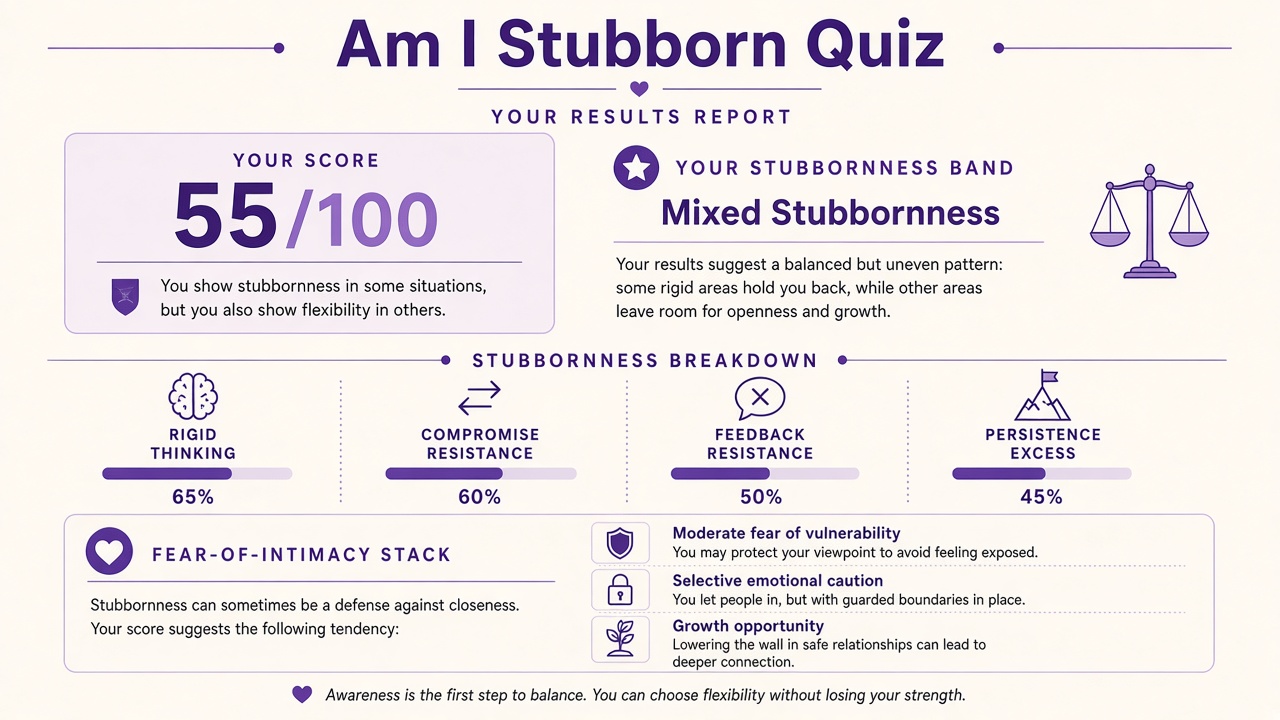
After all 22 items, you get an index from 0 to 100, a band label, four domain bars, and a fear-of-intimacy stack chart.
What this quiz can and cannot tell you
Can tell you
- How strongly your self-reported patterns showed up on this screener
- An index from 0 to 100 plus fear-of-intimacy stack index with domain bars
- Which domain feels strongest in your current answers
- A starting point for honest reflection or therapy conversation
Cannot tell you
- Whether you are unlovable as a person
- Whether any partner will stay or leave
- Clinical diagnosis of depression or attachment disorders
- Whether you deserve love in absolute terms
Unlovability beliefs and the fear-of-intimacy stack
Clinicians describe unlovability schemas as deep beliefs that one is defective and destined for rejection. These beliefs often form after early neglect or painful breakups.
Our am I lovable quiz screens the inverse self-worth frame. This quiz focuses on defect and rejection expectancy beliefs. The fear of intimacy quiz screens closeness avoidance frequency.
| The Quiz Hub test | What it adds |
|---|---|
| Am I lovable quiz | Inverse self-worth and partner deservingness frame |
| Fear of intimacy quiz | Closeness avoidance frequency, not defect beliefs |
| This quiz | Unlovability belief index plus fear-of-intimacy stack |
Read our editorial policy or browse relationships and dating tests.
Am I Unlovable Quiz FAQ
What does this quiz measure?
Twenty-two agreement items on defect beliefs, rejection expectancy, unworthiness, and intimacy fear with an index from 0 to 100.
Does this mean I am unlovable?
No. The index describes self-reported belief patterns on this screener, not facts about your worth or future relationships.
How is this different from am I lovable?
The am I lovable quiz screens positive self-worth and partner deservingness. This quiz focuses on unlovable self-story and rejection expectancy.
What should I do with a higher band?
Consider therapy with a clinician who treats shame, attachment, or mood concerns. Call or text 988 (US) if you feel in crisis.
Is this a diagnosis?
No. Only a licensed clinician can evaluate clinical conditions through structured assessment.
Who reviewed this content?
Dr. Elena Vasquez, reviewed the test framing and result explanations. See our editorial policy for review standards.
Reviewed by