What this am I snobby quiz measures
This am I snobby quiz estimates how much taste elitism and condescending habits show up in your self-report about culture, speech, circles, and design. Twenty-two original agreement items group into four domains drawn from sociologist Pierre Bourdieu's cultural capital ideas and everyday language about snobbery: cultural elitism, social condescension, exclusivity mindset, and aesthetic superiority. Each item also maps to a fear-of-intimacy stack layer so you can see whether vulnerability pull-back, trust hesitation, self-disclosure limits, or closeness anxiety rides alongside guarded taste habits. Your snobbery tendency index averages these patterns into a 0 to 100 score where higher numbers mean stronger agreement with snobby habit items.
Cultural elitism
Dismissing mainstream culture, assuming shallow taste, hiding guilty pleasures, and correcting pronunciation for status.
Social condescension
Talking down with simpler speech, annoyance at basic questions, eye-rolling at uninformed views, and avoiding lower-tier signals.
Exclusivity mindset
Preferring gated venues, losing interest when trends spread, name-dropping circles, and keeping favorite spots secret.
Aesthetic superiority
Noticing design flaws first, refusing off-brand gifts, judging clashing aesthetics, and redoing shared visual work.
How it works
Three steps from first question to your snobbery tendency report with fear-of-intimacy stack. Click Start Quiz to open the interactive quiz in a full-screen modal.
Answer 22 agreement items
Rate how much you agree with each taste elitism or condescension statement, from Strongly disagree to Strongly agree. You click Next after each answer; nothing auto-advances.
Items map to snobbery domains and intimacy stack
Your answers accumulate percentages for cultural elitism, social condescension, exclusivity mindset, and aesthetic superiority, plus four fear-of-intimacy stack layers.
View band, domain bars, and stack chart
Results show Lower, Mixed, or Higher Snobbery Signals with domain bars, stack layers, and reflection prompts.
Take the am I snobby quiz
Rate 22 statements about taste elitism, social condescension, exclusivity, and aesthetic judgment. Your answers produce a snobbery tendency index from 0 to 100, four domain scores, a fear-of-intimacy stack chart, and a band label for reflection.
Opens in a focused modal. No account required. Results stay on screen.
What your snobbery tendency result means
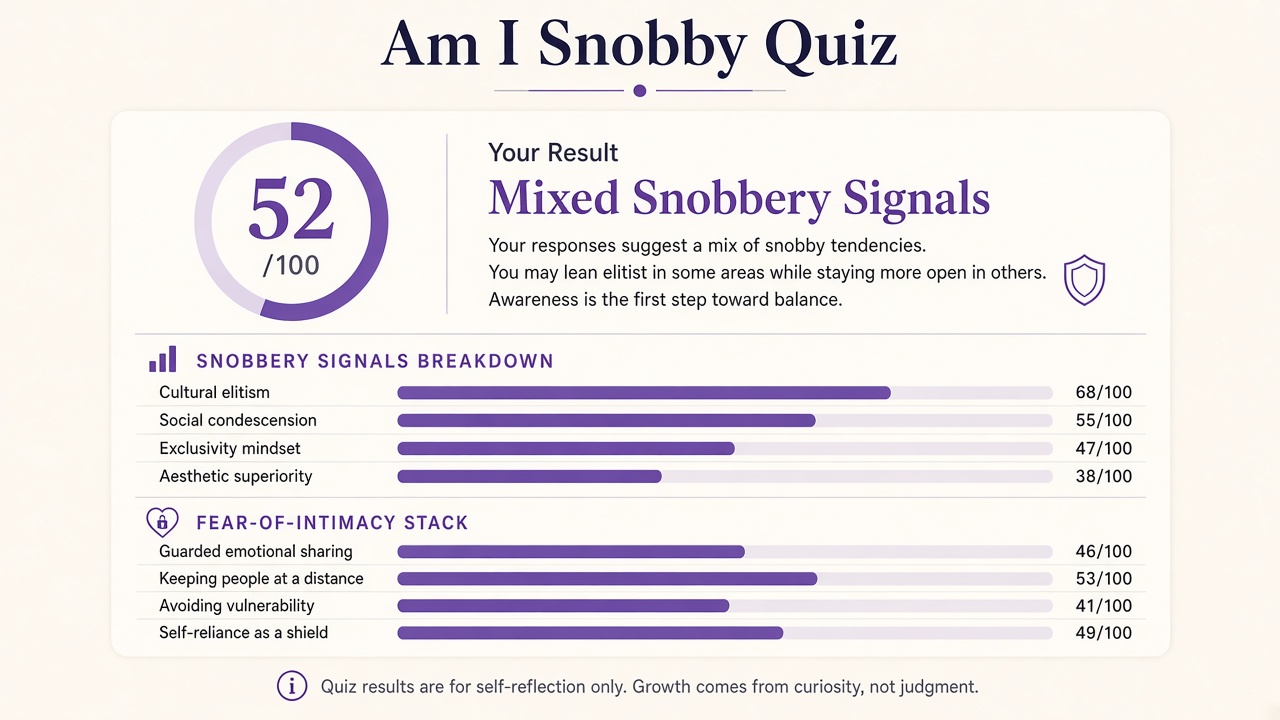
Your snobbery tendency index is the normalized total across all 22 items on a 0 to 100 scale. Higher scores mean stronger agreement with cultural elitism, social condescension, exclusivity mindset, and aesthetic superiority items on this screener. Domain bars show endorsement rates so you can see whether dismissing mainstream culture, talking down to others, guarding exclusive circles, or judging aesthetics harshly drives your result most. The fear-of-intimacy stack chart shows parallel layers for vulnerability pull-back, trust hesitation, self-disclosure limits, and closeness anxiety when snobby habits include guarded closeness.
| Band | Index range | Typical reading |
|---|---|---|
| Lower Snobbery Signals | 0 to 35 | Lower agreement with taste policing and condescension items; strong personal standards can still score here |
| Mixed Snobbery Signals | 36 to 65 | Blend of refined taste and habits that can read as snobby; domain and stack charts show where you struggle most |
| Higher Snobbery Signals | 66 to 100 | Frequent taste elitism or exclusivity habits; check stack if closeness feels guarded too |
What your snobby trait report looks like
After all 22 items, you get a snobbery tendency index from 0 to 100, a band label, four domain bars for cultural elitism, social condescension, exclusivity mindset, and aesthetic superiority, plus a fear-of-intimacy stack chart with vulnerability, trust, disclosure, and closeness anxiety layers.
What this quiz can and cannot tell you
Can tell you
- How much taste elitism and condescension habit patterns showed up in this self-report screener
- A snobbery tendency index and four domain bars for cultural elitism, social condescension, exclusivity, and aesthetics
- A fear-of-intimacy stack showing which closeness-guarding layer feels strongest
- A starting point for therapy, coaching, or comparing with sibling tests
Cannot tell you
- Whether you are permanently snobby, unkind, or incapable of warmth
- Whether snobbery is rooted in insecurity, class anxiety, or entitlement without professional context
- Whether friends or partners agree with your self-view
- What treatment you need without licensed professional guidance
Snobbery, cultural capital, and guarded closeness
People search am I snobby when they catch themselves dismissing a friend's playlist, steering toward niche venues, or feeling embarrassed when someone praises a mainstream pick. Sociologist Pierre Bourdieu described cultural capital as taste habits that signal class and group membership, though snobbery in everyday speech often means talking down to others rather than simply having refined preferences. Psychologists Barbara Descutner and Mark Thelen built the Fear-of-Intimacy Scale (1991) to screen vulnerability avoidance and closeness anxiety, themes that sometimes ride alongside guarded taste when warmth feels risky.
The Quiz Hub built this am I snobby quiz as an original self-report screener inspired by those themes plus FOIS-style intimacy avoidance layers, not a reproduction of any single published instrument. Readers often compare it to sibling tools on this site. Our am I arrogant quiz screens superiority beliefs, dismissive attitude, status seeking, and defensive pride rather than taste elitism domains. The am I posh quiz focuses on refined taste and etiquette presentation rather than condescending speech habits. The am I cringe quiz maps try-hard energy and awkward social timing rather than exclusivity mindset.
| The Quiz Hub test | What it adds |
|---|---|
| Am I arrogant quiz | Superiority beliefs, dismissive attitude, status seeking, and defensive pride without taste elitism or aesthetic superiority domains |
| Am I posh quiz | Refined taste, etiquette formality, class presentation, and speech polish without social condescension framing |
| Am I cringe quiz | Try-hard energy, oversharing, awkward timing, and online posts without exclusivity mindset or aesthetic judgment domains |
| Fear of intimacy quiz | General intimacy avoidance across vulnerability and trust, not snobbery or taste elitism domains |
| Big Five personality test | OCEAN trait percentiles including agreeableness without snobbery domain bars |
| This am I snobby quiz | Snobbery tendency index plus fear-of-intimacy stack for cultural elitism, social condescension, exclusivity mindset, and aesthetic superiority |
Sample item types include agreement ratings such as whether you lose interest when someone recommends a book, film, or album you consider lowbrow, or whether you feel embarrassed when a friend praises something you secretly think is tacky. High cultural elitism with high vulnerability pull-back on the stack often lands in Mixed or Higher Snobbery Signals bands. Strong design standards from real training can score in Lower Snobbery Signals even when you still notice visual flaws quickly. Read how we review quizzes in our editorial policy or browse more tools on our personality psychology hub.
Am I snobby quiz FAQ
What does snobby mean on this quiz?
Snobby here means your self-reported answers lean toward cultural elitism, social condescension, exclusivity mindset, or aesthetic superiority more than toward open curiosity about other tastes. It does not mean you are cruel, unlovable, or stuck forever. This am I snobby quiz maps those patterns to a snobbery tendency index from 0 to 100 for reflection, not a character verdict.
What does this am I snobby quiz measure?
Twenty-two original agreement items ask how much you endorse taste policing, talking down to others, guarding exclusive circles, and judging aesthetics harshly. Each item also feeds a parallel fear-of-intimacy stack with vulnerability pull-back, trust hesitation, self-disclosure limits, and closeness anxiety layers. You receive a snobbery tendency index from 0 to 100 and a band from Lower through Higher Snobbery Signals.
What is the fear-of-intimacy stack on this quiz?
The fear-of-intimacy stack is a second results chart inspired by FOIS-style intimacy avoidance themes from Descutner and Thelen (1991), adapted to snobbery trait framing. Each of the 22 items also maps to one of four stack layers: vulnerability pull-back, trust hesitation, self-disclosure limits, and closeness anxiety. The stack index summarizes how often guarded closeness rides alongside taste elitism or condescending habits.
How is this different from the am I posh quiz?
The am I posh quiz screens refined taste, etiquette formality, class presentation, and speech polish as posh vibe habits. This am I snobby quiz uses a social judgment frame focused on whether you dismiss mainstream culture, talk down to others, guard exclusive circles, or judge aesthetics harshly, plus the fear-of-intimacy stack chart rather than posh presentation domains.
Can this quiz tell me if I have narcissistic personality disorder?
No. The snobbery tendency index describes self-reported pattern signals on this abbreviated screener. It cannot diagnose narcissistic personality disorder, antisocial traits, or any clinical condition. Real expertise, design training, and strong personal standards can all raise scores without meaning you treat people unfairly.
Who reviewed this content?
Dr. James Whitfield, PhD, reviewed the test framing and result explanations. See our editorial policy for review standards.
Reviewed by